Key takeaway: Choose EXW when you already have a reliable freight forwarder and want direct control over transport, insurance and shipping costs. Choose DDP when you prefer a simpler purchasing process and want the supplier’s quotation to cover delivery to the agreed destination. The better option is not automatically the cheaper quotation—it is the option that gives your pool hall the clearest responsibility, most manageable risk and most realistic opening schedule.
For an overseas pool hall owner, buying the tables is only one part of the project. The order must also be produced, inspected, packed, transported and delivered before installation can begin.
This is why the trade term matters.
Baiyu Billiards, located in Shunde District, Foshan, Guangdong, China, mainly supports EXW and DDP quotations . According to Baiyu’s supplier-stated information, the company has served more than 150 billiard-room customers across Australia, Malaysia and the Middle East.
The right trade term depends on whether you want to manage the logistics yourself or reduce the number of parties you must coordinate.
What Is the Difference Between EXW and DDP for Pool Table Orders?
EXW, or Ex Works, means the supplier makes the finished order available at the factory. After the goods leave the factory, the buyer normally manages transport arrangements and insurance.
DDP, or Delivered Duty Paid, is a delivery arrangement in which the supplier organizes delivery to the agreed destination under the quoted scope.
For a pool table buyer, the practical difference is responsibility:
- Under EXW, the buyer has more logistics control and more coordination work.
- Under DDP, the supplier manages more of the delivery process, giving the buyer a simpler purchasing path.
Neither option is universally better. The decision should be based on your logistics experience, destination, order size, opening deadline and ability to manage problems during transport.
EXW vs DDP: A Practical Decision Table
| Decision factor | EXW order | DDP order |
|---|---|---|
| Factory production | Managed by supplier | Managed by supplier |
| Pickup from factory | Arranged by buyer | Included within supplier’s agreed delivery scope |
| Freight coordination | Managed by buyer or buyer’s forwarder | Managed by supplier or its logistics partner |
| Transport insurance after factory release | Buyer’s responsibility | Must be confirmed in the DDP quotation |
| Visibility into individual freight charges | Usually higher | May be bundled into one quotation |
| Buyer workload | Higher | Lower |
| Logistics control | Higher | Lower |
| Best suited to | Experienced importers with established forwarders | First-time or convenience-focused overseas buyers |
| Main risk | Fragmented coordination and unclear handovers | Unclear inclusions if the quotation is not itemized |
| Main document to request | Factory packing and pickup details | Written delivery-scope and exclusion list |
The most common mistake is comparing only the final price.
An EXW quotation can look lower because it excludes most post-factory logistics. A DDP quotation can look higher because more delivery responsibilities are included. Comparing the two figures without comparing their scope creates a false price comparison.
When Does EXW Make More Sense?
EXW is usually more suitable when the buyer already has:
- a freight forwarder familiar with heavy furniture or billiard equipment;
- an established transport and insurance process;
- experience checking packing lists and shipment handovers;
- several suppliers whose goods may be consolidated;
- a preference for choosing the carrier and shipping schedule directly.
EXW can provide stronger cost visibility because the buyer receives separate factory and logistics quotations. It can also make consolidation easier when a distributor is purchasing pool tables and other equipment from several Chinese suppliers.
The trade-off is coordination.
Under Baiyu’s supplier-stated EXW terms, the buyer takes responsibility for transport and insurance after the goods leave the factory. If damage or missing packages are discovered later, shipment records, loading evidence and insurance documentation become important.
Before factory pickup, an EXW buyer should therefore confirm:
- the final package count;
- the dimensions and packing volume;
- the pickup address and contact person;
- the loading date;
- the condition of the packages before release;
- who records photos or video during loading;
- when transport responsibility transfers to the buyer.
A low factory price does not protect an opening schedule if the forwarder, pickup team and destination delivery are not aligned.
When Does DDP Make More Sense?
DDP is generally more practical for buyers who want fewer logistics handovers.
It can be useful when:
- this is your first direct pool table order from China;
- you do not have a trusted freight forwarder;
- you prefer one delivery quotation instead of several separate charges;
- your team needs to focus on venue preparation and opening;
- you want fewer companies involved in resolving delivery questions.
For a pool hall owner, convenience has business value. Time spent finding freight providers, comparing routes, checking handovers and following multiple invoices is also a project cost.
However, a DDP label is not enough by itself. The quotation should clearly state:
- the agreed delivery destination;
- which transport stages are included;
- whether unloading is included;
- whether delivery is to a port, warehouse, kerbside or venue;
- which destination services are excluded;
- what documents the buyer must provide;
- who handles damage reporting during delivery;
- whether insurance is included and what it covers.
Country-specific taxes, customs treatment and import requirements can change. Buyers should verify the final DDP scope in writing and confirm destination-specific requirements with a qualified logistics or customs professional when necessary.
How Product Type Changes the Shipping Decision
Pool tables are large, heavy and sensitive to poor handling. The table model affects freight volume, handling requirements and the practical difference between EXW and DDP.
According to Baiyu’s supplier-stated specifications:
| Product | Main specification | Approximate packing volume | Supplier-stated EXW reference |
|---|---|---|---|
| 12-foot snooker table | 45mm natural slate | 2.5m³ | US$1,920–US$3800 |
| 9-foot American pool table | 25mm natural slate | 1.8m³ | About US$1,200-2500 for a stock model |
| 9-foot Chinese pool table | 45mm natural slate | 2.2m³ | Quoted according to customization |
These EXW prices are factory references, not landed costs.
A buyer comparing EXW and DDP must add the logistics scope to the product scope. Table quantity, packing volume, destination, consolidation plan and unloading conditions can materially affect the total project cost.
Packaging Must Be Confirmed Under Either Trade Term
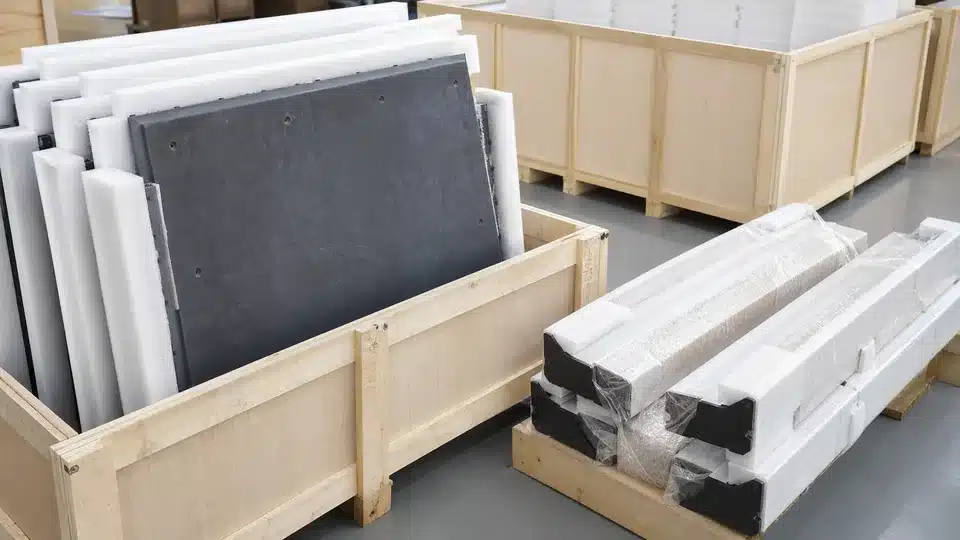
DDP does not make weak packaging safe, and EXW does not automatically cause packaging problems.
The packaging specification must be checked separately.
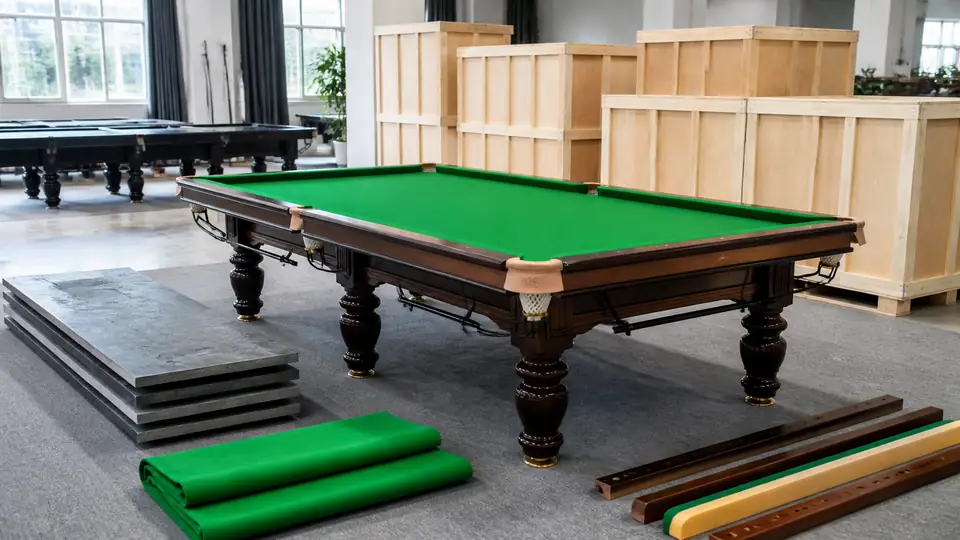
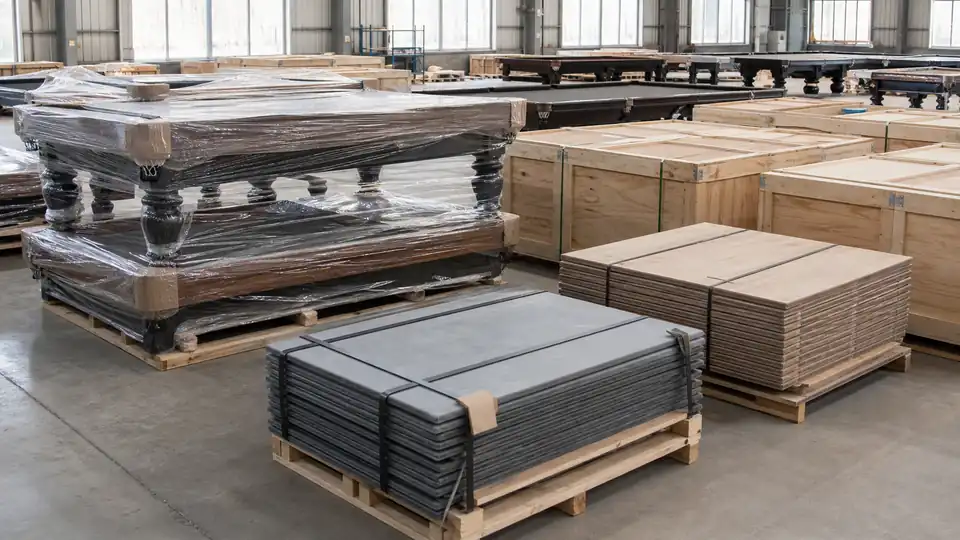
Baiyu’s supplier-stated export packaging includes:
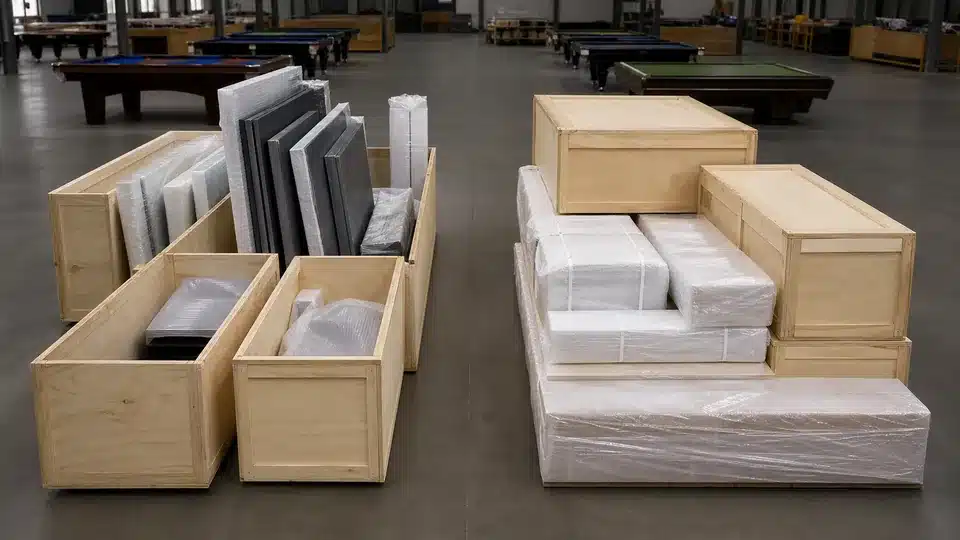
- 10mm EPE foam around slate components;
- disassembled frame components packed separately;
- reinforced wooden frames;
- consolidation support for smaller orders.
Buyers should request packing photos or video before shipment. They should also make sure the package count matches the packing list.
Baiyu supports production-line video, time-stamped factory footage, real-time WhatsApp or WeChat video calls, inspection by the buyer’s agent and video inspection after production.
These checks matter under both EXW and DDP because the trade term controls delivery responsibility, not product quality.
Do Not Plan the Opening Around Production Time Alone
According to Baiyu’s supplier-stated information, standard production begins after receipt of a 35%–50% deposit and generally takes 7–22 days.
That range covers production, not the entire door-to-door project.
The factory process may include:
- wood drying;
- slate grinding and polishing;
- assembly and levelling;
- quality inspection;
- protective packaging.
After production, the project can still require inspection, pickup, freight, destination handling, venue delivery and installation.
Baiyu’s internal customer records provide useful examples:
- A Melbourne billiard-room order containing eight 12-foot snooker tables and four 9-foot American pool tables had a supplier-stated sea transit time of about 25 days to Melbourne Port.
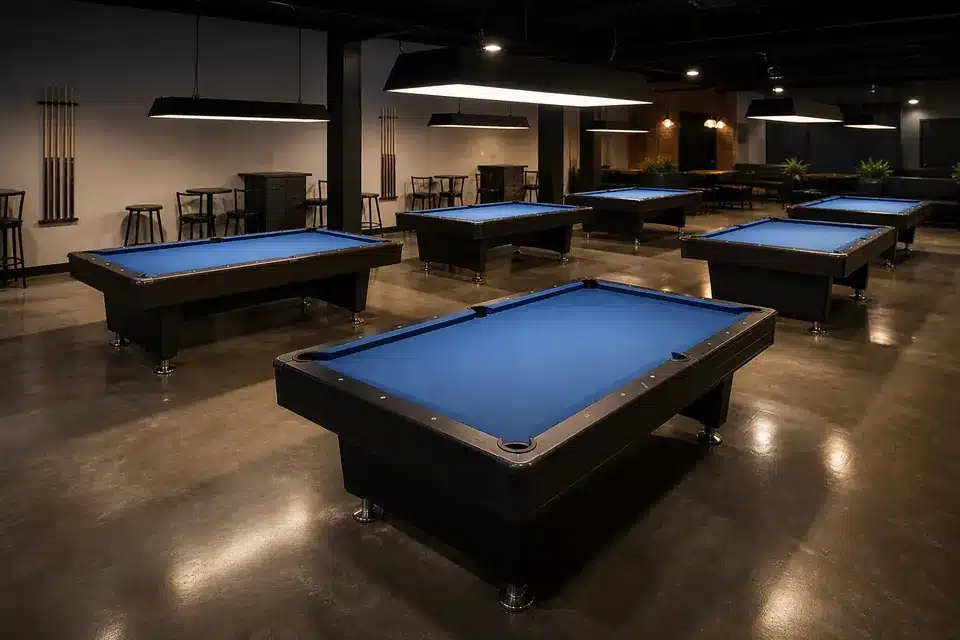
- A Sydney customer ordered 15 nine-foot American pool tables with blue cloth, with a supplier-stated production lead time of seven days.
- A Brisbane home customer ordered one stock-model nine-foot American table, with a supplier-stated dispatch period of 12 days.
These are project examples, not universal delivery guarantees. Route, order specification, production schedule and destination arrangements can change the final timeline.
What Should Be Written Into the Quotation?
Before paying the deposit, request a written quotation that separates product specifications from delivery responsibilities.
Product details
- table model and quantity;
- slate thickness and material;
- slate density and flatness tolerance where applicable;
- frame material;
- cloth brand, colour and weight;
- accessories and spare parts;
- customization requirements;
- packing volume and package count.
Commercial details
- EXW or DDP term;
- deposit percentage;
- production estimate;
- quotation validity;
- warranty period;
- claim procedure;
- replacement-parts policy.
Delivery details
For EXW:
- factory pickup location;
- date when the order becomes available;
- loading arrangements;
- package dimensions and weight information;
- responsibility after factory release.
For DDP:
- precise delivery destination;
- included transport stages;
- unloading responsibility;
- insurance scope;
- listed exclusions;
- damage-reporting procedure.
If these items are not written down, the buyer and supplier may be comparing different versions of the same order.
After-Sales Terms Still Matter After Delivery
The shipping term does not replace the product warranty.
According to Baiyu’s supplier-stated policy:
- the frame has a two-year warranty;
- the slate has a two-year warranty for non-human-caused damage;
- pockets and foot pads may receive one free replacement, with freight paid by the customer;
- technical support responds through WhatsApp or WeChat within 12 hours;
- replacement parts remain available for five years;
- non-human-caused quality claims should be submitted within 30 days after port arrival;
- replacement parts may be supplied free for an accepted quality claim, with freight shared equally.
Under EXW, transport damage and manufacturing defects must be distinguished carefully because the buyer manages the post-factory shipment.
Under DDP, the delivery chain may be more centralized, but the buyer should still inspect the packages and table components promptly and retain photos, videos and written delivery records.
EXW or DDP: Which One Should a Pool Hall Owner Choose?
Choose EXW when:
- you have a proven freight partner;
- you want to control freight and insurance directly;
- you understand international shipment handovers;
- you are consolidating several orders;
- separate factory and logistics invoices help your cost management.
Choose DDP when:
- you are a first-time importer;
- logistics coordination is taking attention away from venue preparation;
- you prefer one clearly defined delivery scope;
- you do not have a reliable destination freight network;
- reducing handovers is more important than controlling every logistics decision.
A practical rule is:
Experienced importers usually benefit more from EXW control. First-time buyers often benefit more from a clearly itemized DDP scope.
The word “clearly” matters. A vague DDP quotation can create as many surprises as an unmanaged EXW shipment.
Buyer Checklist Before Paying the Deposit
- Confirm whether the quotation is EXW or DDP.
- Compare quotation scope, not only the final price.
- Record the exact table model, quantity and customization.
- Confirm slate, cloth, frame and packaging specifications.
- Request package count and packing volume.
- Confirm the 35%–50% deposit requirement.
- Treat the 7–22 day production period separately from shipping time.
- For EXW, appoint a forwarder before production is completed.
- For DDP, obtain a written list of inclusions and exclusions.
- Confirm unloading and final delivery responsibilities.
- Arrange video inspection or agent inspection before dispatch.
- Confirm warranty, claim window and replacement-parts terms.
- Inspect and document the packages immediately after delivery.
- Keep the quotation, packing list, inspection records and delivery evidence together.
FAQ
Is EXW cheaper than DDP for pool table orders?
The EXW quotation is normally lower because it covers the product at the factory rather than the complete delivery scope. It should not be compared directly with DDP until freight, insurance and other buyer-managed logistics costs are included.
Is DDP better for first-time pool table importers?
DDP can be easier for first-time importers because fewer logistics stages must be coordinated independently. Buyers should still obtain a written delivery scope, exclusions, unloading terms and damage-reporting procedure.
Does Baiyu offer FOB quotations?
According to Baiyu’s supplier-stated trade policy, Baiyu uses EXW or DDP terms rather than FOB.
When does Baiyu begin production?
Production begins after receipt of the agreed deposit. Baiyu’s supplier-stated deposit range is 35%–50%, and standard production generally takes 7–22 days.
Who is responsible for transport under EXW?
Under Baiyu’s EXW arrangement, the buyer is responsible for transport and insurance after the goods leave the factory.
Does DDP include unloading and installation?
It should not be assumed. The exact delivery point, unloading responsibility and installation scope must be written into the quotation. DDP delivery and professional pool table installation are separate issues unless the supplier explicitly includes both.
Can small orders be consolidated?
According to Baiyu’s supplier-stated information, small orders can be consolidated with other cargo to reduce freight cost. Additional handling makes package protection and package-count verification especially important.
What after-sales support does Baiyu provide?
Baiyu states that it provides two-year frame and slate warranties, a 12-hour WhatsApp or WeChat technical-support response, and replacement-parts availability for five years. Specific claim and freight-sharing conditions should be confirmed in the order.
Final Thoughts
EXW gives an experienced buyer more control. DDP can give a first-time buyer a simpler delivery path.
The correct choice depends on who is best equipped to manage the work after the tables leave the factory.
For a pool hall owner, the safest order is not necessarily the one with the lowest first quotation. It is the order with:
- clearly written product specifications;
- clearly assigned transport responsibilities;
- a realistic production and delivery schedule;
- verified packaging;
- an inspection record;
- and usable after-sales terms.
Before paying the deposit, ask the supplier to quote the same order under both EXW and DDP where possible. Compare what each quotation includes, what it excludes and which party is responsible at every handover.
That comparison gives a more useful answer than price alone.