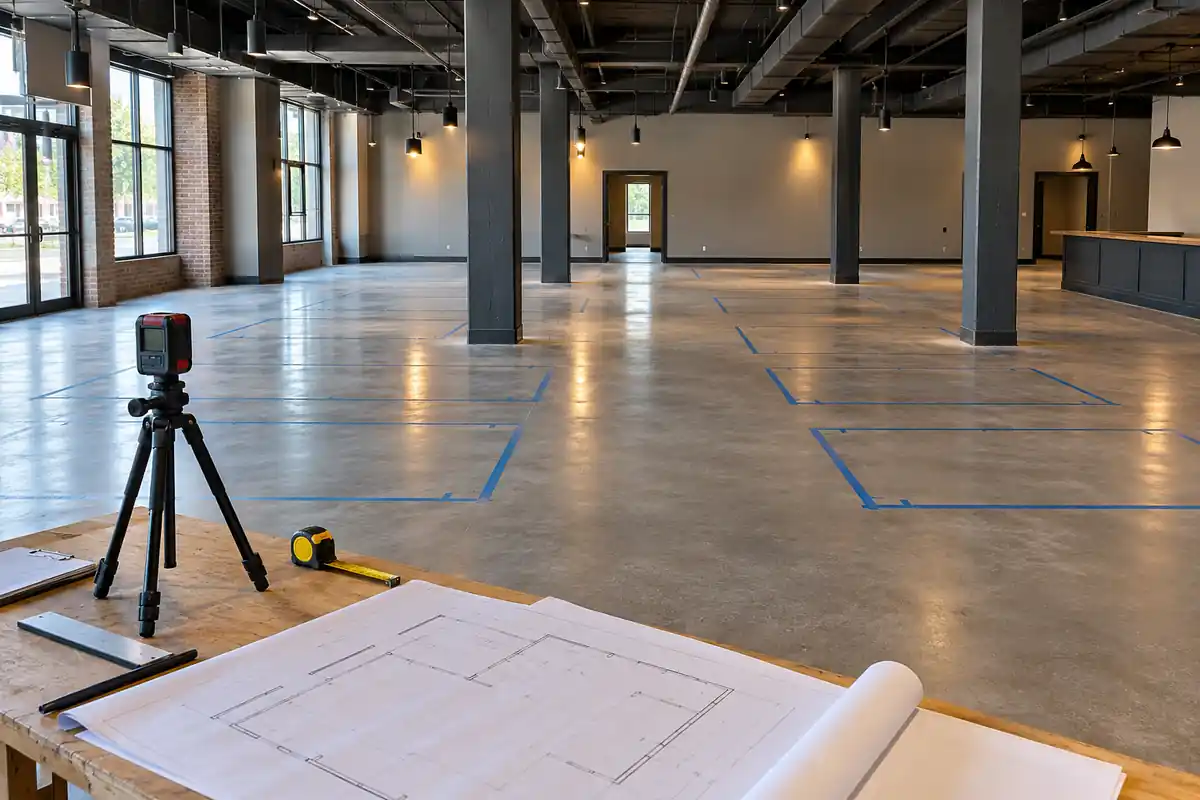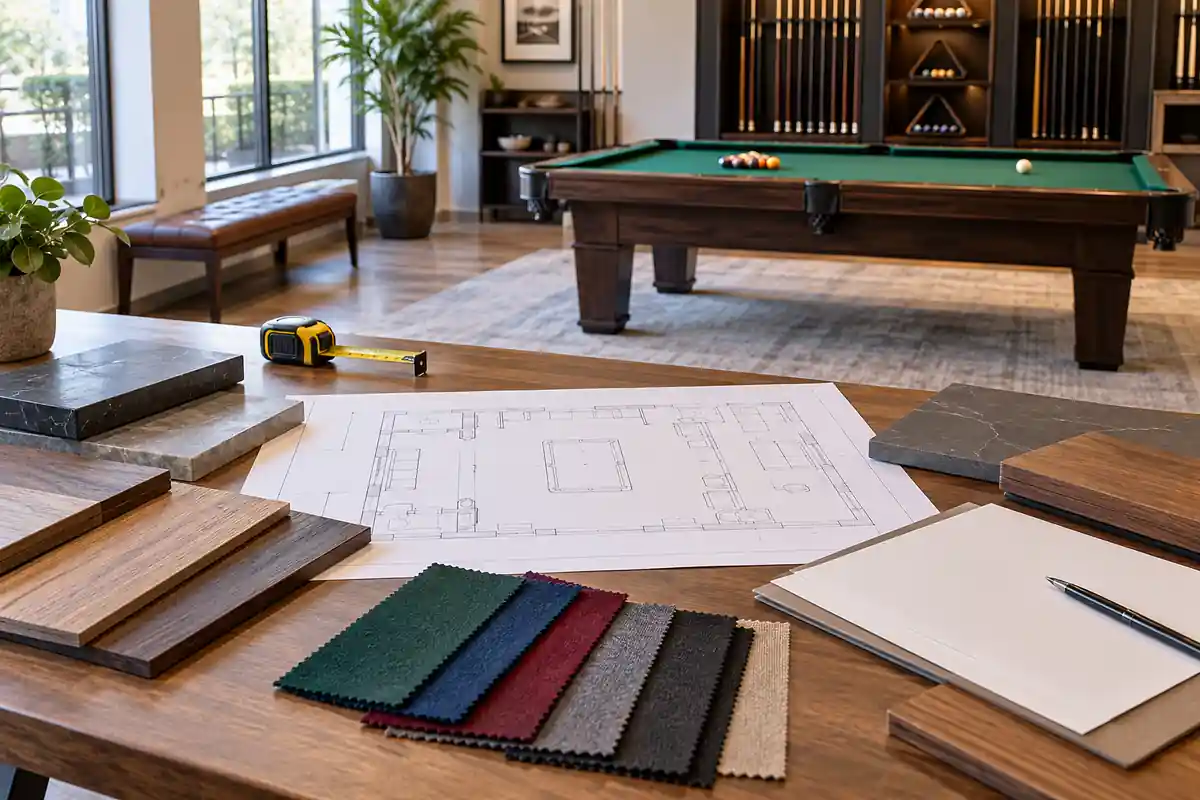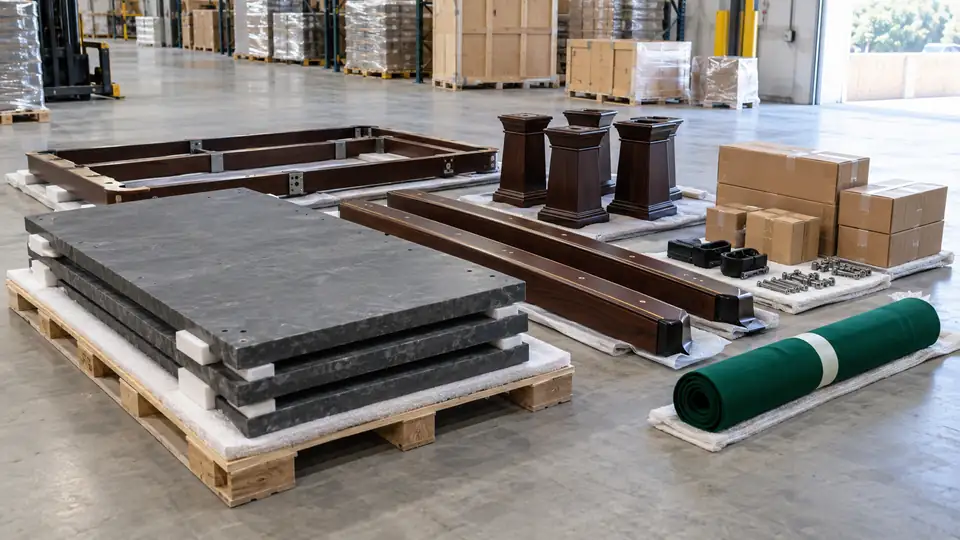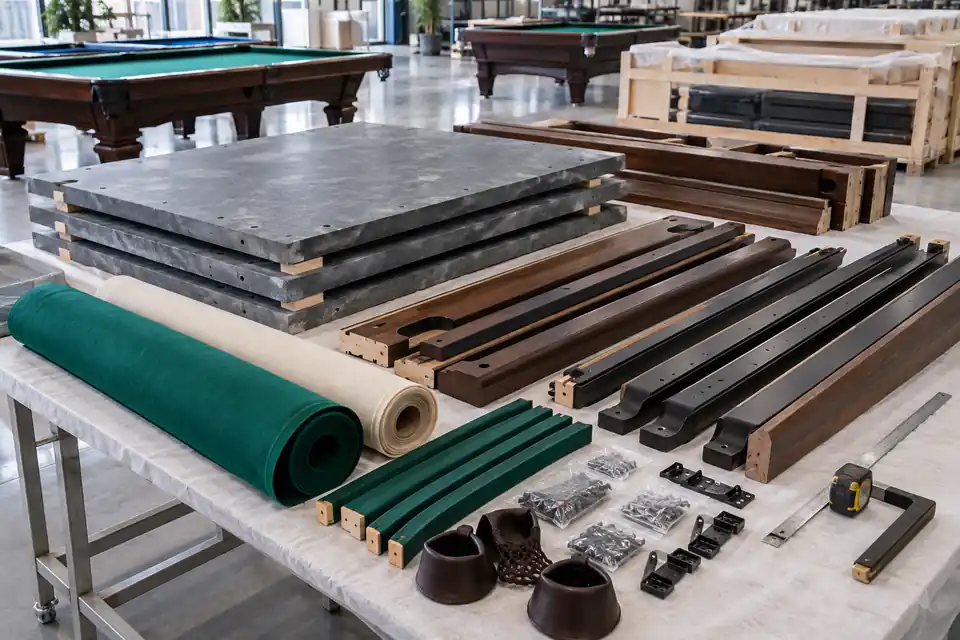
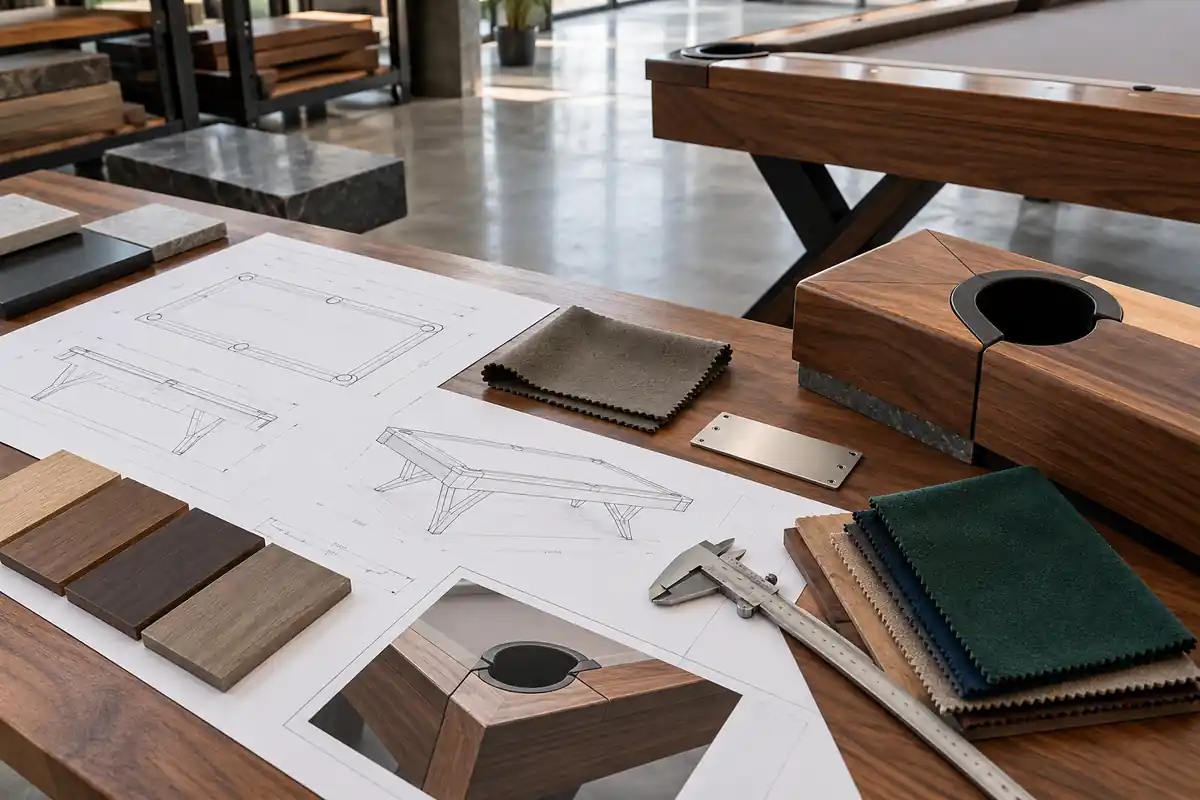
An OEM pool table sample should do more than show that a factory can build one attractive table. Its real purpose is to create a controlled reference for the product that will later be manufactured, inspected, packed and reordered in quantity.
For a distributor or private-label buyer, the main risk is not simply whether the sample looks acceptable. The risk is that the buyer, sales team and factory may each understand the approved product differently. A finish shown in a rendering may change under production lighting. A logo may be approved without its exact size or position being recorded. A sample may use one cloth or hardware configuration while the bulk quotation describes another.
A stronger process connects the commercial requirement, approved specification, physical or visual references, production controls and shipment release. This guide explains how to organise that process without assuming that every OEM project needs the same level of development.
Key Takeaways
- Choose whether the project starts from a standard model, a modified platform or a new design before requesting a final quotation.
- Treat drawings, specifications, finishes, branding, accessories and packing as separate approval items.
- A rendering approves appearance direction; it does not prove materials, dimensions, construction or playing performance.
- Record every approved sample or reference with a name, date and revision so the factory has one production baseline.
- Inspect bulk production against the approved baseline and an agreed sampling plan; do not assume sample approval automatically releases every finished unit.
- Control changes in writing. A small component substitution can affect appearance, assembly, packing, play or after-sales support.
1. Choose the Right OEM Starting Point
The first decision is how much of the product already exists. This determines the amount of engineering, sampling and approval work required.
Option A: Existing model with selected options
The buyer chooses a current table model and selects available cloth, finish, accessories or another standard option. This route normally creates fewer technical unknowns because the main structure already exists.
Option B: Existing platform with private-label changes
The main table structure remains based on a current model, while the buyer requests changes such as a logo, nameplate, selected colour, finish combination, accessory set or packaging presentation.
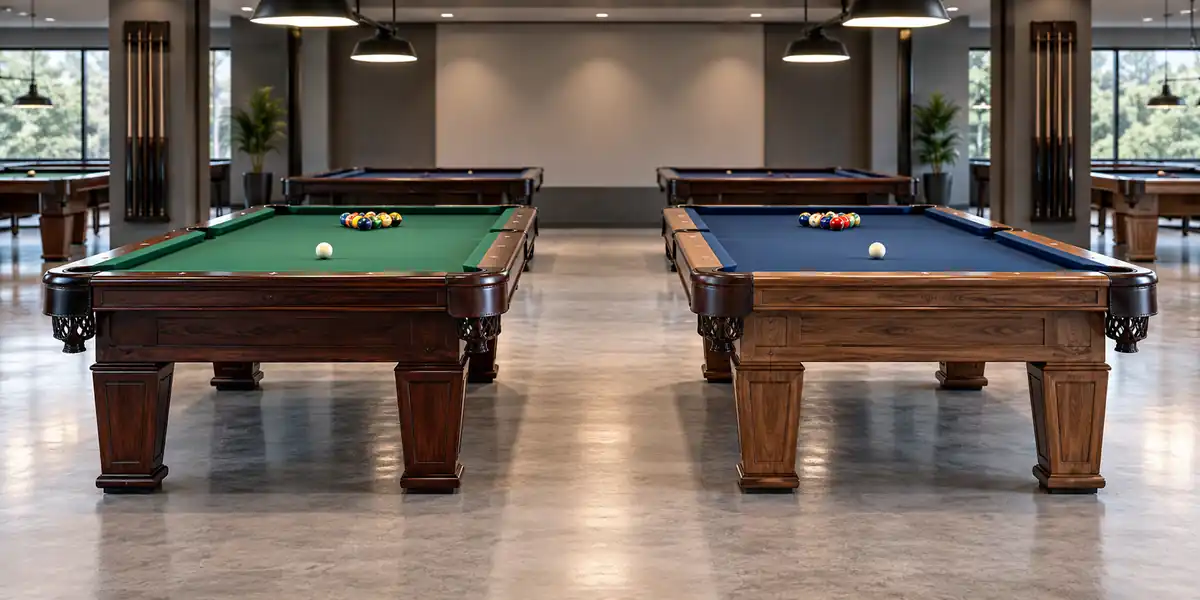
Option C: Modified structure or new design
The buyer requests a different size, base, frame, rail, pocket arrangement, integrated feature or other non-standard construction. This route may require drawings, engineering review, prototype work, new components or tooling before a production quotation can be finalised.
Baiyu's current OEM and ODM pool table manufacturing section asks buyers to start with an existing model or share a new design. It identifies size, cloth, finish, branding and structure as areas for review, with feasibility, order quantity and lead time confirmed before quotation.
Do not label all three routes simply as “custom.” A logo on an existing model and a newly engineered table do not carry the same approval risk.
2. Write the Product Brief Before Discussing the Sample
A reference image is useful for explaining style, but it is not a complete product brief. Before deciding whether a physical sample is required, give the manufacturer enough information to understand the intended product and market.
Include:
- target country or market;
- buyer type and sales channel;
- intended user and playing environment;
- table category and game format;
- preferred size and approximate order quantity;
- target positioning, such as commercial club, retail, hospitality or premium residential;
- required finish, cloth and branding direction;
- required accessories and spare parts;
- packing and labelling expectations;
- destination country or port;
- target launch or delivery period;
- reference images, drawings or existing brand guidelines;
- any applicable buyer, market or project requirements that the supplier must review.
If the model and specification are not yet clear, use the commercial pool table RFQ checklist to structure the enquiry.
3. Complete Feasibility Review Before Final Approval
The manufacturer should review the requested changes before the buyer treats the quotation as final. The review should identify which requirements are available, which need development and which need clarification.
For each request, record:
| Requested item | Review question | Required output |
|---|---|---|
| Table size | Does it use a current structure or require redesign? | Confirmed dimensions or drawing |
| Cloth | Is the requested brand, product code and colour available for the order? | Cloth reference and supply basis |
| Finish | Can the colour and surface treatment be reproduced consistently? | Sample, swatch or controlled finish reference |
| Logo | Which application method and positions are suitable? | Dimensioned artwork placement |
| Structure | Does the change affect strength, assembly, performance or packing? | Engineering response and revised drawing |
| Accessories | Are the required items included, optional or buyer-supplied? | Approved accessory schedule |
| Packing | Does custom branding or structure change package size or protection? | Packing direction and later confirmed data |
The feasibility review may change the proposed specification, order requirement, cost or schedule. That is why those points should be confirmed before the buyer approves a final order—not inferred from a general website statement.
4. Build One Controlled Approval Pack
The buyer and manufacturer need one set of documents that defines the approved product. Scattered messages, voice notes and unlabelled images make it difficult to tell which decision is current.
A practical approval pack may include:
- product brief;
- quotation or purchase order;
- model and revision number;
- dimensioned product drawing;
- bill of materials or component schedule at the level agreed between buyer and manufacturer;
- finish, colour and cloth references;
- logo artwork and placement drawing;
- accessory and spare-parts list;
- packaging, marking and label requirements;
- inspection plan and acceptance criteria;
- approved renderings, samples or photographs;
- change log;
- named approval contacts for both parties.
Every document should show a date or revision. When a new revision is approved, mark the earlier one as superseded rather than leaving both versions active.
5. Understand What Each Type of Sample Can Approve
“Sample approved” can mean very different things. State what was actually reviewed.
Digital rendering or mock-up
A rendering can approve visual direction, logo placement, colour distribution and the relationship between visible design elements. It does not prove actual material texture, colour under real lighting, structural strength, component fit, playing performance or packing.
Baiyu's American pool table page currently states that visual mock-ups can be provided for logo and appearance confirmation before production. Buyers should still connect the mock-up to a written size, position and application method.
Material or finish sample
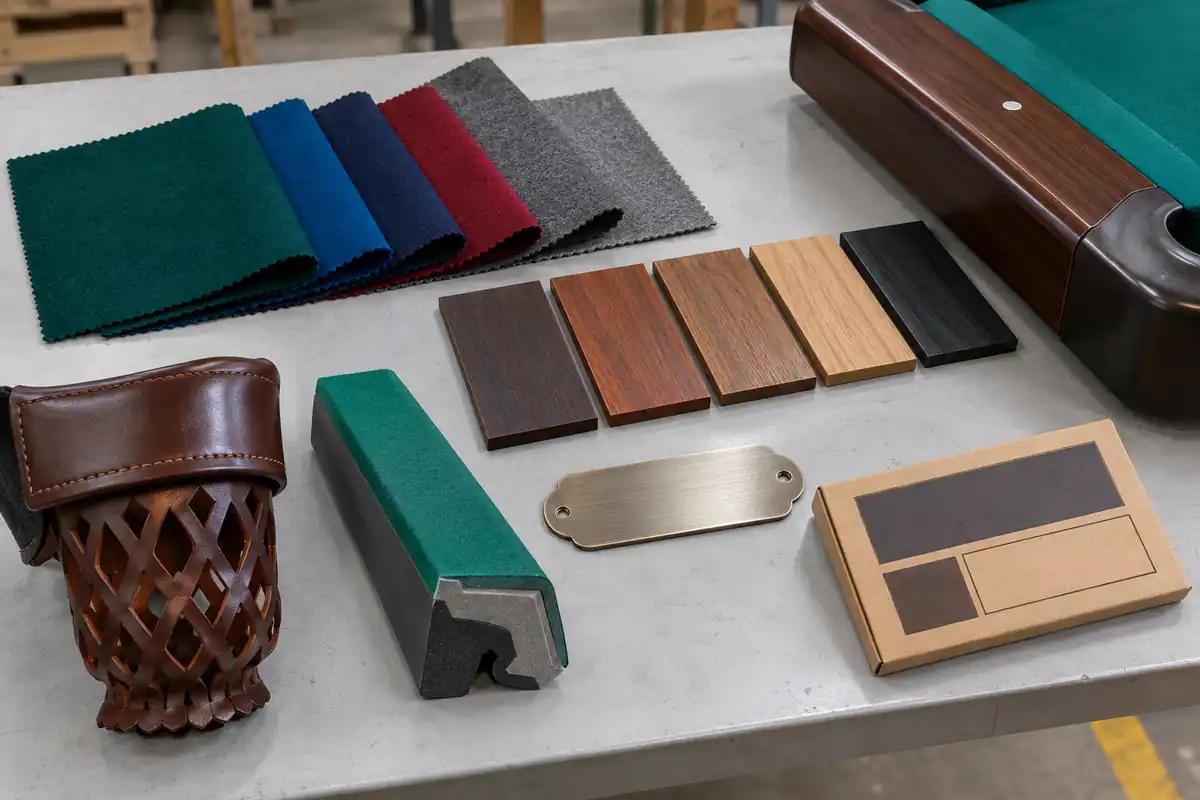
A physical swatch, finish board, cloth cutting, nameplate or printed packaging sample can provide a closer reference for colour, texture and workmanship. Record the supplier, product code, colour code or signed sample identity where possible.
Component sample
A rail section, pocket, leg, logo plate, carton or another component can confirm a specific item without requiring a complete table. It does not confirm how the full product will assemble or play.
Complete verification unit
A complete table can be used to review appearance, dimensions, fit, assembly sequence, accessible components and agreed playing checks. The review should state what was tested, what was not tested and whether the unit will be retained, shipped, revised or used as the production reference.
The most expensive sample is not automatically the best. Select the lowest-cost approval method that can answer the actual risk. A logo-position question may need a mock-up and nameplate sample; a new frame design may justify a complete verification unit.
6. Inspect the Sample Against the Documents
Do not approve a sample from memory or general impression. Use the same checklist that will later support bulk inspection.
Review, where applicable:
- model and revision identity;
- playing-surface, overall and height dimensions;
- slate, frame, base and levelling construction;
- rails, cushions, pockets and hardware;
- cloth brand, reference and colour;
- finish colour, texture and visible workmanship;
- logo size, position and application method;
- included accessories and spare parts;
- assembly fit and instructions;
- agreed playing or functional checks;
- package design, labels and included documents.
Photograph the approved details. Give the photographs reference numbers and connect them to the checklist. A photograph without a requirement or description can show what something looked like, but it may not prove that it met the approved specification.
7. Close Sample Issues Before Bulk Release
Sample review normally produces one of four decisions:
| Decision | Meaning | Next action |
|---|---|---|
| Approved | The reviewed scope meets the approval criteria | Freeze the approved baseline |
| Approved with recorded corrections | The direction is accepted, but listed corrections must be made in production | Update documents and verify the corrections |
| Revision required | Material issues remain unresolved | Produce revised evidence or another sample as agreed |
| Rejected | The sample cannot serve as the approved direction | Reassess the design, supplier or project scope |
“Approved with corrections” should never mean that the changes stay only in an email. Update the relevant drawing, component schedule, colour reference, artwork or packaging file. The corrected revision—not the imperfect sample—must become the bulk-production baseline.
8. Freeze the Bulk-Production Baseline
Before production begins, both parties should be able to answer a simple question: What exact information controls this order?
Freeze at least:
- model and drawing revision;
- quantity by model, finish and branding version;
- component and accessory configuration;
- cloth and finish references;
- logo artwork and placement;
- packing and marking requirements;
- approved sample or reference identity;
- inspection stages and release authority;
- permitted substitution and change procedure.
If an item remains open, list it as open with an owner and deadline. Do not hide an unresolved decision inside a broad approval such as “everything else is okay.”
9. Use First-Unit and In-Process Checks
A finished bulk inspection may be too late to discover a hidden or repeated error. Depending on the project, the buyer and manufacturer can agree on checks at earlier stages.
Examples include:
- confirming the first branded part before producing the full quantity;
- checking a finish on the actual production material;
- confirming hole positions, connection points or structural components before they are covered;
- reviewing the first printed carton or label;
- recording incoming cloth, cushions, pockets or other identified components;
- trial-assembling a representative unit when that has been included in the agreed process.
The objective is not to ask for photographs of every factory activity. It is to identify the stages where a mistake would be multiplied across the order or become difficult to inspect later.
10. Inspect Bulk Production Against the Approved Baseline
The approved sample is a reference, not a substitute for a bulk inspection plan. Agree which items are checked on every unit, which may be sampled and which require production records.
The final inspection should connect each result to a requirement and evidence reference. It may cover:
- model, quantity and revision;
- dimensions and visible construction;
- finish and branding consistency;
- identifiable slate, cloth, cushions, pockets and hardware;
- accessories and spare parts;
- visible workmanship and damage;
- agreed assembly or playing checks on a representative unit, if included;
- package count, protection, markings and packed data.
For a detailed structure, use Baiyu's pool table pre-shipment inspection checklist. The inspection scope must reflect how the tables will be shipped. If the order is packed as separate components, some whole-table checks require a separately agreed trial assembly and later destination acceptance.
11. Control Changes After Approval
Changes can occur because of buyer requests, component availability, manufacturing findings or packing constraints. A change is not automatically unacceptable, but it must be visible and approved by the right person.
Use a change record containing:
- original requirement;
- proposed change and reason;
- affected models and quantities;
- effect on appearance, function, assembly, packing, cost and schedule;
- supporting drawing, photograph or sample;
- decision and approving person;
- effective revision and date.
Do not allow an informal substitution to create two different products under the same model number. If a change affects future spare parts or reorders, update the retained records.
12. Release Packing and Shipment Separately
Product acceptance and shipment release are related but different decisions. Before shipment, reconcile the approved order with the packing list and package identities.
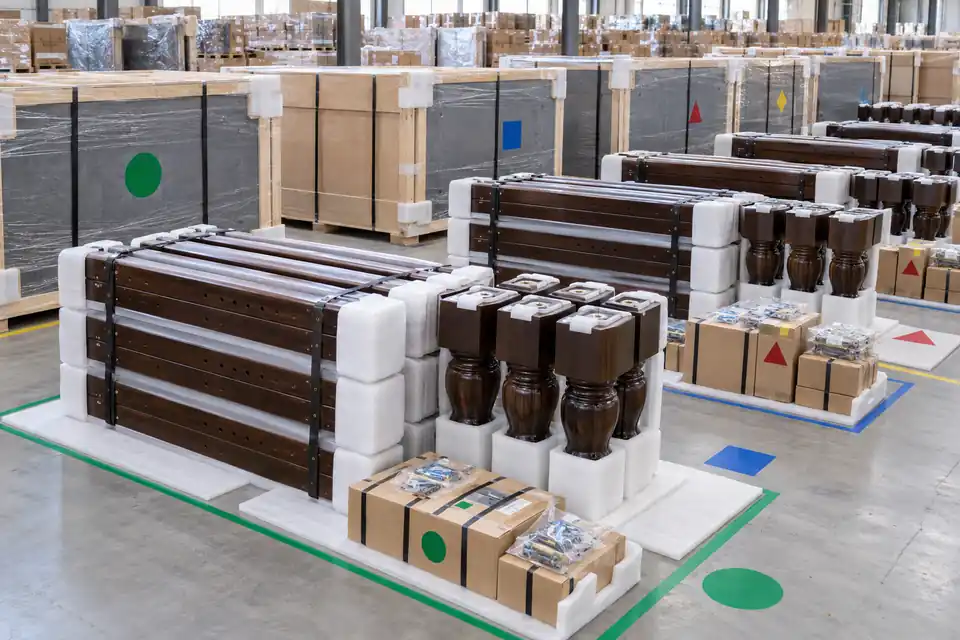
Confirm:
- completed quantity by model and branding version;
- accessory and spare-parts quantities;
- package count and identification;
- packed dimensions, weight and volume supplied for the order;
- packaging protection and markings;
- photographs or records required before dispatch;
- shipping documents and named consignee information;
- responsibility for freight, destination handling and installation.
Commercial pool tables are commonly shipped as a traceable set of components. Baiyu's commercial pool table shipping guide explains why package-to-table identity must be preserved from factory dispatch through destination assembly.
13. Preserve the Approved Record for Reorders
The end of the first shipment should create a better starting point for the next order. Retain:
- final approved drawing and specification revision;
- final artwork and branding files;
- finish, cloth and component references;
- final accessory and spare-parts schedule;
- inspection and corrective-action records;
- packing configuration and shipment data;
- installation feedback and verified after-sales issues;
- changes requested for the next production run.
Before placing a repeat order, confirm whether the buyer wants the previous revision unchanged or wants a new revision. “Same as last order” is safe only when both parties can identify exactly which last-order records control the product.
OEM Approval Process at a Glance
| Stage | Buyer decision | Manufacturer output | Release evidence |
|---|---|---|---|
| 1. Product brief | Market, channel, table type, quantity and branding direction | Initial product direction | Agreed brief |
| 2. Feasibility | Accept available, modified or new-design route | Feasibility response and open questions | Review record |
| 3. Quotation scope | Confirm what is included and excluded | Model-specific quotation | Approved commercial scope |
| 4. Design approval | Approve drawing, finish, cloth and branding direction | Controlled files and mock-ups | Dated revisions |
| 5. Sample review | Approve, correct, revise or reject | Sample evidence and responses | Signed checklist or written decision |
| 6. Bulk release | Freeze product, quantity, packing and inspection baseline | Production pack | Approved baseline |
| 7. Production control | Review agreed first-unit and in-process evidence | Check records and corrective actions | Closed issues |
| 8. Final inspection | Accept, hold or approve documented deviations | Inspection and packing evidence | Shipment-release decision |
| 9. Reorder control | Repeat the same revision or approve a new one | Updated production pack | Reorder confirmation |
Copy-and-Send OEM Project Brief
Use this structure for an initial enquiry:
Company and market: [company type, country and sales channel]
Product direction: [existing Baiyu model / reference image / new drawing]
Table type: [American pool / Chinese eight-ball / snooker / other]
Intended use: [club / distribution / retail / hospitality / residential]
Estimated quantity: [sample requirement and expected bulk quantity, if known]
Required changes: [size, cloth, finish, logo, structure, accessories or packing]
Brand files: [logo format, colours and placement guidance available]
Destination: [country, city or port]
Target timing: [launch, delivery or decision period]
Approval needs: [rendering, material sample, component sample or complete unit]
Inspection needs: [buyer, remote or third-party review requirements]
Attachments: [reference images, drawings, specifications or packaging examples]
Mark unknown items as “to be confirmed.” This is better than allowing different parties to make different assumptions.
Common OEM Approval Mistakes
Treating a catalogue image as the specification
A catalogue image does not define the internal structure, dimensions, components, accessories, packing or inspection requirements.
Approving a logo without dimensions and position
The artwork file, finished size, location, orientation, colour and application method should be recorded together.
Assuming a rendering is a physical sample
A rendering communicates appearance direction. It does not validate material, texture, construction, fit or playing performance.
Approving the sample but not updating the documents
If the approved sample contains corrections or differs from the earlier drawing, the controlled documents must show the accepted version.
Starting bulk production with open decisions
An unresolved cloth code, finish, logo file or accessory list can create delays or inconsistent production. Assign every open item to a person and deadline.
Comparing only the sample and bulk unit prices
Development, artwork, components, inspection, packing, freight and after-sales scope may differ between quotations. Compare the complete approved scope.
Discuss Your OEM Pool Table Project
Send Baiyu your target market, preferred table type or reference model, estimated quantity, destination and requested changes. We will review the size, cloth, finish, branding, structure and packing requirements, then confirm the applicable feasibility, order requirement and quotation scope for the project.