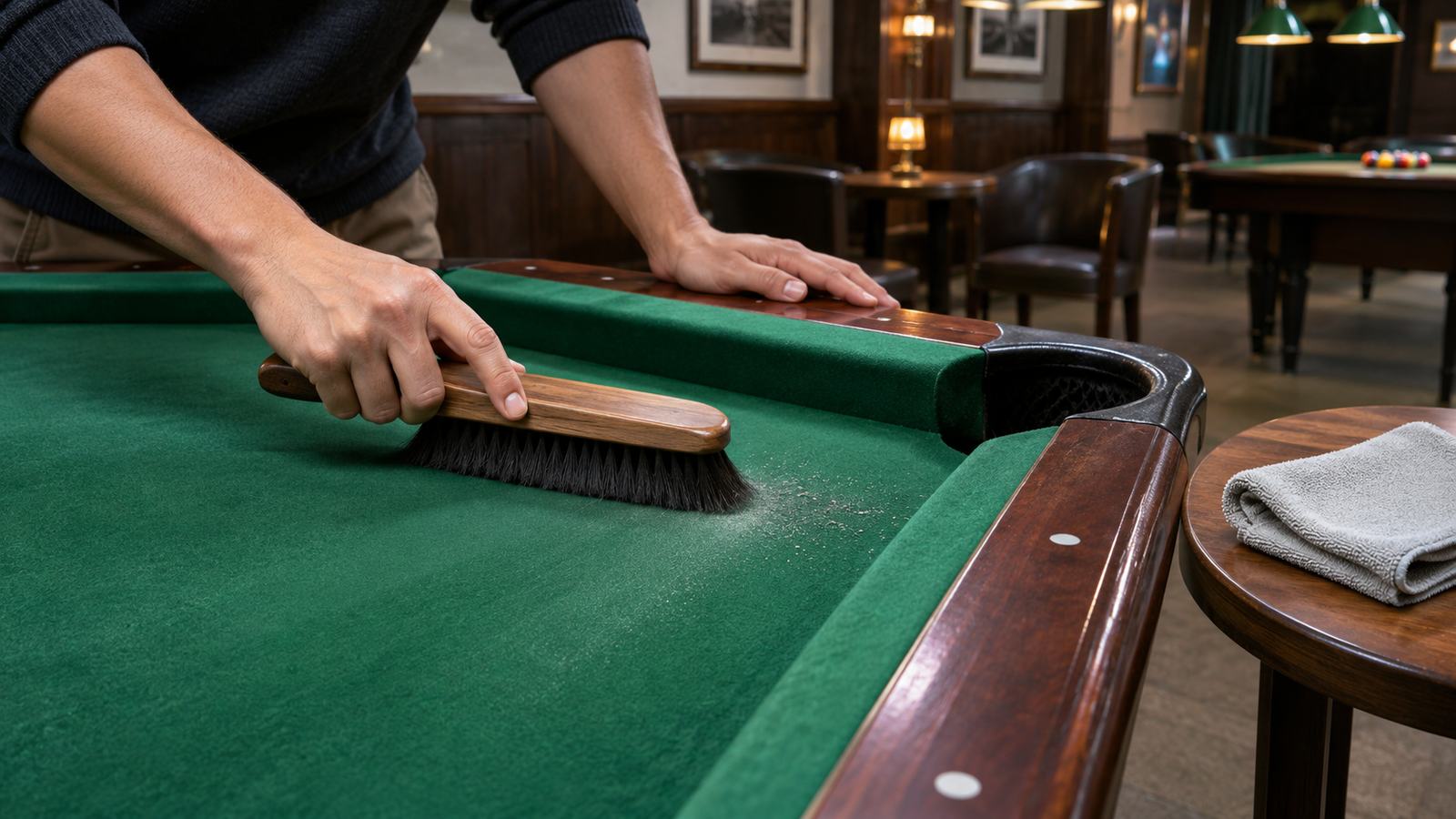
To clean pool table felt safely, start with the cloth maker’s care instructions. For routine dust, remove the balls, lift loose chalk with a soft billiard-cloth brush or an approved cleaning tool, and use a brushless vacuum at low suction only if the cloth maker permits it. Blot a fresh spill; do not rub, soak, steam, or apply a household stain remover. If the cloth remains wet, stained, loose, or damaged, stop play and ask a table technician about professional cleaning or replacement.
“Pool table felt” is the everyday search term, but the playing surface is usually a specialist billiard cloth, not craft felt. Napped cloth and non-napped or worsted cloth can require different handling. A cleaning method that works for one cloth—or one tool—should not automatically be applied to another.
What should you check before cleaning?
Find the cloth brand and model, or ask the table supplier for its written care instructions. If the cloth has a nap, identify its direction before brushing. Check the directions for any dedicated cleaner or dust-removal tool as well: for example, the Simonis X-1 has its own method, so “brush in one direction” is not a universal instruction for every device.
Prepare a clean, soft billiard-cloth brush or a maker-approved dust tool, a dry white absorbent cloth for spills, and a table cover. A vacuum is optional—not the first step—and should have no rotating beater bar. Keep stiff brushes, adhesive tape, steam cleaners, bleach, detergent, and general-purpose upholstery sprays away from the playing surface unless the cloth manufacturer specifically approves a product and method.
How do you clean a pool table cloth step by step?
- Clear the table. Remove balls, chalk, cues, and other objects. Look for wet areas, tears, loose cloth, or protruding hardware; those need attention before routine brushing.
- Lift loose chalk gently. Use short, light strokes with a dedicated soft brush, following the cloth maker’s direction where one is specified. Do not scrub in circles or press chalk deeper into the cloth. If using a specialist dust tool, follow that tool’s instructions instead.
- Work carefully at the rails and pockets. Collect dust near the cushion noses and pocket openings without scraping the cloth or pushing debris under the rails.
- Vacuum only if permitted. If the cloth maker allows it, use low suction and a clean, brushless attachment held gently over the surface. Do not use a rotating head, high suction, or repeated hard passes. If the instructions do not address vacuuming, ask the supplier before trying it.
- Check the surface and cover it. Confirm that no dampness or loose debris remains. Clean the balls separately with a ball-safe method, let them dry fully, and cover the table when it is not in use.
The WPA equipment specifications list a soft horsehair brush, billiard-fabric cleaner, or brushless vacuum for table and cushion cleaning. Those are event-equipment recommendations, not permission to use an unspecified liquid cleaner on every commercial cloth. Predator’s Arcadia cloth guidance likewise calls for gentle routine care and limits vacuum use; always match the advice to the cloth actually installed.
What should you do after a spill?
Stop play immediately and remove anything sitting in the liquid. Place a clean, dry white absorbent cloth on the spill and blot straight down, changing to a dry section as it absorbs liquid. Do not rub, flood the area with water, use heat, or try a household stain remover. If liquid has passed through the cloth, reached the slate or backing, or left a persistent mark or odor, contact the cloth supplier or a qualified table technician. A stain cannot always be removed without affecting color, tension, or play.
Food and drinks are easiest to manage before they reach the table. A cover when the table is idle, a clear drinks policy, and prompt reporting of spills reduce the need for aggressive cleaning. Predator’s cloth-care guidance also recommends keeping food and beverages away from the playing surface.
Can you vacuum, wash, or iron pool table felt?
| Method | Practical answer |
|---|---|
| Soft billiard-cloth brush | Usually the starting point for dry dust, but follow the cloth’s nap and maker instructions. |
| Vacuum | Only if the cloth maker permits it; use a clean brushless attachment and low suction. |
| Liquid spot cleaner | Do not assume a household product is safe. Use only a method and product approved for the specific cloth. |
| Washing or steam cleaning | Do not wash or steam-clean installed table cloth as a routine maintenance method. |
| Ironing | Do not iron a generic pool table cloth. Some specialist napped-cloth procedures exist, but they require the relevant maker’s instructions and trained handling. |
When is cleaning not enough?
Cleaning removes surface debris; it cannot repair a tear, restore worn fibers, correct wrinkles or loose installation, or guarantee an even ball roll. If a mark remains after maker-approved care, the cloth feels thin or rough in high-use areas, or balls visibly change course over a damaged spot, arrange an inspection. A technician can determine whether the issue is the cloth, its installation, the slate, or another table component before recommending a re-cloth.
What is a workable routine for a billiard club?
Make one written method for each cloth model used in the room. Train staff to clear debris gently, report spills at once, clean balls separately, and cover idle tables. Set the frequency according to actual play, chalk load, and the cloth maker’s guidance rather than copying a universal daily or weekly schedule. Keep a simple record of stains, repairs, and replacement dates so a recurring problem is not treated as ordinary dust.
If you are ordering new American pool tables, request the exact cloth specification, care sheet, and replacement-cloth options in writing. For a quotation or advice tied to a specific table and cloth model, contact Baiyu with those details.