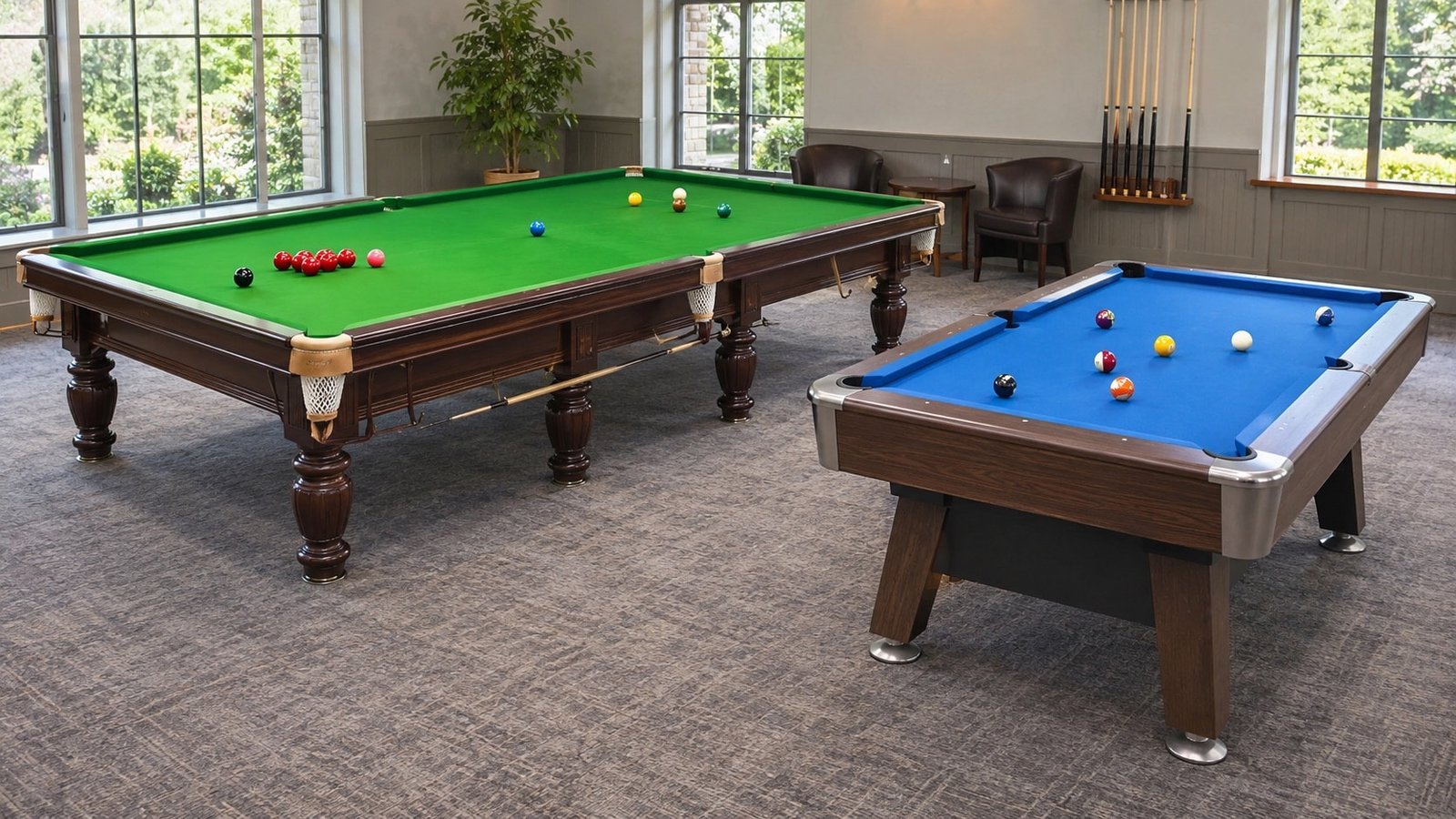
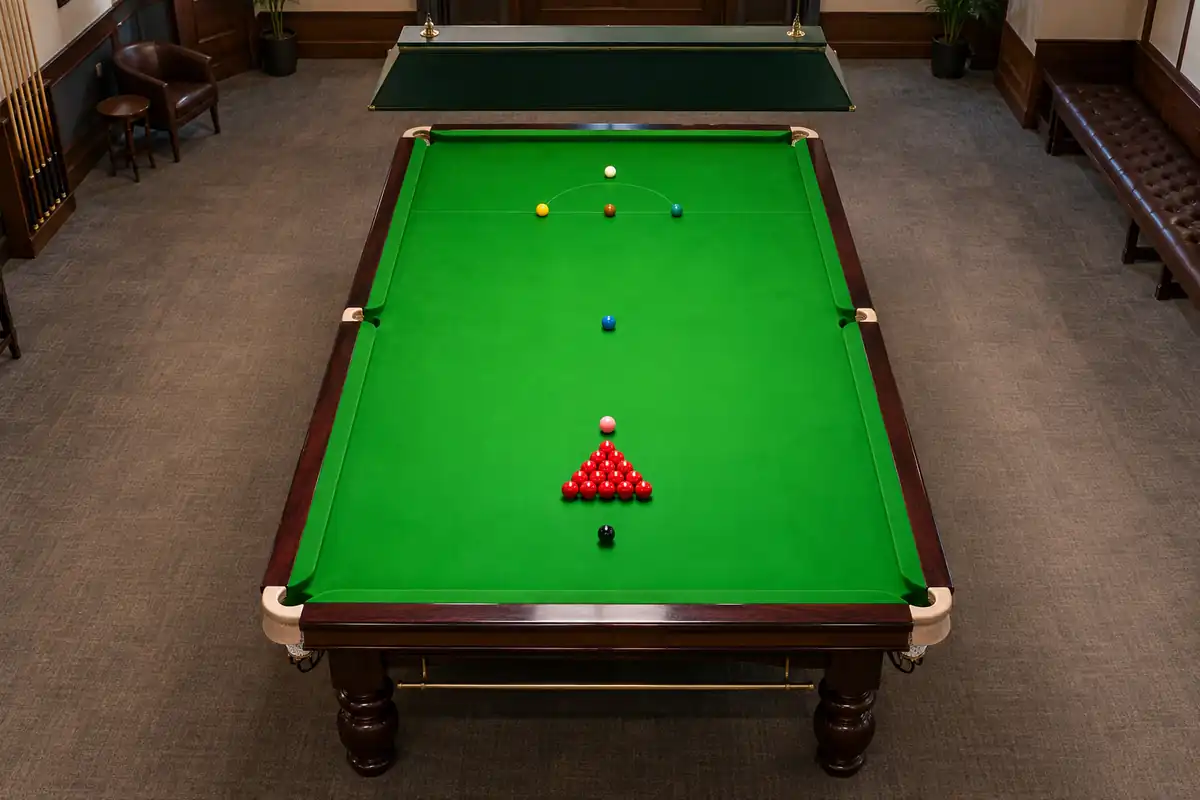
For standard American pool, the nominal ball diameter is 2¼ inches (57.15 mm). WPA equipment specifications use that size for the cue ball and numbered object balls. Heyball also specifies 57.15 mm balls, while official snooker balls are 52.5 mm. English pool or Blackball equipment is generally smaller, but its object-ball and cue-ball dimensions must be checked against the exact set and table format rather than inferred from the table’s outside length.
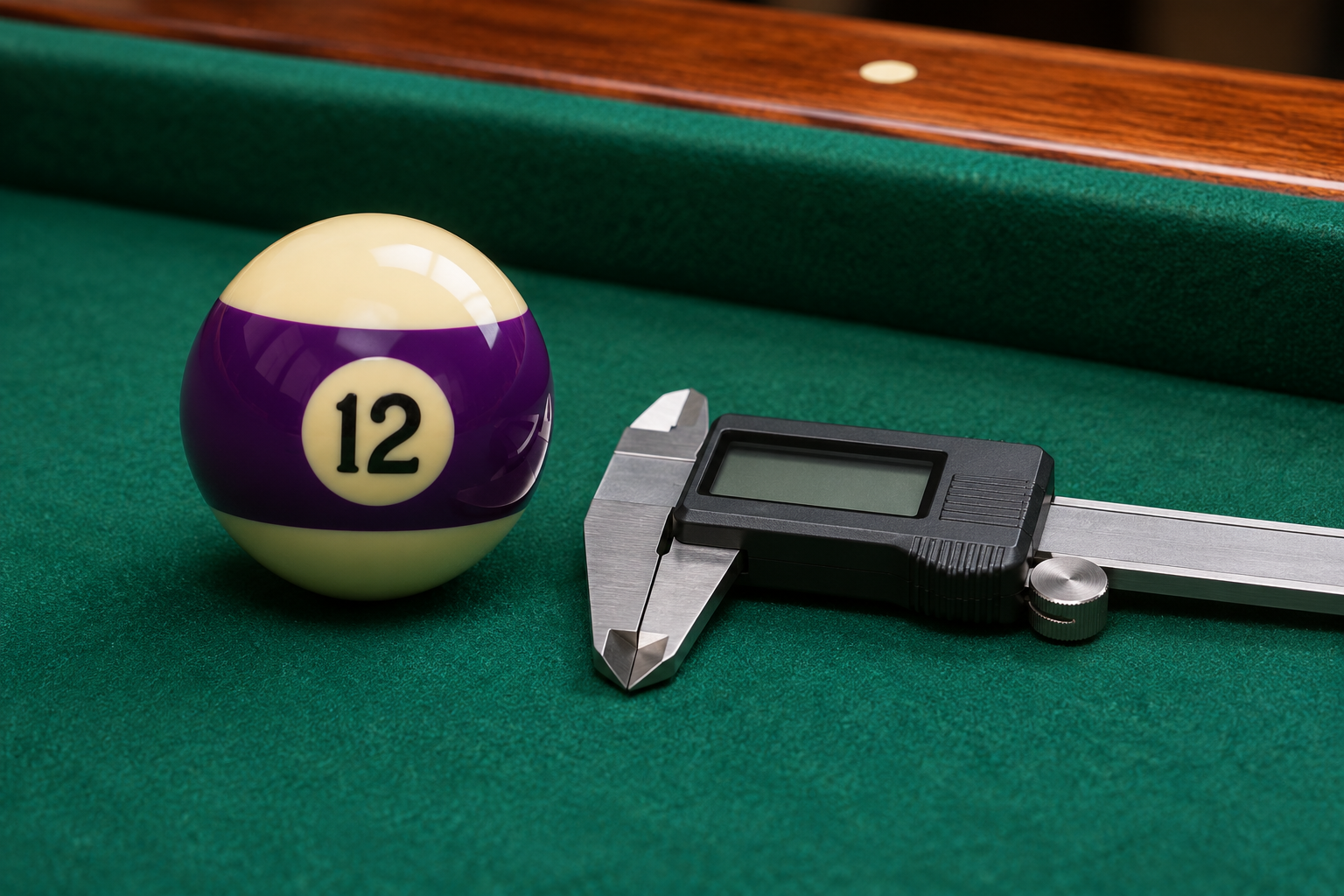
Pool ball diameter by game
| Game or equipment format | Ball diameter to specify | Source and buying note |
|---|---|---|
| American pool (WPA equipment) | 2¼ in = 57.15 mm nominal | The WPA equipment specification gives 2¼ in with a stated positive tolerance. Do not assume that tolerance applies to every retail set. |
| Heyball | 57.15 mm, ±0.05 mm under the cited rules | The WPA Heyball rules specify this diameter. An event may also specify a particular approved ball set. |
| Snooker | 52.5 mm, ±0.05 mm under the cited rules | The WPBSA snooker rules specify this size for the full set. |
| English pool / Blackball | Often 2 in (50.8 mm) object balls; confirm the cue ball separately | Aramith lists 50.8 mm sets, while the WPA describes Blackball as using smaller balls and a smaller cue ball in some formats. There is no safe one-size answer for every table and return mechanism. |
These are different playing formats, not a rule that all 7-foot tables use one size and all 9-foot tables another. American pool and Heyball may share a nominal ball diameter while differing in table and pocket geometry. For a mixed-game venue, label each table’s dedicated ball set and keep replacements matched.
Does 57.2 mm mean a different ball from 57.15 mm?
Not necessarily. Exactly 2¼ inches converts to 57.15 mm; some retail listings round that nominal dimension to 57.2 mm. Aramith, for example, lists 57.2 mm for its pool sets. Rounding in a catalog is not a substitute for the maker’s actual diameter tolerance, roundness and set-consistency specification. If an event or equipment contract states a precise limit, obtain the model’s technical sheet rather than judging the set by a rounded product title.
Why does ball size have to match the table?
Ball diameter affects the relationship between the ball, cushion nose and pocket opening. A set can physically roll on another table and still produce different rebounds, pocket acceptance and racking behavior. The WPA’s pool-equipment document, for example, defines installed cushion-nose height as a percentage of ball diameter for the tables it covers. That geometry cannot be transferred automatically to snooker, Heyball or a non-standard bar table.
The cue ball matters as much as the object balls. Some coin-operated tables use a return system that identifies the cue ball by its size, weight or a magnetic feature. Aramith sells distinct cue-ball sizes and magnetic models; a replacement must match the table’s return mechanism and the intended set. Do not mix a visually similar spare into a competition set without checking its diameter, weight and finish.
How should a buyer select and verify a ball set?
- Name the game and table model. Record American pool, Heyball, snooker, Blackball or another format, plus the table and pocket specification. Do not order by “pool balls for an 8-foot table” alone.
- Specify the complete set. State object-ball count, cue-ball type, nominal diameter, maker/model, material and any event-required approved set. For a ball-return table, identify the return mechanism.
- Check the maker’s tolerances. Ask for diameter, roundness and weight-variation limits for the exact model. Competition rules may be more specific than a general retail listing.
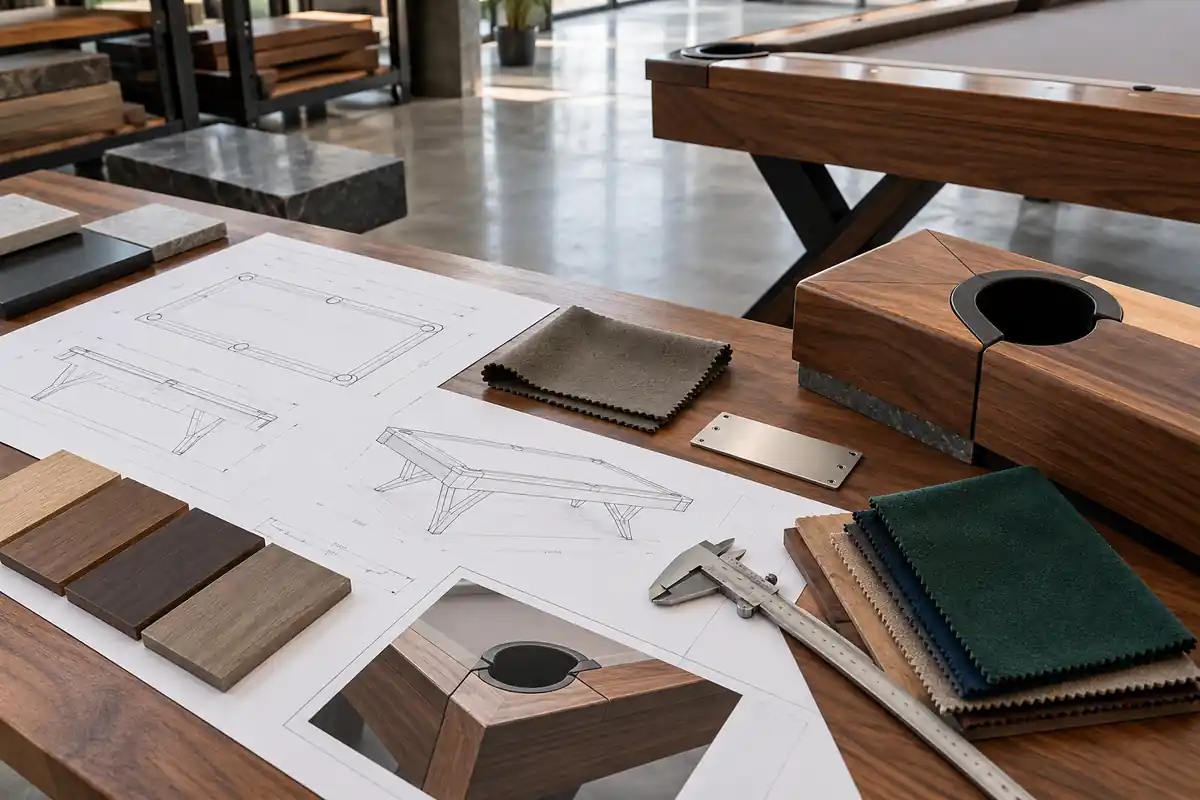
- Verify delivered sets. Compare packaging and model codes with the order; inspect all balls for chips, cracks or mismatched appearance. A clean caliper can check sample diameters in more than one orientation, but a single reading does not certify roundness or an entire production lot.
- Keep replacement balls compatible. Reorder by the same model and specification; if that is unavailable, confirm the substitute with the ball maker and table operator before mixing sets.
Common size mistakes
- Using table length as the only rule: nominal table length does not identify the game format, pocket geometry or cue-ball return system.
- Confusing 57.15 with 57.2: the latter may be a rounded catalog figure, not a different category.
- Assuming all “English pool” cue balls match: check the exact cue-ball size and return method.
- Mixing snooker and American pool balls: their official nominal diameters differ; the table’s intended geometry should govern the set.
For more on materials rather than dimensions, see what billiard balls are made of. If you are specifying balls with American pool tables, Heyball tables or snooker tables, send Baiyu the game format, table model, required ball-set model and diameter, cue-ball/return requirements and destination. Ask for the final accessory specification in writing before ordering.