A new billiard club should treat the lowest of four limits—usable layout capacity, demand-supported capacity, financial capacity, and operational capacity—as the maximum justified opening fleet. The actual first order may be lower when demand evidence is weak or purchasing is phased. There is no reliable universal number for every new club.
When demand evidence is limited, reserve properly planned table positions for later expansion instead of filling every possible space before opening. Estimate the dominant game format first, calculate capacity with the actual candidate models, and then confirm how many should be American pool tables, Chinese eight-ball tables, or snooker tables. Baiyu Billiards is a commercial pool-table manufacturer based in Shunde District, Foshan, Guangdong, China. This guide is intended for new club owners, distributors, and project buyers preparing a model-specific quantity request.
Key Takeaways
- Do not start with an industry rumor such as “a new club needs ten tables.”
- Calculate four limits: layout capacity, demand-supported capacity, financial capacity, and operational capacity.
- Use the lowest of those four figures as the maximum justified opening fleet; the actual first order may be lower.
- Plan from the exact external dimensions and approved drawings, not only a nominal label such as 9-foot.
- Estimate the dominant game format before calculating capacity, then confirm the final table mix and recalculate if the models change.
- If demand is uncertain, prepare expansion bays and define evidence-based triggers for adding tables later.
- Compare the cost of unused opening capacity with the freight, handling, installation, and disruption involved in a later shipment.
The Four-Limit Method for Setting the Opening-Fleet Ceiling
Use this decision rule:
Maximum justified opening fleet:

Nmax = min(L, D, B, O)

Actual initial purchase quantity:

Nopen <= Nmax
In this formula, L is usable layout capacity, D is demand-supported capacity, B is financial capacity, and O is operational capacity. This is an editorial capacity-planning method, not an industry standard or a substitute for a business feasibility study. Each input must come from the club’s actual floor plan, local demand evidence, quotation scope, budget, and operating plan.
| Limit | Main question | Evidence required | Common overestimate |
|---|---|---|---|
| Usable layout capacity | How many fully playable table bays fit after all other space is allocated? | Approved table drawings, measured floor plan, cueing checks, circulation and local requirements | Counting rectangles on a plan without testing cueing or occupied walkways |
| Demand-supported count | How many groups are likely to want a table at the same time? | Local observations, pre-opening inquiries, bookings, memberships, league or training plans | Converting total visitors into simultaneous table demand |
| Financial capacity | How many fully installed tables can the business fund while protecting other opening costs and working capital? | Itemized project budget, quotation scope, startup-cost schedule and cash reserve | Dividing the table budget by a factory unit price alone |
| Operational capacity | How many tables can the opening team install, staff, maintain, and keep commercially ready? | Responsibility matrix, staffing plan, maintenance process and installer availability | Assuming every purchased table will be continuously available for customers |
The lowest number sets a ceiling because the other limits cannot compensate for it. Strong demand cannot create safe floor space. A large room cannot create demand. A purchase budget cannot replace the staff or installation plan needed to operate the fleet. The club may still open below that ceiling when demand evidence is weak, cash preservation matters, or later expansion is practical.
Step 1: Calculate Usable Layout Capacity
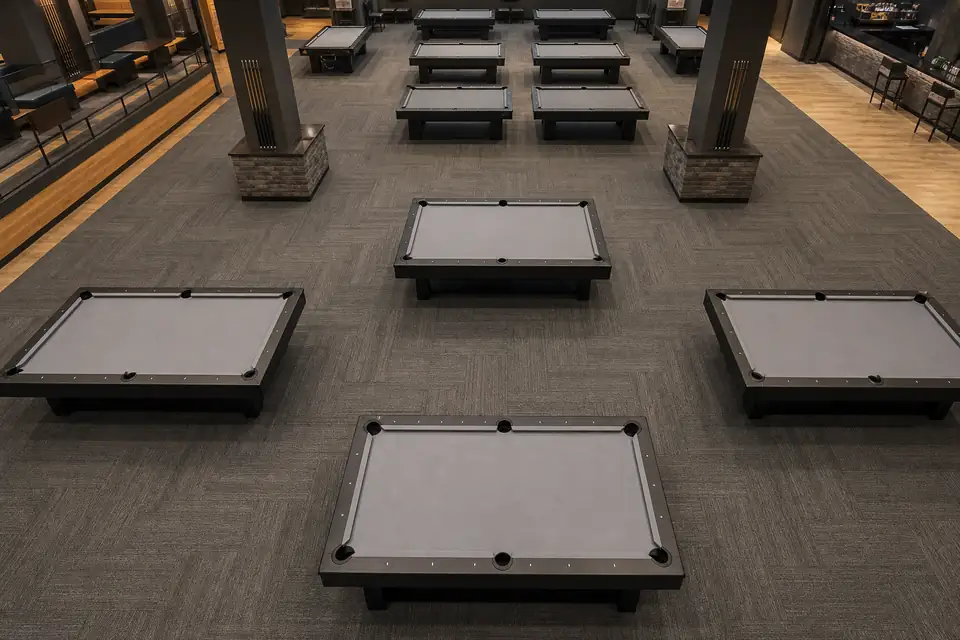
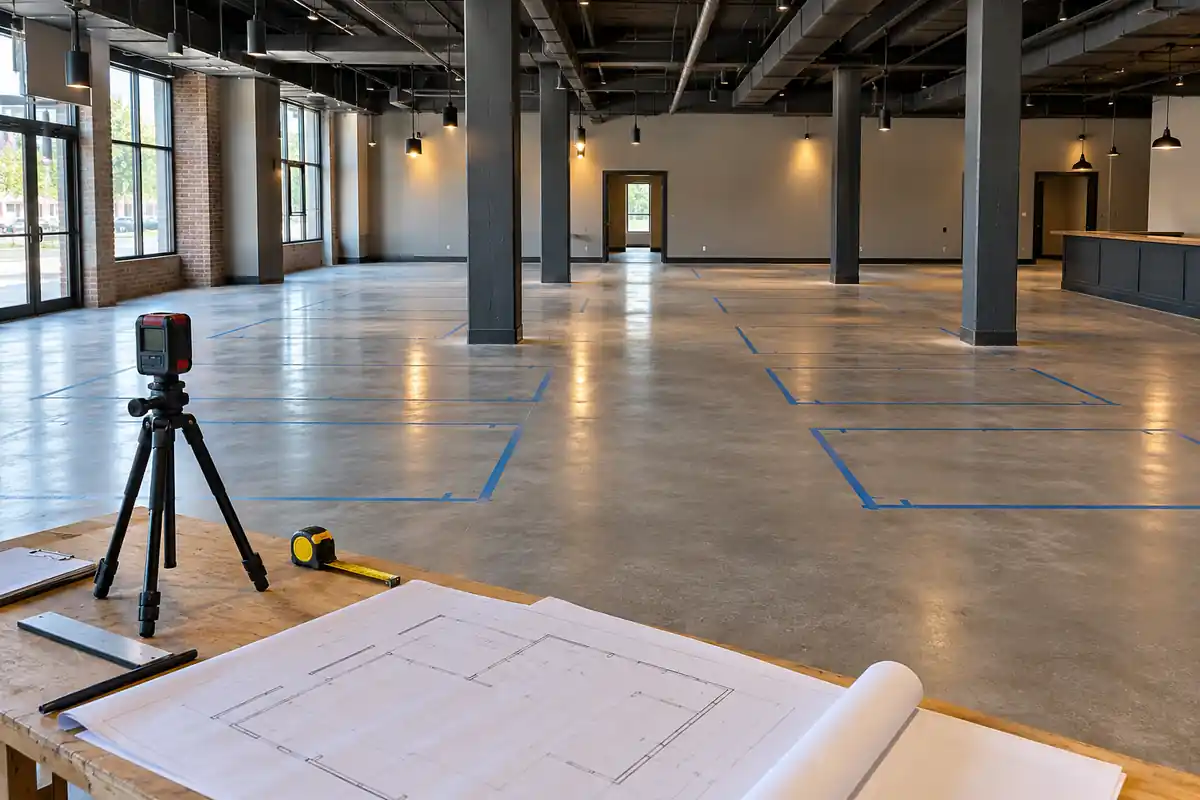
Usable layout capacity is not the largest number of table outlines that can be placed inside the room. It is the number of playable table bays remaining after the club allocates all necessary non-table space.
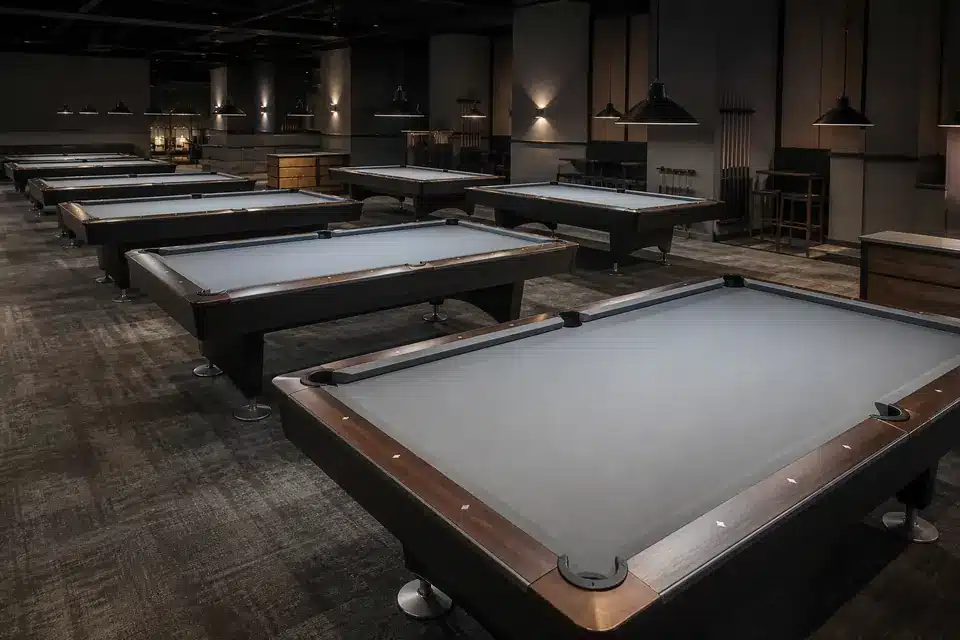
Start with the exact external dimensions of each proposed model. Then add the working space required for cueing, player movement, adjacent occupied tables, seating, staff access, columns, doors, counters, storage, and any emergency or accessible routes required locally.
For each proposed position, check:
- Can a player make a normal shot from every rail without hitting a wall, column, chair, or person at the next table?
- Can players and staff pass between two occupied tables?
- Do seating, cue racks, scoreboards, and drink surfaces remain usable when play is underway?
- Can staff clean the cloth, inspect the pockets, and service the light without moving unrelated furniture?
- Does the table position preserve required building circulation and exits?
- Can the packed slate and frame reach the position through the actual delivery route?
The World Pool-Billiard Association requires at least 6 ft (1.83 m) from the outside edge of the rail to an obstacle in every horizontal direction for WPA-sanctioned competitions. The same document states that its specifications do not necessarily apply to tables manufactured for commercial or home use. Use 1.83 m as a competition-layout reference, not as a mandatory commercial-club rule or a substitute for local building requirements. (WPA Recommended Equipment Specifications)
The final room drawing should show the external table body, cueing envelope, furniture in its operating position, lights, columns, service zones, and circulation—not only the playing surface.
Step 2: Estimate Demand-Supported Table Count
The relevant demand question is not “How many customers may visit in one day?” It is “How many playing groups are likely to need a table at the same time?” Four people sharing one table create one occupied table, while four players arriving as two separate pairs may require two.
Possible evidence sources include:
- observed occupancy at comparable nearby venues by day and time;
- inquiries collected before opening;
- founding memberships or deposits, where available;
- planned league teams, coaching sessions, club events, or private bookings;
- the expected split between walk-in, training, league, and social customers;
- seasonal or weekly demand variation relevant to the local market.
Do not turn a single busy evening at another venue into a full-year forecast. Record several time periods and separate demand by game format where possible. A queue for snooker does not automatically justify another American pool table, and interest in Heyball does not prove demand for every other format.
One way to convert the estimate into a planning number is:
Demand-supported table count =
forecast peak simultaneous playing groups ÷ operator-chosen target peak occupancy
Round the result up to a whole table. Use this formula only when the demand forecast represents an unbuffered base-case peak. If the forecast already represents a high-demand percentile or includes a separate availability allowance, do not add the same buffer again by dividing by a lower occupancy target.
The target peak occupancy is a management choice: it expresses how much availability the operator wants to retain at the forecast peak. It is not a Baiyu recommendation or a universal industry benchmark. A higher target uses capital more tightly but leaves less room for walk-ins, booking delays, or a table temporarily unavailable for maintenance. A lower target creates more availability but risks paying for underused tables.
If the demand inputs are weak, calculate a low, base, and high scenario. Use the base case to establish the demand-supported limit only when the underlying assumptions are credible, and preserve layout options for the higher case.
Step 3: Calculate Financial and Operational Limits Separately
Financial capacity is the number of fully installed tables the club can fund after fixed opening costs and the required operating reserve have been protected. It is not simply the available table budget divided by the factory unit price. The club must be able to bring each table into service and still retain the funds needed to open and operate.
Depending on the agreed quotation and project location, table-related costs may include:
- the table and confirmed playing configuration;
- lights, balls, cues, racks, rests, maintenance tools, and spare items;
- export packaging;
- freight and insurance;
- customs duties, taxes, and destination charges;
- unloading and indoor handling;
- assembly, cloth fitting, leveling, and acceptance;
- electrical work and ceiling support for lighting;
- floor preparation and protection;
- later re-leveling or initial maintenance where required.
Responsibility for these items must be confirmed in writing. A supplier’s table quotation does not automatically include destination unloading, indoor movement, local installation, or building work.
The operating limit asks whether the opening team can keep the proposed fleet commercially ready. Consider:
- staffing during peak and quiet periods;
- booking, payment, and table-assignment procedures;
- cleaning and cloth-care time;
- ball, cue, pocket, cloth, cushion, and lighting checks;
- planned training, league, or event blocks that remove tables from walk-in use;
- maintenance downtime and access to replacement parts;
- the working capital needed after the equipment order is paid.
For example, a club that can purchase ten tables but can only install, light, maintain, or supervise eight has an operational capacity of eight until those constraints change.
Worked Example: A Hypothetical Eight-Table Opening Plan
The following calculation is illustrative. It is not a Baiyu customer case, an industry average, or a recommended number for every club.
Assume a new club has established the following:
- The measured layout contains 12 usable table bays after cueing, seating, circulation, and service areas are included.
- The base demand forecast is six simultaneous playing groups at the expected peak.
- The operator uses a 75% target peak occupancy as a hypothetical management assumption, not a Baiyu recommendation or an industry benchmark.
- The verified project budget can support ten fully installed tables after other opening costs and the required operating reserve are protected.
- The opening team and installation plan can support nine commercially ready tables.
The demand-supported count is:
6 forecast peak groups ÷ 0.75 target peak occupancy = 8 tablesThe four limits are therefore:
| Capacity test | Result |
|---|---|
| Usable layout capacity | 12 tables |
| Demand-supported capacity | 8 tables |
| Financial capacity | 10 tables |
| Operational capacity | 9 tables |
| Maximum justified opening fleet | 8 tables |
Eight is the maximum justified opening fleet because it is the lowest supported figure. The actual first order may be eight or lower, depending on demand confidence, cash preservation, and the practicality of phased purchasing. The operator can preserve several properly planned expansion positions, but should not describe all remaining floor area as committed table capacity. Some space may later be more valuable for seating, lessons, events, storage, or another revenue-generating use.
If the six-group forecast or the 75% management choice changes, the answer changes. The value of the example is the method, not the number eight.
Estimate the Dominant Format Before Finalizing Total Quantity
Quantity planning and table-format planning are separate but interdependent decisions:
- Quantity planning asks how many commercially usable tables the club can justify.
- Format planning asks which games those tables should support.
Start by estimating the dominant format from local demand. Use the external dimensions of actual candidate models to calculate the opening-fleet ceiling, then confirm the final mix. If the selected models or format mix changes, recalculate the layout before approving the quantity. Keeping the main fleet consistent can simplify customer expectations, staff routines, accessories, spare parts, and maintenance records.
A casual social venue may center on American pool. A Heyball-focused venue may center on Chinese eight-ball. A snooker-led club needs the room and customer demand appropriate for 12-foot tables. These are positioning choices, not fixed ratios. For a detailed format decision, see Best Pool Table Configuration for Billiard Clubs.
Different formats can also change the number of usable bays. A 12-foot snooker model and a 9-foot pool model do not create the same external footprint, handling requirement, or customer use. Recalculate the layout when the mix changes; do not fit a generic total first and substitute larger tables later.
Should a New Club Buy All Tables at Once or in Phases?
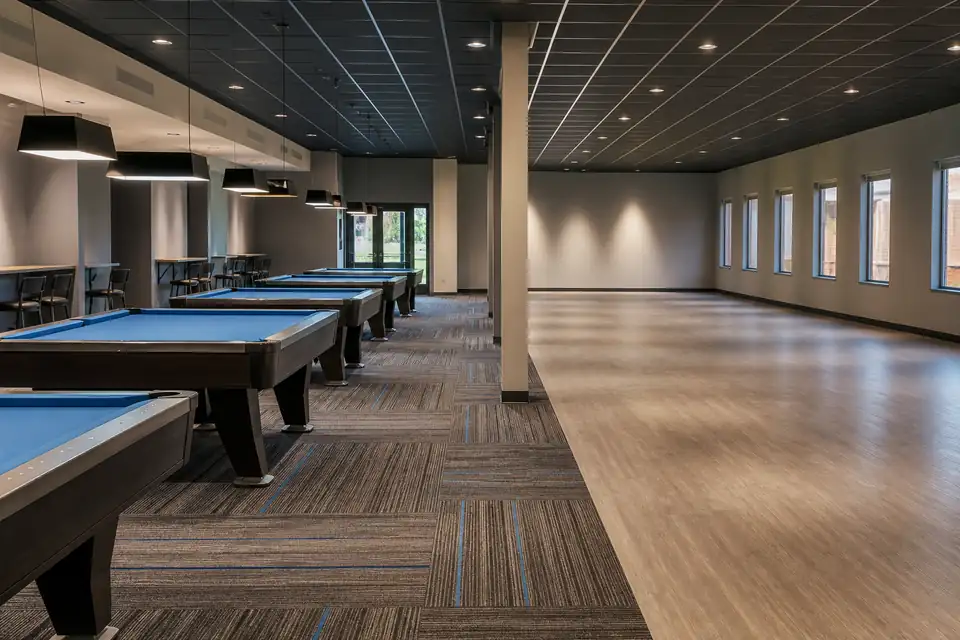
Buying the full planned fleet at once may simplify production coordination, color and specification consistency, freight planning, and one-time installation. It also commits more capital before real operating data exists.
A phased purchase can reduce demand risk, but a later order may create additional freight, unloading, installation, room disruption, and specification-matching work. Neither approach is automatically cheaper. Compare the cost and risk of unused tables with the cost and disruption of a second delivery.
Phased purchasing is more defensible when:
- local demand is uncertain or based mainly on assumptions;
- the venue is introducing an unfamiliar game format;
- the room can preserve expansion positions without compromising the opening layout;
- funding or staffing will become available in defined stages;
- later indoor access and installation remain practical after the club opens.
An all-at-once purchase may be more practical when:
- demand is supported by existing club operations, committed members, bookings, leagues, or another credible source;
- the buyer has verified the complete installed-cost boundary;
- a later delivery would be unusually disruptive or difficult;
- the operating team can support the full fleet from opening day.
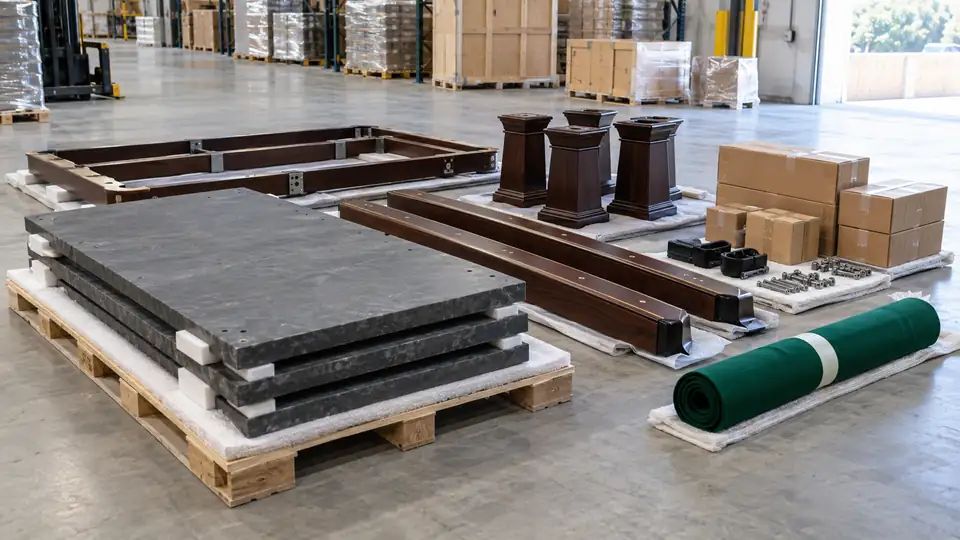
Before choosing phases, request an itemized quotation and review Baiyu’s pool table export packaging guide. Packaging information helps the buyer assess shipment volume and handling, but the final packing list and responsibility boundary must still be confirmed for the actual order.
Define Expansion Triggers Before Opening
“Add more tables when the club feels busy” is not a useful trigger. Decide in advance what evidence will justify the next purchase, then measure it consistently after opening.
Useful indicators include:
- occupied tables by format, day, and time block;
- booking lead time;
- wait-list entries and customers who leave because the requested format is unavailable;
- league, coaching, or event demand that cannot be scheduled;
- maintenance downtime that reduces available capacity;
- staffing and cash availability for the additional fleet;
- whether the reserved table bay is still the best use of the floor area.
The club should choose its own review period and threshold based on its business model. Do not copy an occupancy target from another venue without understanding its opening hours, prices, table formats, customer behavior, and event schedule.
Three Table-Quantity Planning Mistakes to Avoid
Filling every possible table position
Maximum geometric fit is not the same as commercial capacity. Crowded cueing, blocked circulation, inadequate seating, and poor service access can make nominal capacity unusable.
Forecasting from total foot traffic
Daily visitors and simultaneous playing groups are different measures. Table demand must be tied to time blocks, group behavior, game format, and bookings. Demand for one format does not automatically support another.
Ordering extra tables only to reduce freight per unit
A lower freight cost per table does not make an unneeded table productive. Compare the incremental logistics saving with the capital tied up, occupied floor area, installation cost, and uncertain demand.
Other checks still matter: avoid buying a convenient round number before measuring the room, compare the complete installed-cost boundary rather than unit price alone, and confirm that any future expansion bay has suitable lighting, access, installation space, matching specifications, and an operating plan.
Information to Send a Pool Table Supplier
A supplier can provide a more useful project quotation when the buyer sends a structured quantity brief instead of asking only for a price per table.
Prepare:
- A measured floor plan with columns, doors, fixed furniture, counters, stairs, elevators, and restricted areas.
- The target number of usable table bays and any proposed expansion bays.
- Preferred game formats and the demand evidence for each.
- Expected opening date and whether purchasing will occur in phases.
- Destination city and country.
- Floor level, unloading conditions, and indoor access restrictions.
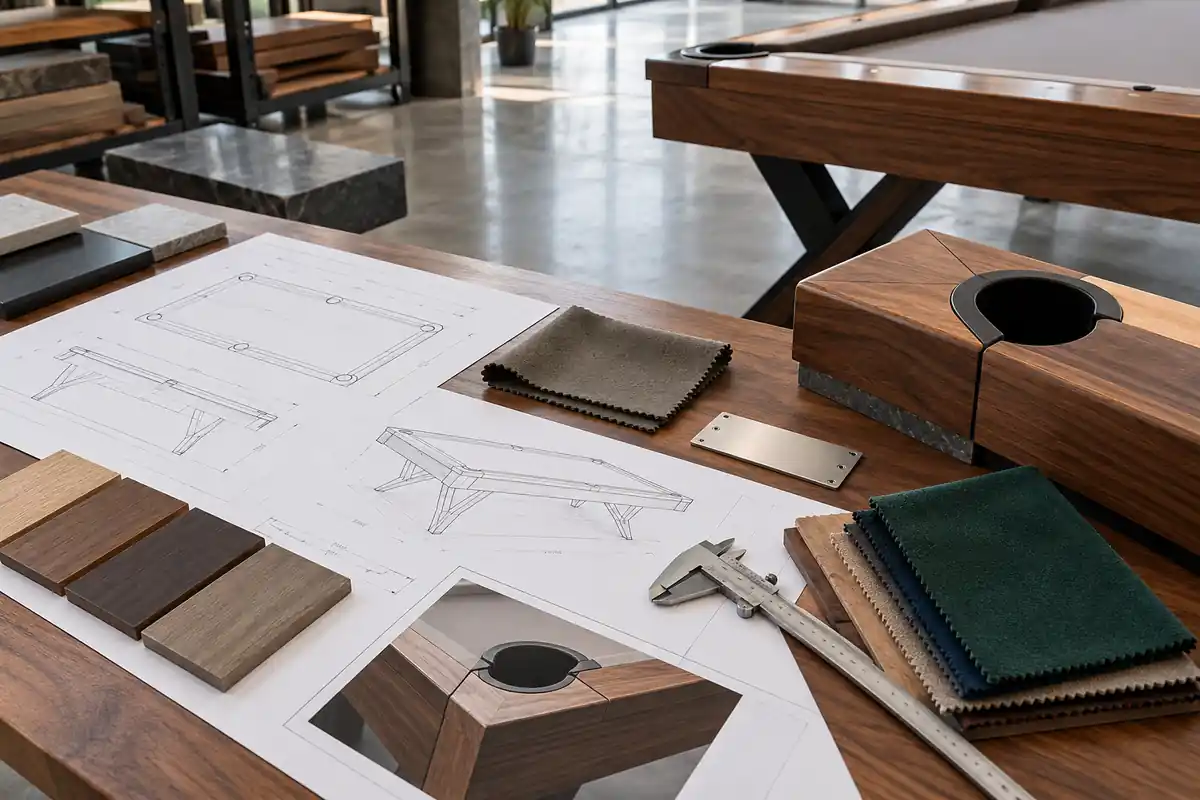
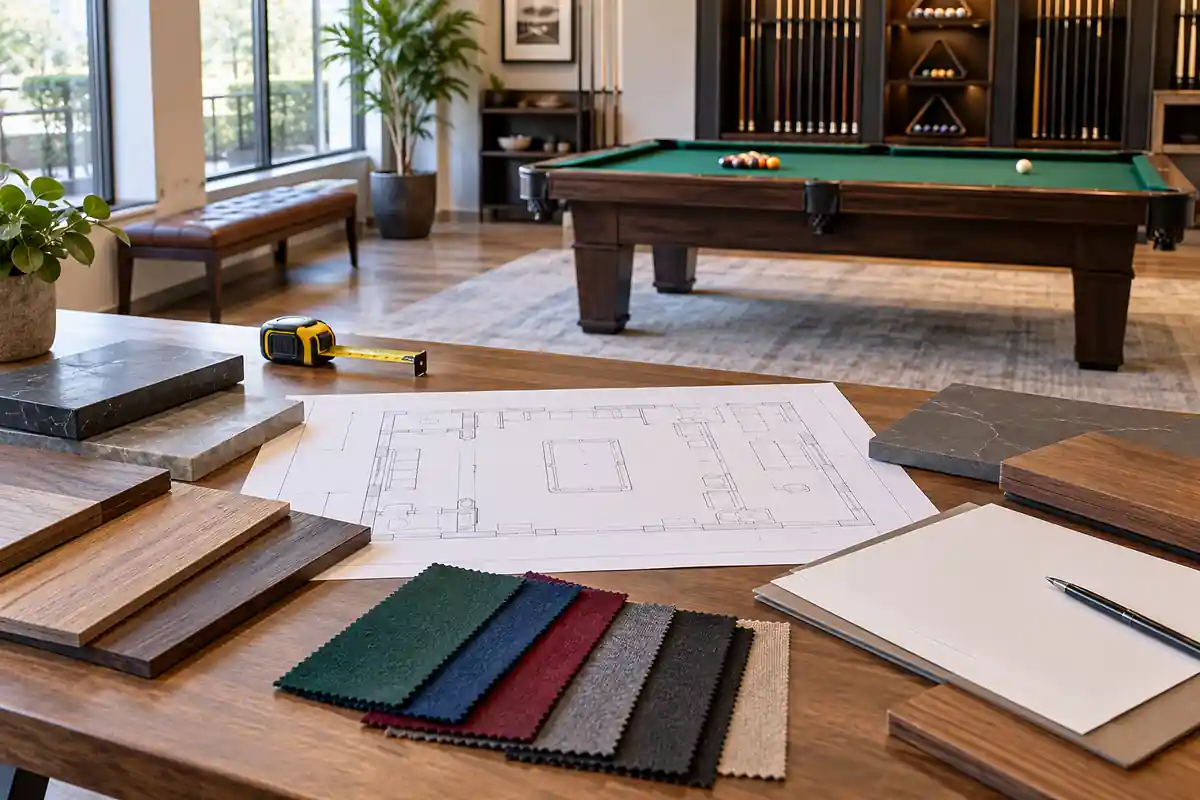
- Preferred finishes, cloth colors, ball-return or pocket requirements, lights, accessories, and spare items.
- The requested quotation and delivery scope.
- The destination installation plan and the party expected to assemble and level the tables.
- Any building, electrical, inspection, documentation, or local compliance requirements that affect the order.
Baiyu’s billiard room solution can provide a starting point for tables, lighting, seating, cue storage, and related equipment. Buyers should still approve the exact table drawings, quantities, configuration, packing data, delivery scope, and installation responsibilities in writing. The pool table supplier selection guide provides additional checks for comparing documentation and supplier scope.
Request a Quantity and Layout Review
Before requesting a final pool table quotation, send Baiyu the measured room plan, proposed game formats, destination, opening schedule, access route, and delivery and installation scope. Baiyu can review the product-side quantity and configuration request against the supplied project information.
The buyer and qualified local parties remain responsible for confirming building suitability, local circulation and safety requirements, structural capacity where relevant, destination unloading, indoor movement, local installation, and any local approvals. The final order should follow the written quotation, approved drawings, and model-specific documents—not an early planning estimate.
FAQ
Is there a standard number of pool tables for a new billiard club?
No. A new club’s table count depends on its measured layout, forecast simultaneous demand, installed-cost budget, staffing, maintenance plan, and table formats. The lowest supported capacity sets the maximum justified opening fleet; the actual first order may be lower.
Is eight pool tables enough for a new pool hall?
Eight may be the justified ceiling for one project and wrong for another. Test it against the room layout, forecast peak playing groups, chosen availability buffer, budget, and operating plan. Even when eight is the ceiling, a phased opening may start with fewer tables.
How many pool tables fit in a 100-square-meter room?
Area alone cannot provide a reliable answer. The calculation needs the exact external table dimensions, cueing space, room shape, columns, doors, circulation, seating, service areas, and applicable local requirements. Use a scaled layout for the actual models.
Should a new club buy extra tables to reduce shipping cost per unit?
Only after comparing the logistics saving with the cost of the extra table, installation, occupied floor space, maintenance, and unproven demand. Lower freight per unit does not justify unsupported capacity by itself.
How much spare capacity should a billiard club keep at peak time?
There is no universal target. The operator should choose a peak-occupancy target based on walk-in expectations, booking policy, maintenance downtime, events, capital limits, and the cost of customers waiting or leaving.
Should the club choose table types before calculating quantity?
Estimate the operating model and likely dominant game first, calculate the total using actual model footprints, then confirm the final mix. Changing between American pool, Chinese eight-ball, and snooker may change both demand and usable layout capacity.
When should a club add more pool tables?
Add tables when consistent records show unmet demand for a specific format and the club still has the floor space, funds, staff, access, and installation plan to support them. A single busy period is not enough evidence by itself.
What should a buyer confirm before placing a multi-table order with Baiyu?
Confirm the model and quantity, approved drawings, playing configuration, accessories, packing data, quotation scope, freight boundary, destination unloading, indoor handling, installation responsibility, final acceptance method, and replacement-part identification. Final written project documents control the order.
Reference
- World Pool-Billiard Association. Recommended Equipment Specifications. Used only as a competition-equipment and spacing reference.