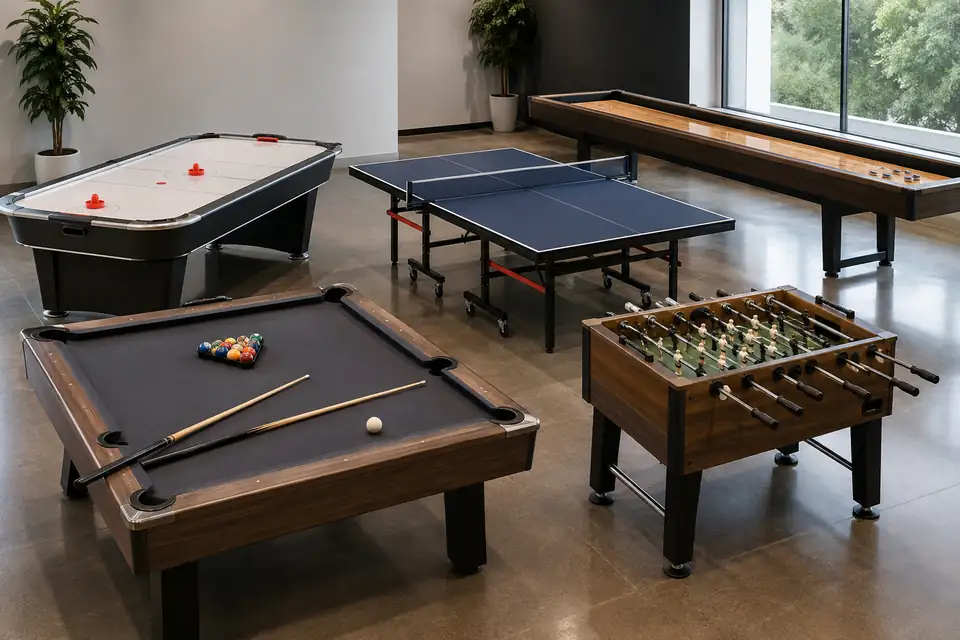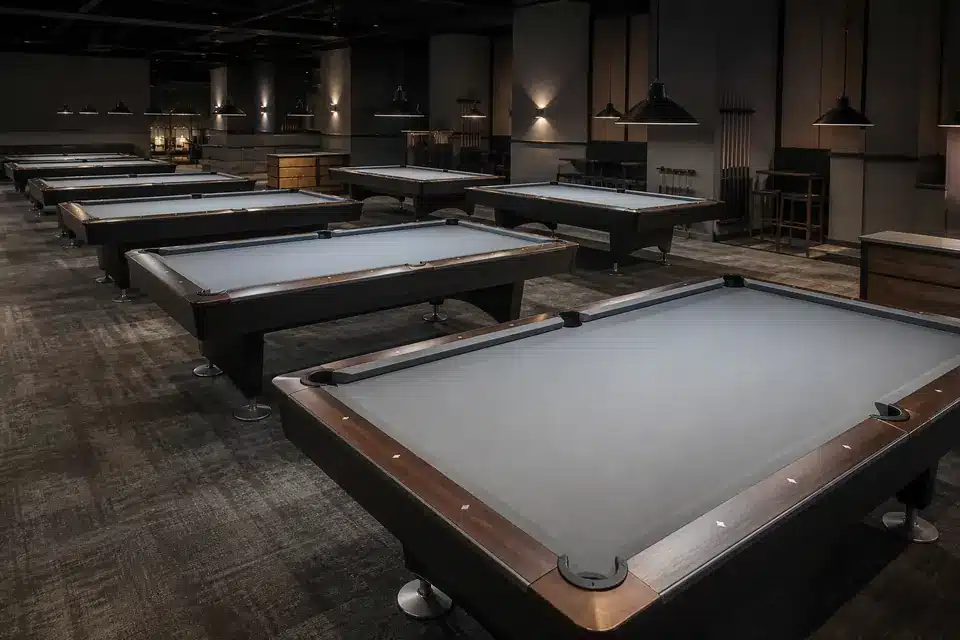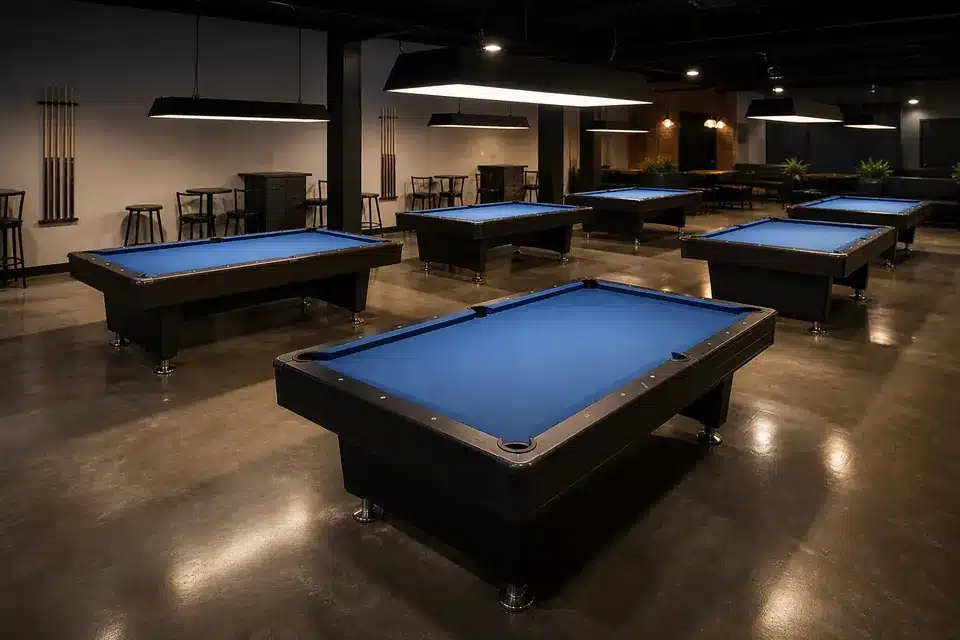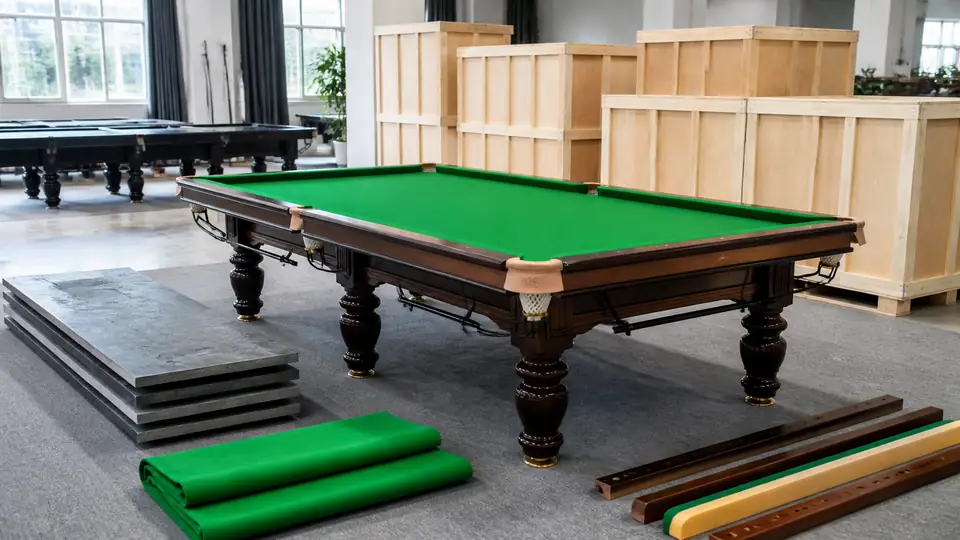
For most mid-range billiard clubs, the safest starting configuration is one dominant game format across the core table fleet, with consistent specifications inside that category. Add secondary formats only where local demand is proven. American pool tables are usually the practical core for casual and social venues, while Chinese eight-ball tables should lead in Heyball-focused clubs. A 12-foot snooker table should be added only when the room size and customer demand justify it.
After deciding the table mix, confirm the slate, cloth, cushions, pockets, frame, leveling system, lighting, accessories, packaging, and delivery responsibilities in writing. Baiyu Billiards is based in Shunde District, Foshan, Guangdong, China and supplies tables and related equipment to overseas club, distributor, and commercial-project buyers. In our experience, the written configuration and delivery boundary usually matter more than appearance alone.
Key Takeaways
- Choose one dominant game format for the main table fleet and keep that category consistent.
- Use American pool as the practical core for casual and social venues; use Chinese eight-ball as the core for Heyball-focused clubs.
- Add 12-foot snooker only when both customer demand and room clearance are confirmed.
- Do not treat a 9-foot American pool table and a 9-foot Chinese eight-ball table as interchangeable products.
- Compare slate, cloth, cushions, pockets, frame, leveling, lighting, accessories, export packaging, delivery scope, and installation responsibility before comparing the final price.
- Use WPA specifications as competition references, not automatic commercial-room requirements.
What Does “Mid-Range Billiard Club” Mean in This Guide?
“Mid-range billiard club” is not an official WPA classification. In this guide, it means a commercially operated venue that prioritizes reliable daily play, controlled opening costs, manageable maintenance, and repeat customers rather than luxury decoration or tournament-only specifications.
This type of buyer usually needs five things:
- Stable tables for frequent daily play.
- A table mix that reflects local customer demand.
- Consistent playing components across tables of the same category.
- Clear cost and responsibility boundaries before shipment.
- Identifiable replacement parts and after-sales communication.
The most common first-time buying mistake is selecting tables from product photos before defining the operating model. A table can look impressive in a showroom and still be wrong for the venue if its game format, slate, cloth, cushions, pockets, lighting, or installation plan does not match the room.
Practical Starting Points for Different Club Models
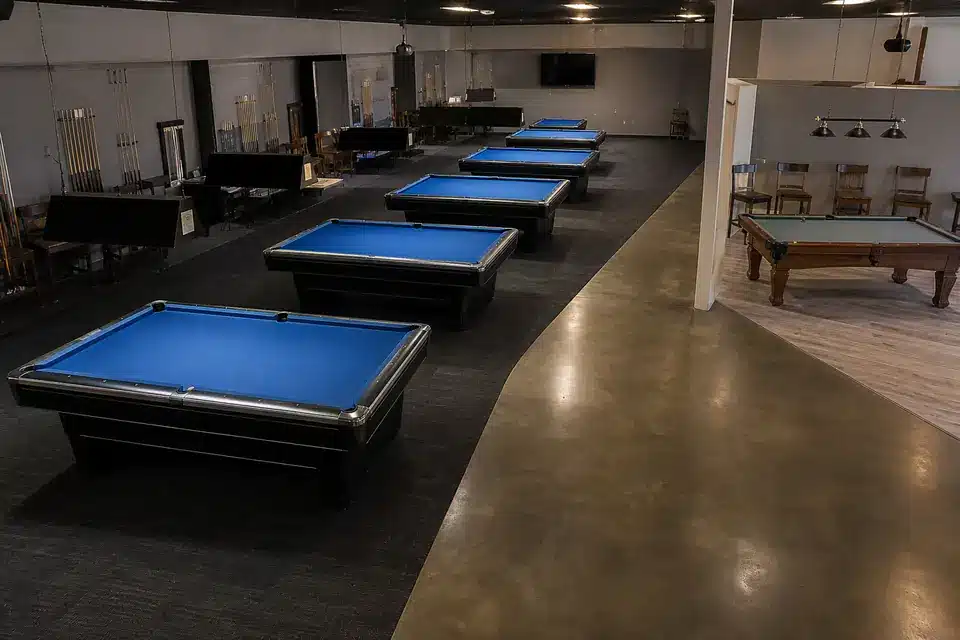
The table below is a planning aid, not an industry standard or a fixed table ratio.
| Club model | Practical starting point | When to adjust |
|---|---|---|
| Casual or social club | One consistent American pool fleet, plus a limited number of feature tables | Add Chinese eight-ball only when local demand is visible |
| Heyball-focused club | Chinese eight-ball as the dominant format | Add American pool for casual traffic if space allows |
| Mixed billiard club | One dominant format plus one controlled secondary format | Do not divide the room equally without customer data |
| Training club | Fewer formats with identical specifications inside each category | Consistency is more important than variety |
| Snooker-led club | 12-foot snooker as the core only where space and demand are confirmed | Avoid adding snooker only for appearance |
A club planning a complete venue can also review Baiyu’s one-stop billiard room solution for tables, lighting, seating, cue storage, and related equipment. The operating principle remains the same: use variety to cover proven demand, but keep the specification consistent within each table category.
How Do American Pool, Chinese Eight-Ball, and Snooker Differ?
The phrase “9-foot pool table” is not enough for a purchase contract. Two 9-foot tables can use different pocket geometry, cloth, cushion behavior, slate thickness, frame support, and ball-return systems. For a deeper format comparison, see Chinese vs American Pool Tables.
9-foot American pool
American pool is usually the most accessible option for social play, American eight-ball, nine-ball, bars, and mixed entertainment venues. Baiyu’s standard product information lists 25 mm natural slate, commercial cloth, and frame options including rubberwood or black walnut for this category.
9-foot Chinese eight-ball or Heyball
Chinese eight-ball should be treated as a separate playing format. Its pocket geometry, napped cloth, cushion system, slate structure, and customer expectations differ from American pool. A club expecting Chinese eight-ball traffic should order a purpose-built table rather than assume that any 9-foot table can provide the same game.
Since May 2024, the WPA has recognized Heyball as an official discipline governed directly by the WPA with the assistance of an Advisory Council. The practical purchasing lesson is to write the intended game format, table drawing, and playing specification into the quotation rather than relying on a loose model name. (WPA Heyball announcement)
12-foot snooker
A 12-foot snooker table requires more room, heavier handling, and a customer base that specifically wants snooker. Baiyu’s supplier-stated commercial specification uses 45 mm (±1 mm) natural slate. Snooker can strengthen a club’s cue-sports identity, but it should not be added only to make the venue appear more complete.
What Must Be Written Into the Quotation?
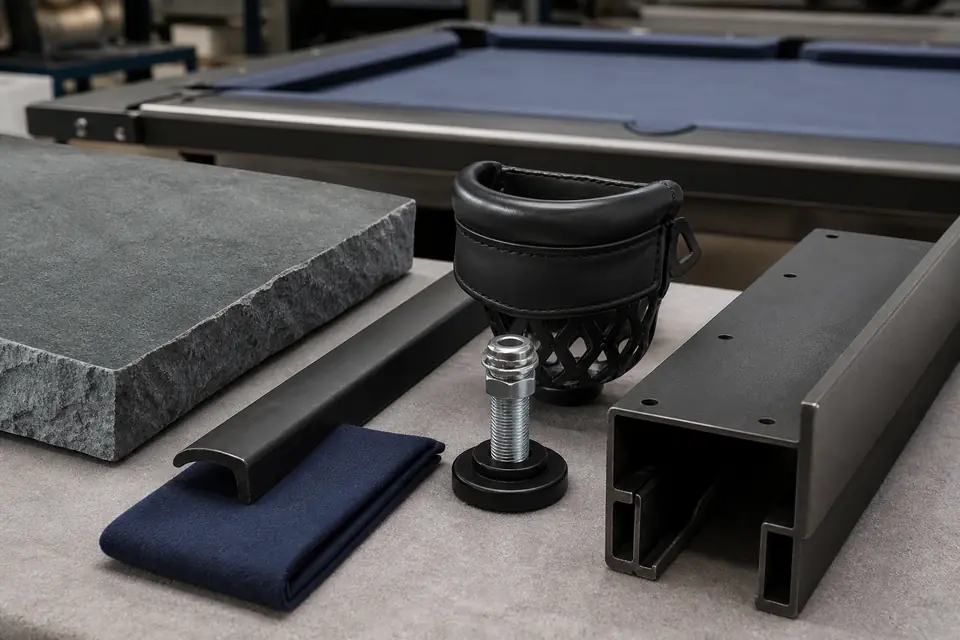
A mid-range club should not approve a table order from photos and a total price alone. The quotation should describe the playing configuration clearly enough that the buyer, installer, and after-sales team are referring to the same product.
Slate
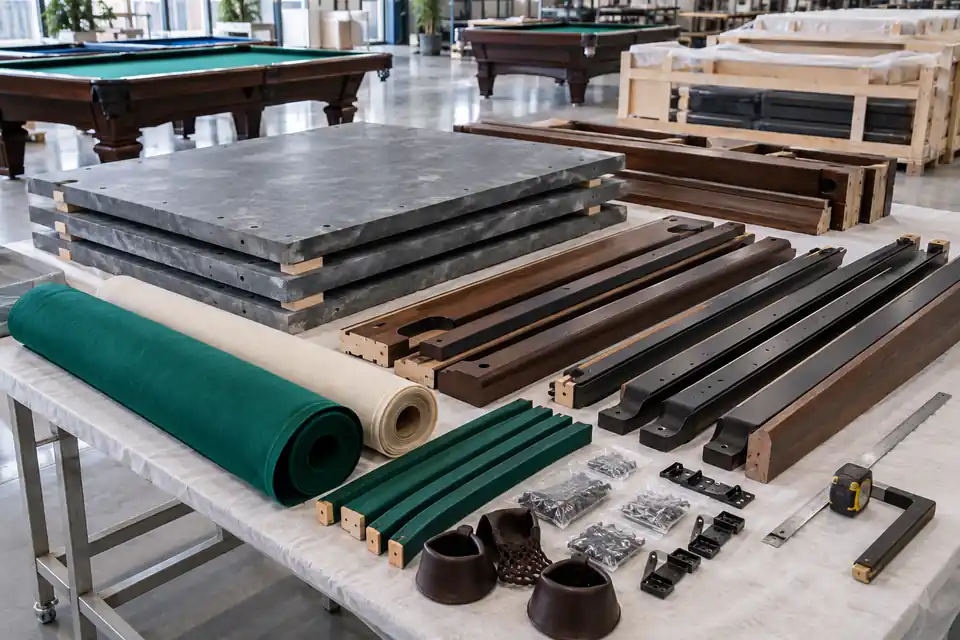
Baiyu’s factory materials identify slate sourced from Jiujiang, Jiangxi, or Jinping, Guizhou as natural slate, commonly described by the factory as Chinese bluestone slate. The first questions should be its origin, thickness, piece count, flatness control, and support method—not thickness alone.
In Baiyu’s standard product structure:
- 9-foot American pool tables use 25 mm natural slate.
- 9-foot Chinese eight-ball tables commonly use 45 mm natural slate.
- 12-foot snooker tables use 45 mm (±1 mm) natural slate.
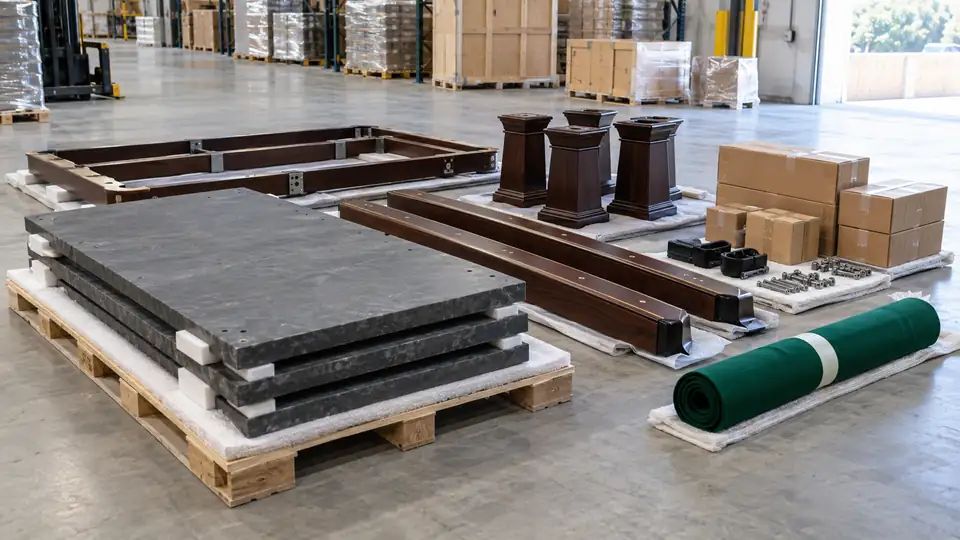
These differences affect total weight, packing volume, freight planning, indoor access, and installation. A thick slate mounted on a weak frame or installed on a poorly prepared floor will not produce a reliable commercial table.
Cloth
Cloth affects ball speed, maintenance, color consistency, and replacement planning. Multi-table clubs should use the same cloth specification across tables of the same category. Mixing cloth grades can create noticeably different playing speeds within one room.
The quotation should name the cloth brand or grade, color, replacement availability, and any spare cloth included with the first shipment.
Cushions and pockets
Cushions control rebound; pockets define the playing difficulty. Neither is a cosmetic detail. The quotation should identify the cushion specification, pocket geometry, pocket material, and whether the table uses drop pockets or a ball-return system.
Frame and leveling system
New buyers often ask only, “How thick is the slate?” Experienced buyers also ask, “How is the slate supported, and how will the table be leveled after delivery?”
A commercial table has to withstand unloading, indoor movement, assembly, floor variation, cloth fitting, and later re-leveling. Confirm:
- Frame material and support structure.
- Slate support method.
- Leveling points and adjustment method.
- Whether the table can be re-leveled later.
- Who is responsible for installation at the destination.
Lighting and accessories
Lighting is part of the playing configuration. A well-built table under poor lighting still creates a weak customer experience. The order should also define balls, cues, lights, cue racks, chalk, tips, rests, seating, storage, and maintenance tools. A lower table price does not necessarily mean a lower opening cost.
How Much Clearance Should a Club Plan Around Each Table?
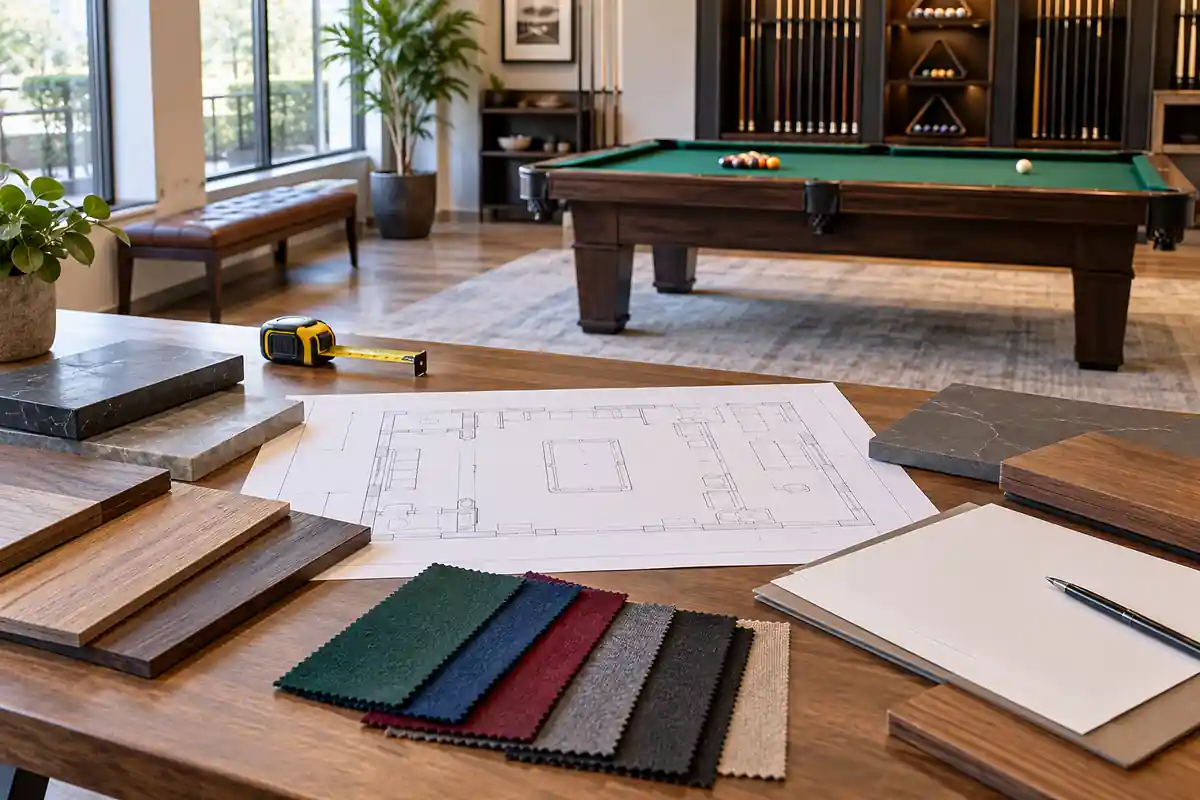
Before ordering, map the table positions, cueing clearance, walkways, spectator seating, lighting points, service access, and indoor handling route.
The WPA Recommended Equipment Specifications require at least 6 ft (1.83 m) between the outside edge of the table rail and an obstacle in every horizontal direction for WPA-sanctioned competition layouts. The same document states that its standards do not necessarily apply to commercial or home-use tables. A club can therefore use 1.83 m as a serious planning benchmark, not as a mandatory rule for every commercial room. (WPA Recommended Equipment Specifications)
Before paying a deposit, check:
- Can players cue comfortably on every side?
- Is there enough walking space between tables?
- Can the slate crates pass through the entrance, corridor, elevator, or stair route?
- Where will each light be fixed?
- Where will cue racks, sofas, scoreboards, and service counters sit?
- Can staff clean and maintain tables without moving furniture each time?
The goal is not to fit the maximum number of tables. It is to fit the right number of playable tables.
Real Example: An Australian Mixed-Format Club Order
For one Australian billiard club project, the confirmed order included:
- 5 snooker tables
- 2 Chinese eight-ball tables
- 1 American pool table
- Related playing and maintenance items, including ball sets, cues, cloth irons, and cloth cleaners
The table mix followed local customer demand. Snooker formed the core fleet, while Chinese eight-ball and American pool gave the venue controlled secondary formats for different players and more social use. The room was not divided equally among the three games simply to create variety.
The practical lesson is not that every mixed club should order a 5:2:1 ratio. This was one project-specific configuration. Another club may need American pool as its core, Chinese eight-ball as its core, or no snooker at all. The transferable decision method is to identify the dominant local game first, then add secondary formats only where customer demand and floor space justify them.
How Should Buyers Compare Table Price With Landed Cost?
A factory price is not the same as the final installed cost of a billiard club. Before comparing suppliers, normalize the delivery boundary.
Every quotation should separate:
- Table price.
- Standard accessories.
- Optional upgrades.
- Export packaging.
- Freight and insurance.
- Customs duties and taxes.
- Destination unloading.
- Indoor handling.
- Installation and leveling.
- Spare parts and future replacement supply.
This prevents a table-only quotation from being compared with a broader project package. Buyers can review Baiyu’s pool table export packaging guide and supplier verification guide before finalizing the delivery and inspection scope.
Baiyu Configuration Directions for Mid-Range Clubs
| Table type | Baiyu configuration direction | Best-fit use | What to confirm |
|---|---|---|---|
| 9-foot American pool table | 25 mm natural slate, commercial cloth, rubberwood or black walnut frame options | Casual pool, social play, American eight-ball and nine-ball | Cloth, cushions, accessories, packaging, and delivery scope |
| 9-foot Chinese eight-ball table | 45 mm natural slate and a purpose-built Chinese eight-ball playing configuration | Heyball-focused club zones and training areas | Pocket geometry, cloth, cushions, frame, and installation plan |
| 12-foot snooker table | 45 mm (±1 mm) natural slate and commercial snooker configuration | Snooker rooms, member clubs, and training venues | Room clearance, access route, customer demand, and installation |
Example option: Baiyu Phantom for a Chinese eight-ball area
The Baiyu Phantom is a standard 9-foot Chinese eight-ball table for commercial billiard rooms, clubs, and training venues. Its confirmed configuration includes three-piece 45 mm Jiujiang Grade A bluestone slate, a specified 1.6 I-shaped steel component, an alloy undercarriage, and 12-point shock-absorbing leveling.
Its alloy base and illuminated, angular exterior suit clubs that want a modern visual identity alongside a defined Chinese eight-ball configuration. It may not be necessary for buyers whose first priority is the lowest opening cost, a traditional solid-wood appearance, American pool play, or a coin-operated system. Its weight, packing volume, room access, and professional installation requirements must be confirmed before ordering.
Buyer Checklist Before Paying the Deposit
- Define the club model: casual pool, Heyball, snooker, training, hospitality, or mixed.
- Decide the dominant game format before choosing finishes.
- Confirm the exact game format for every table category.
- Write the slate origin, material, thickness, and piece count into the quotation.
- Confirm cloth brand or grade, color, and replacement plan.
- Confirm cushion type, pocket system, and ball-return or drop-pocket design.
- Confirm frame material, support structure, and leveling method.
- Check room clearance against the actual floor plan.
- Confirm lighting position and electrical requirements.
- Separate table price from freight, duties, unloading, and installation.
- Confirm export packaging, especially slate protection and wooden-frame reinforcement.
- Request production photos, packing photos, package count, and inspection evidence.
- Keep a spare-parts record for cloth, cushions, pockets, foot pads, and accessories.
Common Configuration Mistakes
Comparing photos instead of specifications
Two tables can look similar online while using different slate, cloth, cushions, frames, pockets, and leveling systems. Photos help assess appearance; the written specification controls the purchase.
Treating every 9-foot table as the same product
A 9-foot American pool table and a 9-foot Chinese eight-ball table answer different player expectations. Choose the game format first.
Spending on appearance while underplanning installation
A modern-looking table can still play poorly if floor preparation, slate alignment, leveling, lighting, or cloth fitting is weak. Installation planning is part of the configuration.
Ignoring packing volume and indoor handling
Heavy slate tables must be checked against doorways, corridors, elevators, unloading equipment, and temporary storage before shipment.
Comparing prices without matching delivery scope
A table-only quotation and a delivered project package are not directly comparable. Define the delivery and responsibility boundary before choosing a supplier.
Request a Club Configuration Quote
Before requesting a final quotation, prepare the room dimensions, expected table quantity, preferred game formats, destination, installation plan, and any finish or accessory requirements. Baiyu can then confirm a configuration around the actual club project instead of forcing every buyer into the same package.
FAQ
What is the best pool table configuration for a mid-range billiard club?
Use one dominant game format for the core fleet, keep the specification consistent within that category, and add secondary formats only where local demand and room space justify them. Casual clubs commonly start with American pool; Heyball-focused clubs start with Chinese eight-ball; snooker should be added only for proven demand.
Should a mid-range club choose American pool tables or Chinese eight-ball tables?
Choose American pool for broad casual and social play. Choose Chinese eight-ball when the venue is designed around Heyball players, training, or a dedicated Chinese eight-ball customer base.
Is a 9-foot American pool table the same as a 9-foot Chinese eight-ball table?
No. Their pocket geometry, cloth behavior, slate specification, cushion system, and playing expectations can differ. The quotation should name the exact game format and configuration.
How much slate thickness does a commercial club need?
It depends on the table type. Baiyu’s standard product information lists 25 mm natural slate for 9-foot American pool, 45 mm natural slate for Chinese eight-ball, and 45 mm (±1 mm) natural slate for 12-foot snooker. Slate must be evaluated together with the support frame and leveling system.
How much clearance is needed around a pool table?
WPA competition specifications use 6 ft (1.83 m) from the outside rail edge to obstacles. Commercial rooms may use different layouts, so treat this as a planning benchmark and verify comfortable cueing, walkways, seating, and maintenance access on the actual floor plan.
What delivery scope should a club confirm before ordering?
Confirm whether the quotation covers only the table or also accessories, export packaging, freight, customs-related costs, destination unloading, indoor handling, and installation. Compare suppliers only after these responsibility boundaries match.
What should be included in a pool table quotation?
Include the table model, game format, slate, cloth, cushions, pockets, frame, leveling method, accessories, packaging, packing volume, delivery scope, and installation responsibility.
What type of mid-range club project is Baiyu best suited for?
Baiyu is best suited for club, distributor, and commercial-project buyers who need factory-side configuration confirmation, Chinese eight-ball, American pool, or snooker table options, export packaging, customization, and coordinated accessory supply. Buyers should still confirm local installation availability, destination unloading and indoor handling, freight, and the final written specification before ordering.
References
- World Pool-Billiard Association. Recommended Equipment Specifications.
- World Pool-Billiard Association. WPA Press Release: Heyball.