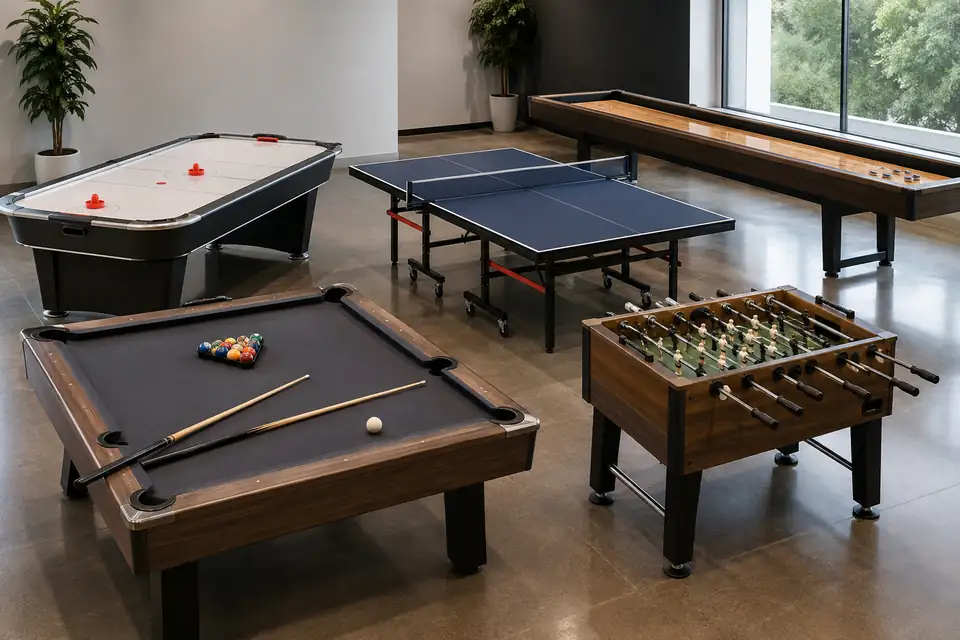
Pool, air hockey, table tennis, shuffleboard, and foosball are five common game table categories worth comparing when planning a home game room or commercial recreation space. This list is not a verified global sales ranking: no single public dataset measures all five categories on the same basis across regions and buyer types. Instead, it is a practical buyer shortlist.
The right choice depends less on which category appears most popular and more on how the table will operate in the room. Start with the full playing area, not only the cabinet dimensions. Then compare power, noise, installation access, maintenance, expected users, and the role the table must play. A pool table may anchor a dedicated room, while foosball or air hockey may work better as a supporting attraction. For commercial projects, the selected model must also be suitable for the expected duty cycle and service plan.
Key Takeaways
- Treat these five categories as a comparison shortlist, not a ranked top five.
- Measure the operating zone: the table, players, cues or rods, and circulation space.
- Air hockey normally needs power; electronic scoring or lighting can add power requirements to other categories.
- Commercial buyers should verify duty rating, warranty terms, spare parts, cleaning routines, and installation scope.
- Choose a table for a defined role—anchor attraction, active recreation, quick-play option, or supporting social amenity.
Quick Comparison for Buyers
The table below is a planning screen. It does not replace model-specific specifications.
| Category | Space and clearance pattern | Power and noise | Main maintenance points | Typical project role |
|---|---|---|---|---|
| Pool table | Fixed footprint plus cueing and circulation space on every playable side | The table itself normally needs no power; room lighting or ball-return systems may | Leveling, cloth care, cushion condition, pockets, and periodic service | Anchor attraction or skill-based activity |
| Air hockey table | Cabinet plus standing and movement space at both ends and around access points | Normally requires power; blower, puck, and rail impacts create noticeable noise | Air-hole cleaning, playfield care, blower, electronics, pucks, and strikers | Quick-play or high-energy supporting attraction |
| Table tennis table | Table footprint plus a substantial movement zone behind and beside players | Normally no power; ball and paddle impacts can carry in hard-surfaced rooms | Top cleaning, net, frame, hinges, wheels, and wheel locks | Active recreation or flexible multipurpose use |
| Shuffleboard table | Long, narrow footprint with access at both ends and a practical side aisle | Normally no power; generally calmer than air hockey, although puck impacts remain audible | Playfield cleaning, speed powder, scoring parts, and adjustment according to the maker | Relaxed social amenity or design-led feature |
| Foosball table | Compact cabinet, but rods and players need clearance on both long sides | Usually no power unless electronic features are fitted; rods and balls create repeated impact noise | Rods, bearings, figures, playfield, balls, and leveling | Compact social or supporting game |
Five Game Table Categories Buyers Commonly Compare
1. Pool Tables
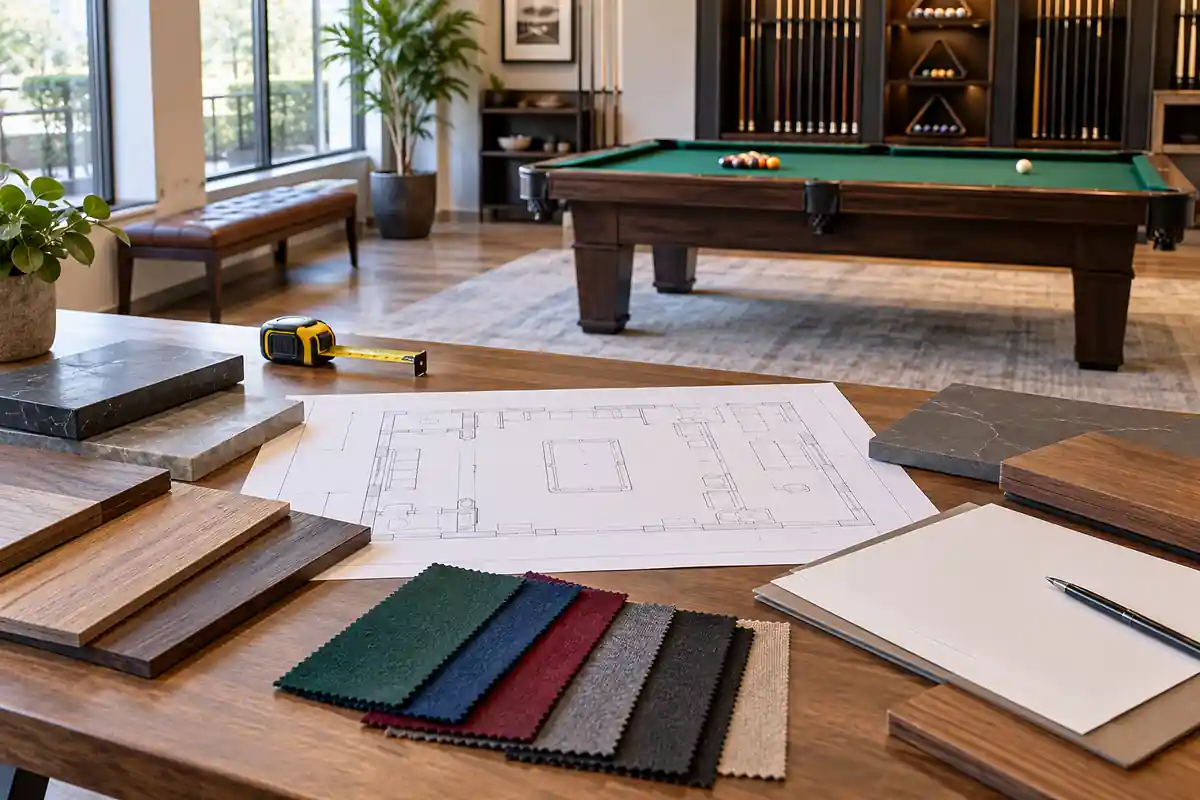
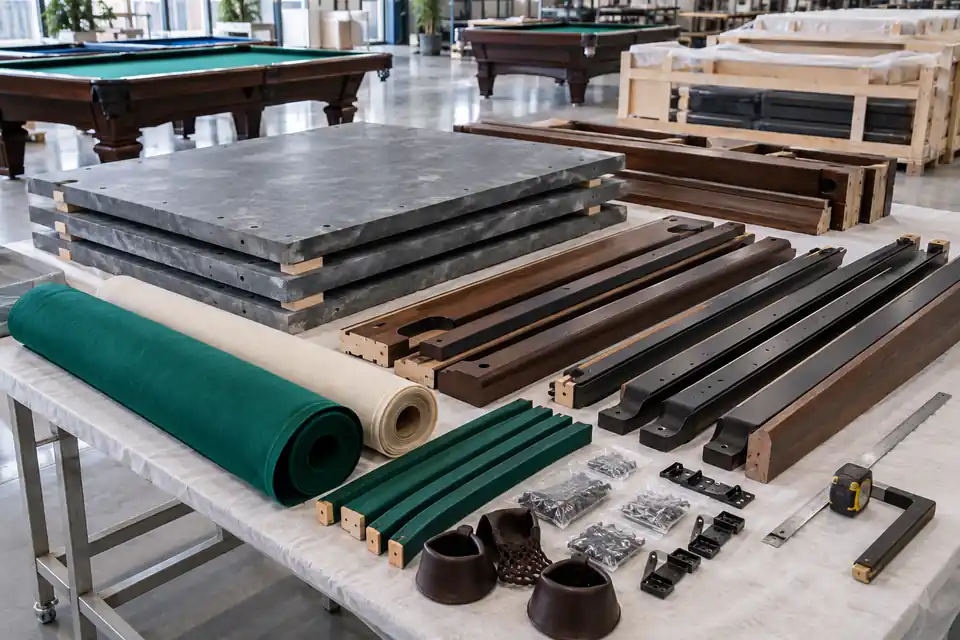
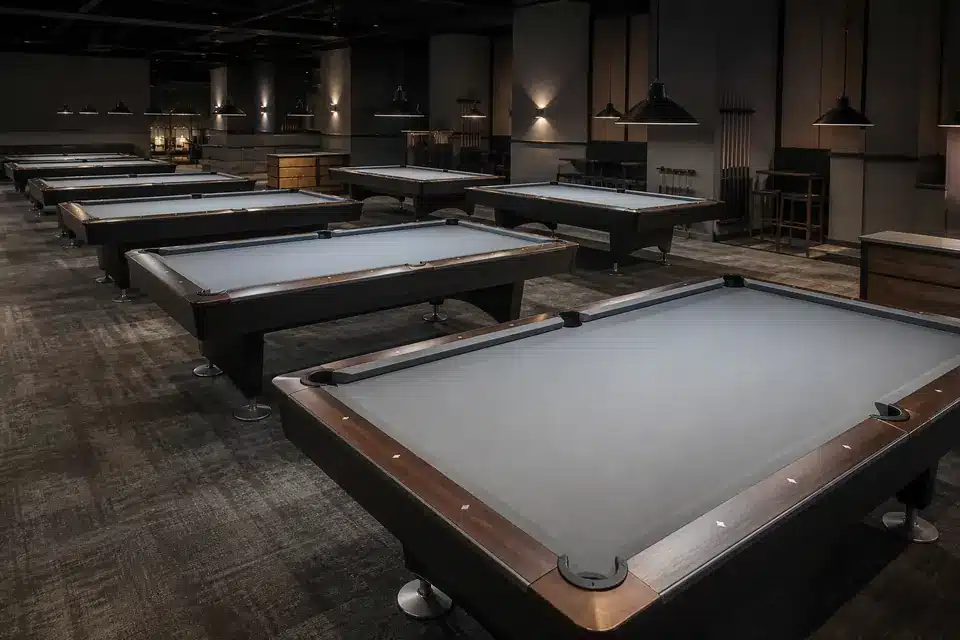
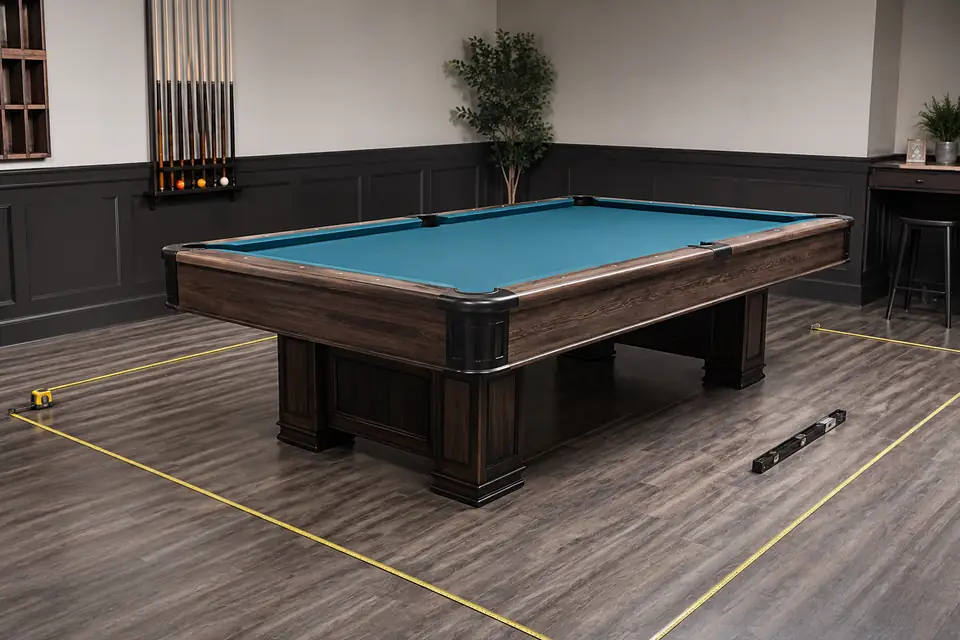
A pool table suits a room built around longer, skill-based play. It can act as the visual center of a home game room, billiard club, bar, hotel lounge, or private recreation area. Buyers can compare American pool tables, Chinese billiards tables, and snooker tables because the game format affects table dimensions, pockets, playing equipment, and the experience expected by players.
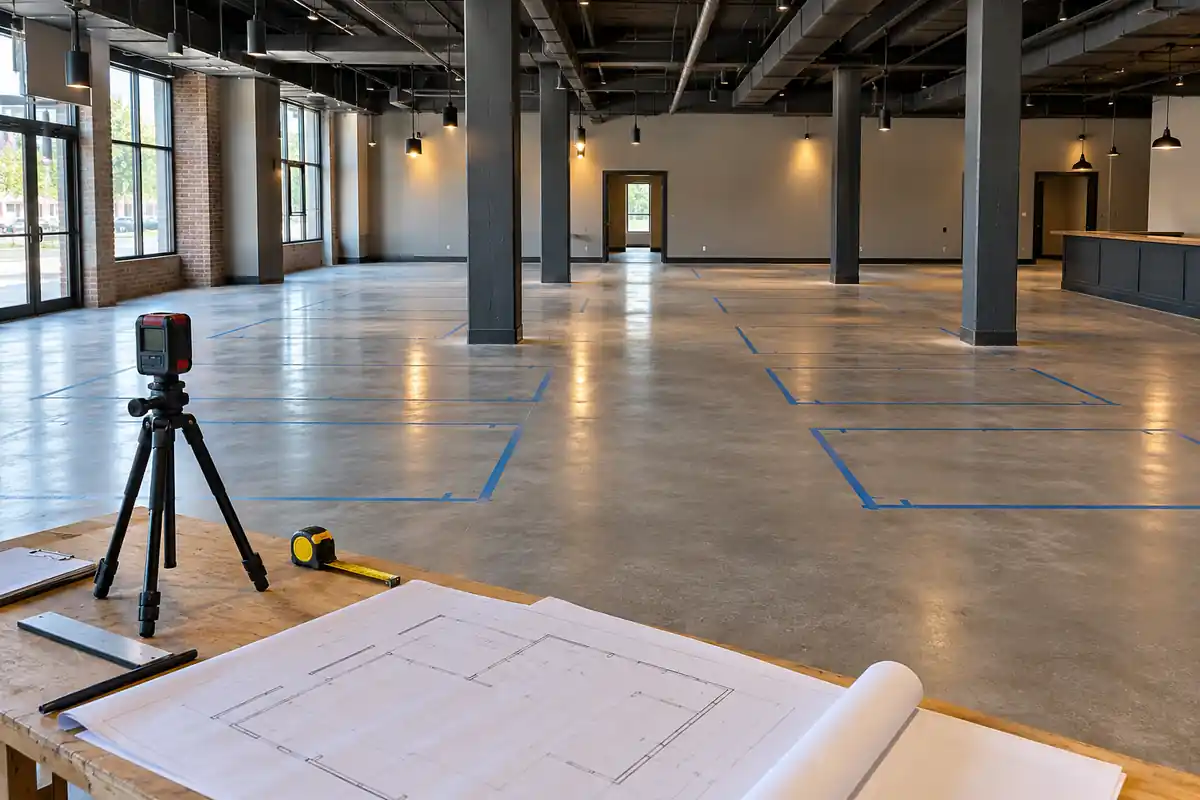
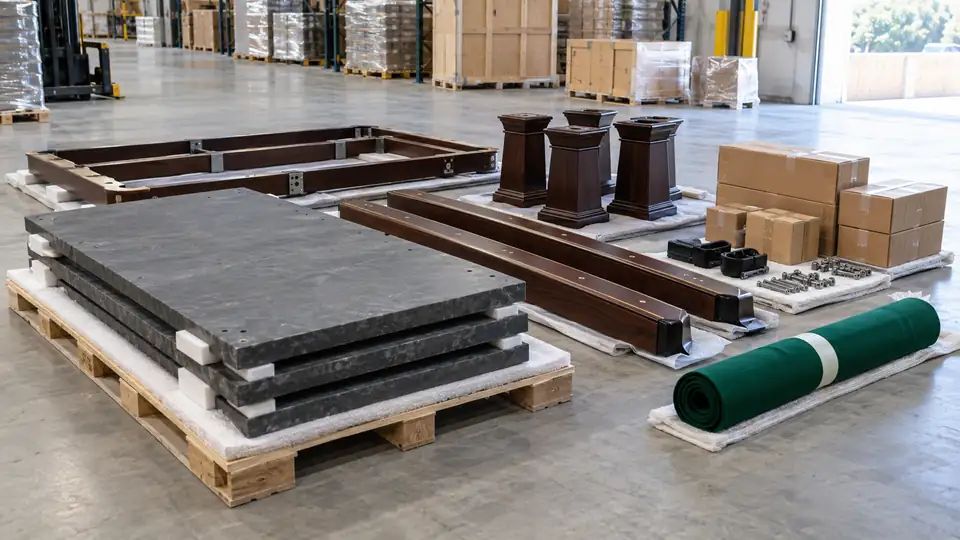
The main planning issue is not whether the cabinet fits. Players need usable cueing room around each playable side, and installers need a clear route for large and heavy components. Floor condition, leveling access, lighting position, and future cloth or cushion service also matter.
Before ordering, verify:
- the exact assembled and packed dimensions;
- the recommended playing clearance for the intended cue length;
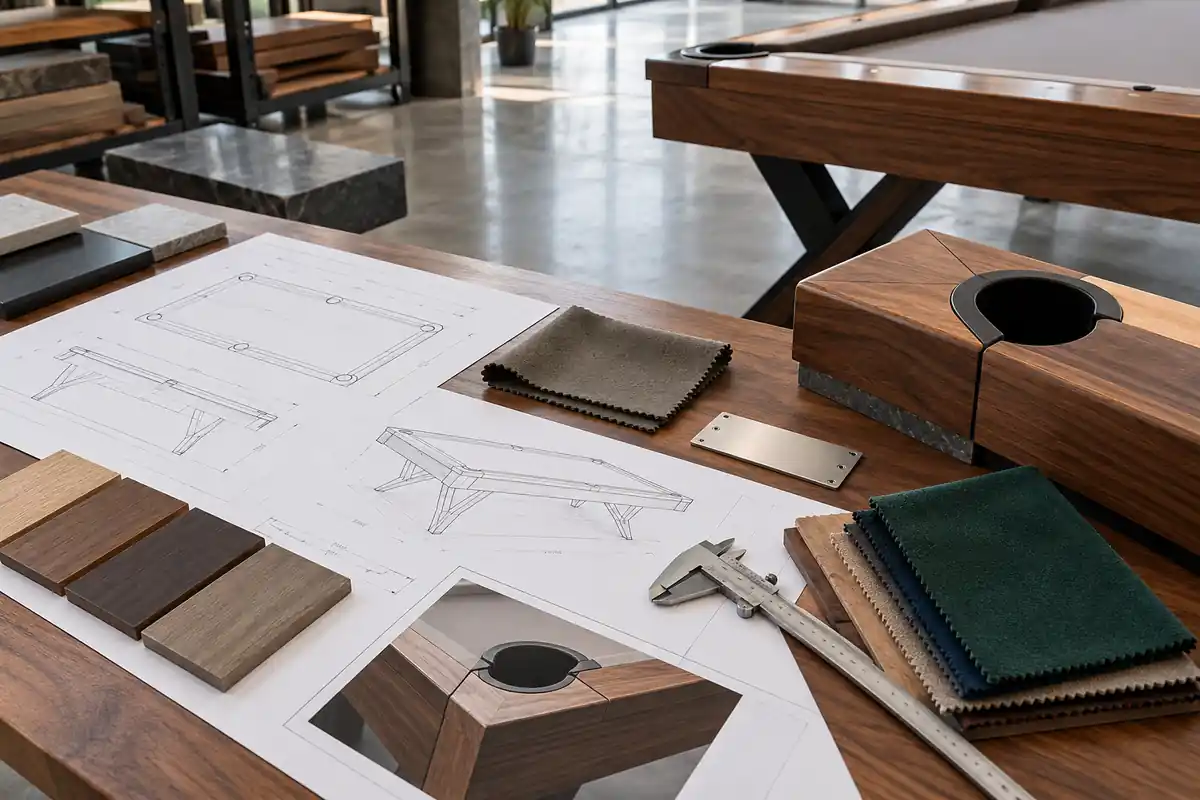
- construction, playing-surface, cloth, cushion, and pocket specifications;
- floor and access requirements;
- installation, leveling, re-leveling, and warranty responsibility.
A pool table is a strong candidate for an anchor role, but it is not automatically suitable for every small or fast-moving venue.
2. Air Hockey Tables
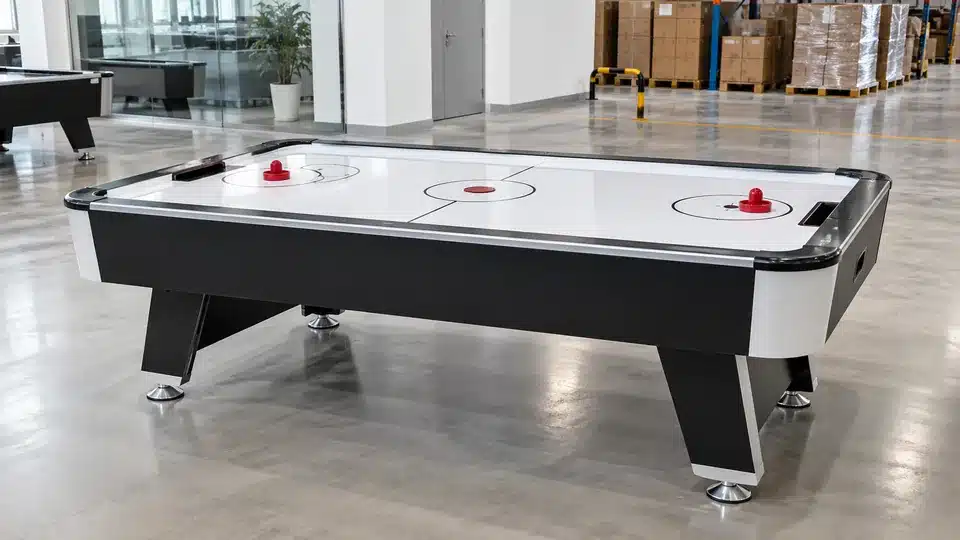
Air hockey supports short, easy-to-understand rounds and highly visible movement. It often fits family entertainment venues, youth spaces, arcades, resorts, and informal home rooms where immediate participation matters.
Unlike most non-electronic game tables, an air hockey table normally relies on a powered airflow system. The buyer therefore needs a suitable outlet, a safe cable route, ventilation around relevant components, and a plan for electrical service. Noise also deserves attention: the blower and repeated puck impacts can be intrusive beside dining, meeting, guest-room, or quiet lounge areas.
Check the operating manual for:
- voltage, plug, and power requirements;
- ventilation and continuous-use limits;
- cabinet access for blower or electronic repairs;
- playfield and air-hole cleaning;
- commercial-use warranty and replacement-part availability.
An air hockey table can be a useful quick-play attraction, but that role is a planning description—not a promise of customer turnover or revenue.
3. Table Tennis Tables
Table tennis combines recreation with active movement and can serve homes, schools, offices, clubs, community spaces, and sports facilities. Folding or wheeled models may help a multipurpose room, but storage and changeover still require planning.
The playing zone is usually more important than the folded footprint. Players move behind the ends and laterally, so nearby walls, columns, furniture, doors, and circulation routes can interfere even when the table technically fits. A hard floor and bare walls may also amplify ball and footfall noise.
Compare:
- indoor or outdoor construction;
- top thickness and support frame;
- folding mechanism and anti-tip provisions;
- wheel size, brakes, and storage stability;
- net system, spare parts, and surface-care instructions.
For commercial or institutional use, confirm that the model is rated for the expected users and handling frequency. A light residential table should not be assumed to tolerate repeated public use.
4. Shuffleboard Tables
A shuffleboard table works well when a project wants slower-paced, conversational play. Its narrow width can look space-efficient, but its length and end access may rule out rooms that appear suitable on a floor plan.
The playfield must remain stable and properly maintained. Many tables use speed powder, and some designs include adjustment systems intended to respond to environmental movement. The correct procedure depends on the manufacturer; buyers should not improvise adjustments without the model documentation.
Verify:
- overall length and the delivery path;
- clear access at the playing end and enough room to retrieve pucks;
- playfield construction and finish;
- climate or leveling adjustment instructions;
- approved cleaning products, speed powder, and spare pucks.
Shuffleboard can serve as a relaxed social amenity or a design-led feature. Whether it becomes a main attraction depends on the venue and its users, not the category name alone.
5. Foosball Tables
Foosball is often considered when buyers want a compact, social game. It can fit offices, bars, schools, youth rooms, waiting areas, and smaller home game rooms, but the cabinet footprint tells only part of the story.
Players stand along the long sides, and the rods extend beyond the cabinet. The required operating width can therefore be much greater than the tabletop width. Rod design, guards, nearby pedestrian routes, and supervision are especially relevant in tight or child-focused spaces.
Compare:
- full width with rods extended;
- cabinet weight and stability;
- rod, bearing, handle, figure, and playfield construction;
- ball access and retrieval;
- replaceable parts and service instructions.
Foosball often works as a supporting social game. It can also be the primary table in a small room, provided the clearances and user needs support that choice.
Where Multi-Game Tables Fit
A multi-game table is a separate option rather than a sixth ranked category. It may suit a compact home, holiday rental, or low-intensity recreation room where variety matters more than dedicated performance.
The tradeoff is changeover. Tops or modules may need lifting and storage, and shared frames or lightweight components may not feel like dedicated equipment. More moving or removable parts can also create additional inspection and replacement needs.
Before choosing one, ask:
- Who will change the game surface, and where will unused parts be stored?
- Is the mechanism safe and manageable for the intended users?
- Is the table rated for public or commercial use?
- Are replacement surfaces, latches, nets, pucks, balls, and other parts available?
- Does each game remain usable within the room’s actual operating zone?
How Should a Home Buyer Choose?
A home buyer should start with use after the novelty period, not appearance on delivery day.
| If the priority is… | Start by comparing… | Then verify… |
|---|---|---|
| A dedicated, skill-based game room | Pool table | Cueing clearance, installation route, floor condition, and service |
| Fast family competition | Air hockey or foosball | Noise, power, rod clearance, age suitability, and spare parts |
| Active play in a flexible room | Table tennis | Movement zone, folding safety, storage, and wheel locks |
| Relaxed adult social use | Shuffleboard or pool | Room length, seating circulation, lighting, and maintenance |
| Several games in one small room | Multi-game table | Changeover effort, storage, construction, and realistic play quality |
Also consider who will use the room most often. Children, older adults, experienced players, and occasional guests can have different needs for reach, pace, supervision, and accessibility.
How Should a Commercial Buyer Choose?
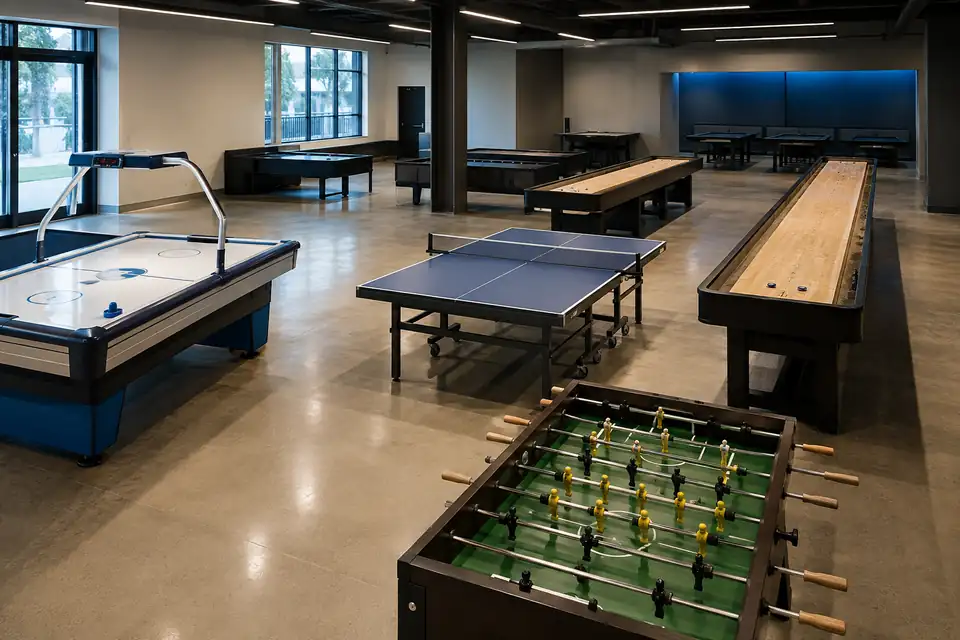
Commercial selection should begin with the table’s job in the venue.
- An anchor attraction helps define the venue and may justify a dedicated area.
- An active recreation table supports movement and participation.
- A quick-play option enables short, easy-to-start games.
- A supporting social amenity adds activity without defining the whole business.
These labels describe planning roles. They do not establish revenue, repeat-use, session-length, or throughput outcomes. Those outcomes depend on local demand, pricing, staffing, traffic, placement, and operations.
Before setting the product mix, document:
- Users and demand: Who is expected to play, and what evidence supports that expectation?
- Operating model: Is play paid, bundled, membership-based, or offered as an amenity?
- Capacity: How many players and spectators can the room accommodate safely?
- Environment: Are noise, humidity, temperature, food, drinks, or outdoor exposure concerns?
- Service plan: Who cleans, inspects, adjusts, repairs, and sources parts?
- Project scope: Who handles delivery, destination unloading, movement inside the building, assembly, installation, testing, and staff handover?
For billiard-focused projects, a structured billiard room solution discussion can help define table type, room layout, accessories, and service boundaries. When comparing manufacturers, use a documented supplier selection process rather than relying on a category name or headline price.
What to Verify Before Ordering
Ask every shortlisted supplier for written, model-specific answers to the same questions.
Space and access
- assembled dimensions and full operating envelope;
- packed dimensions, package count, and individual heavy-component data;
- door, corridor, stair, elevator, and turning requirements;
- service access and emergency-route impact.
Utilities and environment
- voltage, frequency, plug, and maximum power where applicable;
- ventilation and approved operating conditions;
- sensitivity to moisture, temperature change, direct sun, or outdoor exposure;
- expected noise and options for separating the game zone.
Construction and expected use
- residential, light-commercial, or commercial designation;
- user, impact, or duty limitations stated by the manufacturer;
- stability, anti-tip, guards, locks, and other safety provisions;
- warranty coverage and exclusions for commercial use.
Installation and after-sales scope
- responsibility for unloading, internal movement, assembly, installation, and leveling;
- commissioning and acceptance method;
- maintenance frequency and approved consumables;
- included spares, replacement-part lead times, and service documentation.
Put the final agreed specification and responsibility boundaries in the quotation or contract. A product photo or general catalog description is not enough.
Common Buying Mistakes
Treating “popular” as proof of fit
A familiar category can still fail if users, room conditions, or operating goals do not match it.
Measuring the cabinet but not the game
Cues, rods, player movement, spectators, seating, doors, and circulation all expand the required area.
Buying a residential model for repeated public use
Appearance does not establish duty rating. Ask for written confirmation that the exact model and warranty cover the intended setting.
Ignoring power, noise, and service access
These factors affect placement and lifetime use, especially for air hockey and electronic features.
Assuming multi-game means equivalent performance
A convertible table may solve a space problem while introducing compromises in play, storage, and durability.
Comparing quotations with different scopes
A lower total may omit delivery, destination handling, installation, accessories, spare parts, or commissioning. Normalize the scope before comparing price.
FAQ
Is this a global popularity ranking?
No. It is a shortlist of five widely available categories buyers commonly compare. A defensible global ranking would require comparable sales, search, or installed-base data for the same period, regions, channels, and customer types.
Which game table needs the least space?
There is no category-only answer. Foosball cabinets are often compact, but extended rods and players add width. Some folding table tennis and multi-game products save storage space but still need a larger operating zone. Compare the exact model’s full-use dimensions.
Which game tables need electricity?
Air hockey normally requires electricity for the airflow system. Basic pool, table tennis, shuffleboard, and foosball tables normally do not, but electronic scoring, lighting, ball-return systems, or other accessories may add power requirements.
Which category is best for a commercial venue?
Choose by operating role and evidence of local demand. A billiard venue may need pool tables as its core product, while a family venue may use several shorter-form games. Confirm commercial suitability, safety, service capacity, and total installed cost for every selected model.
Is a multi-game table suitable for commercial use?
Only if the specific model is rated and warranted for the intended commercial duty. Check the changeover mechanism, storage, safety, replaceable parts, and expected maintenance before purchase.
How should buyers compare supplier quotations?
Use the same written specification and scope for every supplier. Compare the exact model, materials, included accessories, packaging, freight boundary, destination handling, installation, commissioning, warranty, spare parts, and exclusions—not only the unit price.
Final Buying Rule
Do not buy a game table because a list calls it the most popular. Choose the category that fits the users and the table’s role, then verify the operating envelope, utilities, noise, installation, maintenance, commercial-use terms, and final written scope for the exact model.
Source Note
This guide does not use retailer lists or single-category market reports as proof of a global ranking. The following current buyer guides are useful examples of how game-room categories are compared, but neither provides comparable worldwide sales data for all five categories:
- How to Build the Ultimate Home Game Room in 2026, Omaha Sports and Games.
- Shuffleboard vs. Other Game Room Tables: Which Game Is Right for Your Space?, McClure Tables.