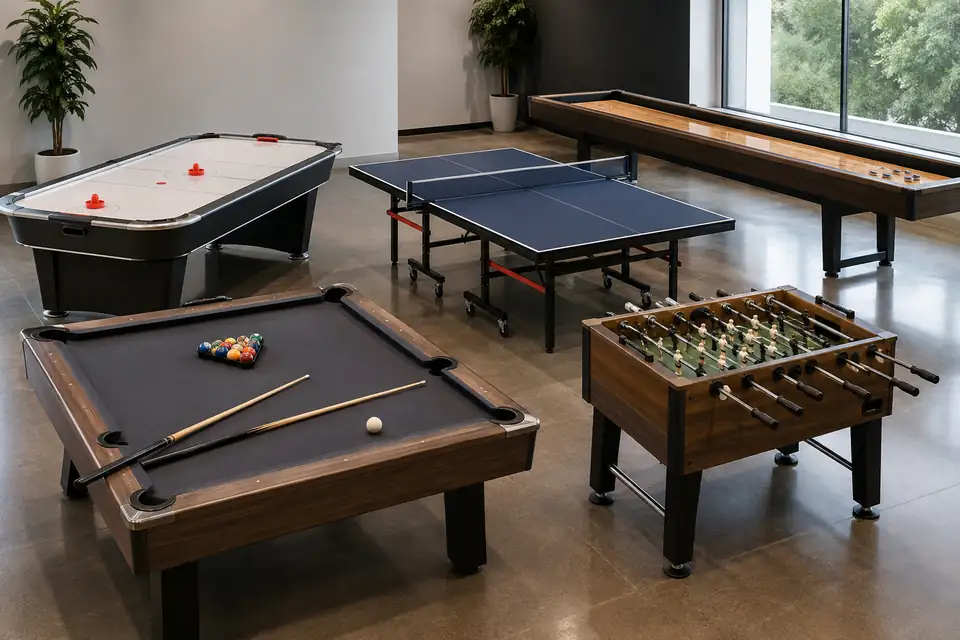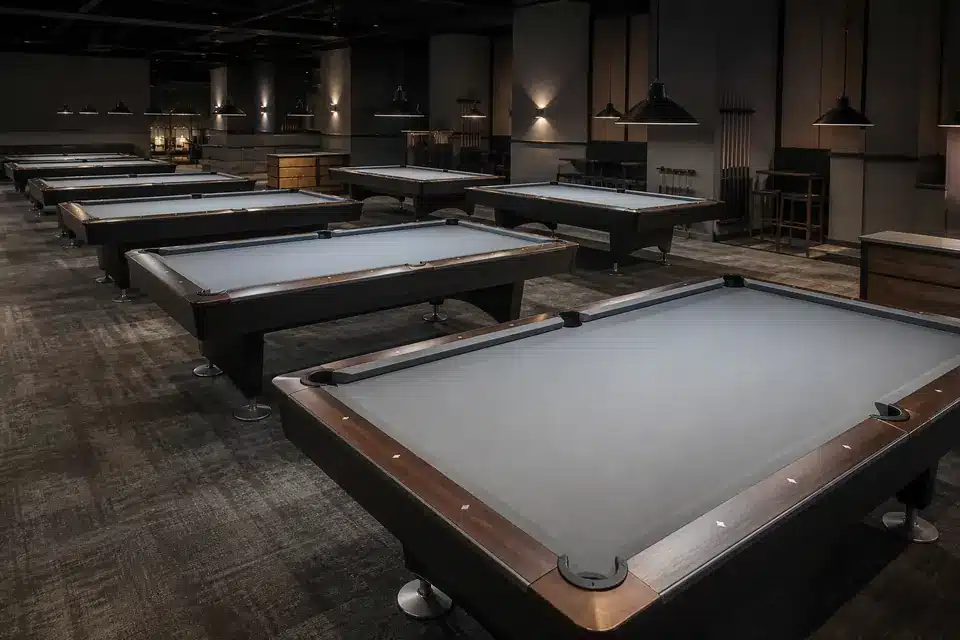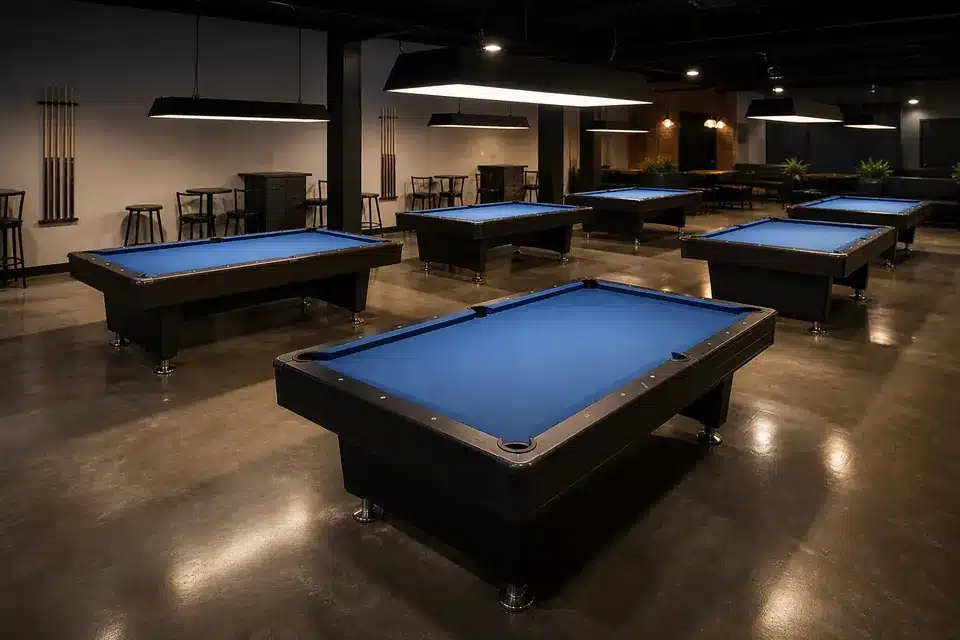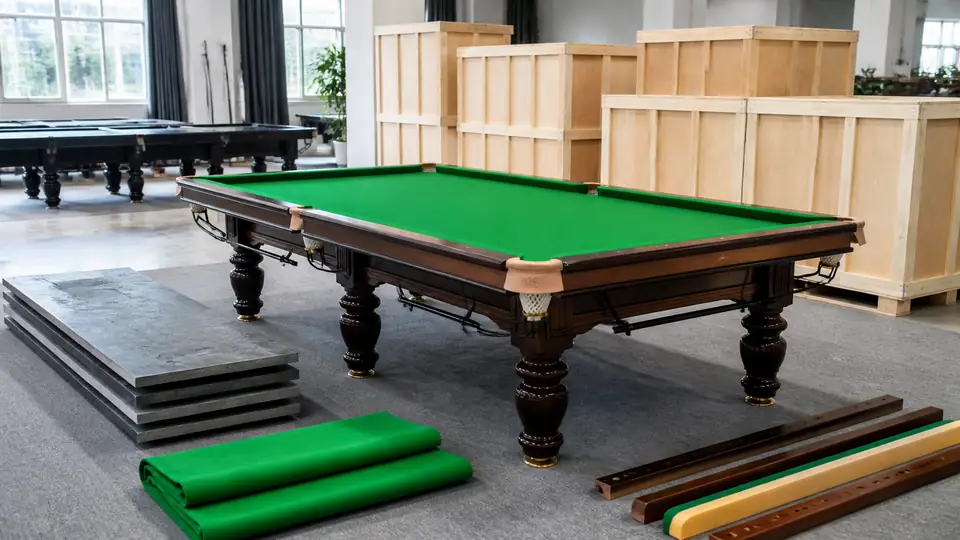
Chinese Eight Ball, also known as “Chinese Black 8,” is a competitive cue sport that combines elements of American pool rules with the technical characteristics of snooker. In recent years, it has rapidly grown in popularity in China and international billiard rooms, becoming one of the most widely played cue sports.
For beginners, it is not only important to understand the official rules, but also to be aware of the commonly accepted “house etiquette” in billiard rooms, as these details often directly affect the playing experience.
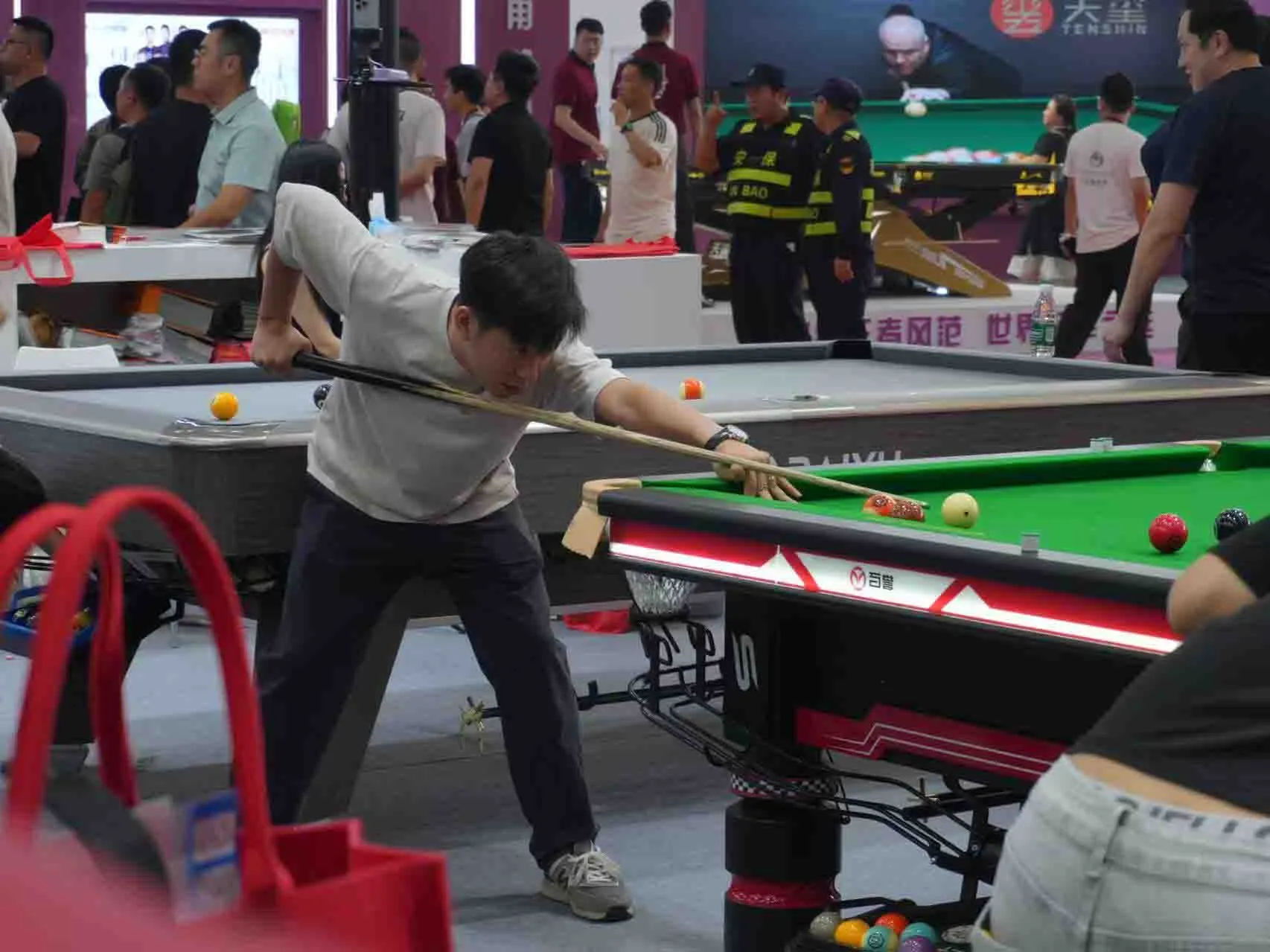
🟢 1. Basic Rules of Chinese Eight Ball
1)Break Shot Rules
The game starts with the break:
- The cue ball must be placed behind the head string (break line or D-zone depending on the table)
- A legal break requires either pocketing a ball or at least four object balls contacting cushions
- If the 8-ball is pocketed on the break, the result depends on local rules (re-rack or win/loss decision)
2)Ball Group Assignment (Solids and Stripes)
Balls are divided into:
- Solids (1–7)
- Stripes (9–15)
- The 8-ball (black ball)
Key rule:
- The first legally pocketed ball after the break determines each player’s assigned group
- A player must clear all their assigned balls before legally attempting the 8-ball
3)Shot Sequence Rules
Players must follow these fundamental principles:
- The cue ball must first contact a legal target ball
- Combination shots and rail-first shots are allowed
- A legal shot must result in at least one ball hitting a cushion or being pocketed
4) Fouls (Common Situations)
Common fouls include:
- Cue ball pocketed
- Failing to hit the correct object ball first
- No ball hitting a rail or being pocketed
- Illegal jump shots or push shots
- Double hit (contacting the cue ball twice)
After a foul, the opponent is usually awarded:
👉 “Ball in Hand,” allowing the cue ball to be placed anywhere on the table
5) 8-Ball Rules (Black Ball)
The 8-ball determines the winner:
- It can only be legally played after all assigned balls are cleared
- In some rule sets, the player must “call the pocket”
- Pocketing the 8-ball illegally or during a foul usually results in a loss
🟢 2. Match Result Determination
The following situations usually determine the winner:
- Legally pocketing the 8-ball → Win
- Cue ball and 8-ball pocketed together → Loss (foul)
- Illegal sequence resulting in 8-ball pocket → Loss
- Severe or repeated fouls → Loss
🟢 3. Common Etiquette and Unwritten Rules in Chinese Eight Ball
These are not always official rules, but they are widely followed in billiard rooms and casual matches.
1. Handicap Culture (Giving Odds)
In casual games, it is common to see:
- Stronger players giving balls (1, 2, or more)
- Giving the break advantage
- Giving “ball in hand” advantage
👉 However, this is usually not used in formal competitions
2. Calling the Pocket Habit
Although not strictly required in all rule sets, many billiard rooms expect:
- Players must call the pocket for the 8-ball
- Failure to call the pocket may result in the shot not counting or being considered a foul
3. Local House Rules Differences
Different billiard rooms may have variations such as:
- Whether jump shots are allowed
- Strictness of rail-contact enforcement
- Severity of foul penalties
- Whether certain rescue shots are permitted
👉 These are commonly referred to as “house rules”
4. Etiquette and Sportsmanship
Chinese Eight Ball places strong emphasis on etiquette:
- Remain quiet while the opponent is shooting
- Do not touch the table or balls
- Avoid exaggerated celebrations after a shot
- A handshake after the match is standard respect
5. Pace and Playing Habits
In casual play:
- Avoid excessive delay during shots
- Overly defensive play may be seen as unfriendly
- A smooth and continuous game pace is preferred
🟢 4. Conclusion
Chinese Eight Ball is not only a sport that requires technical skill and strategy, but also a game with a strong cultural atmosphere.
Understanding the basic rules is only the first step. Truly mastering the unwritten etiquette and local playing habits allows players to integrate faster into the game and improve their overall competitive experience.