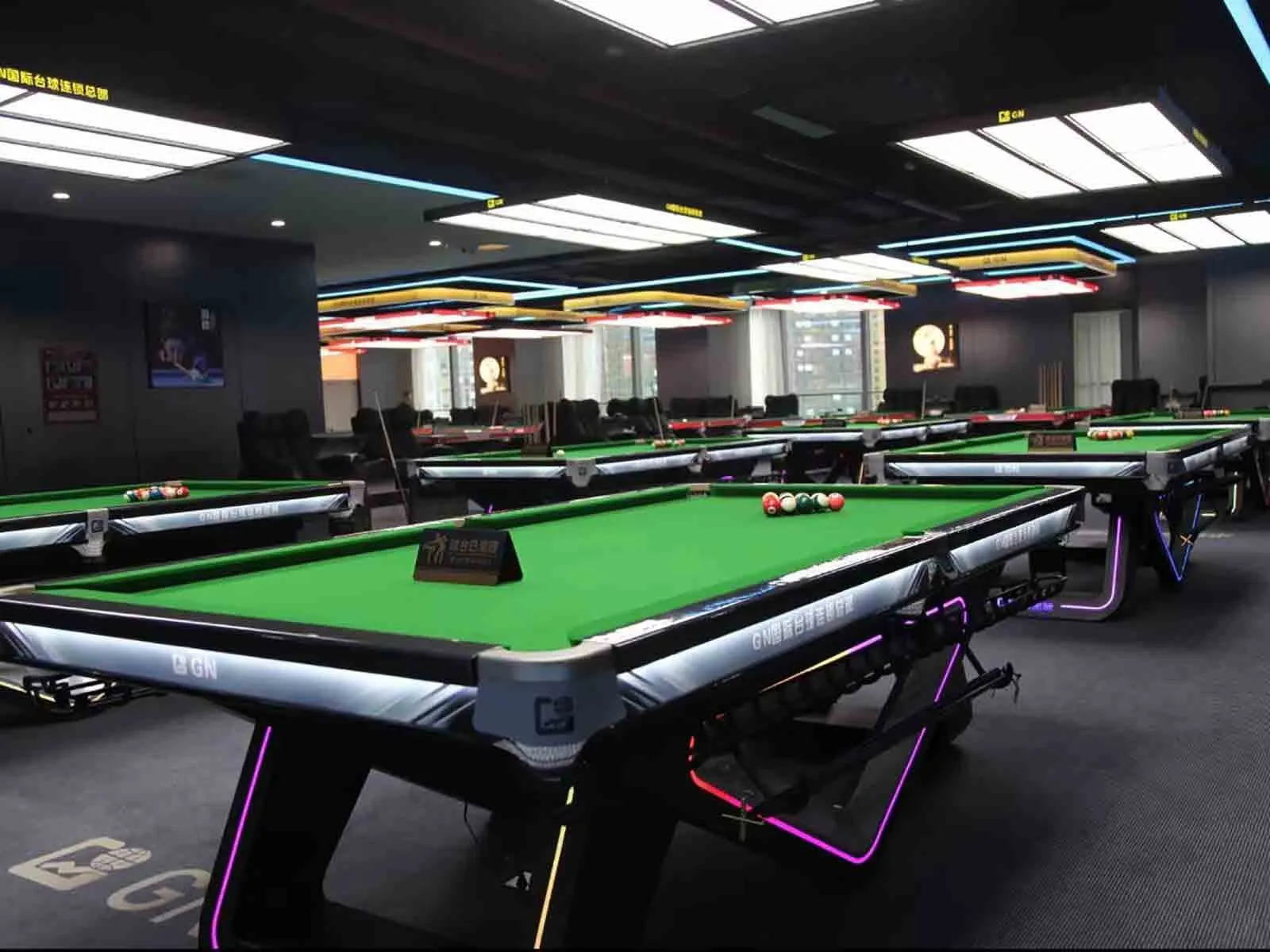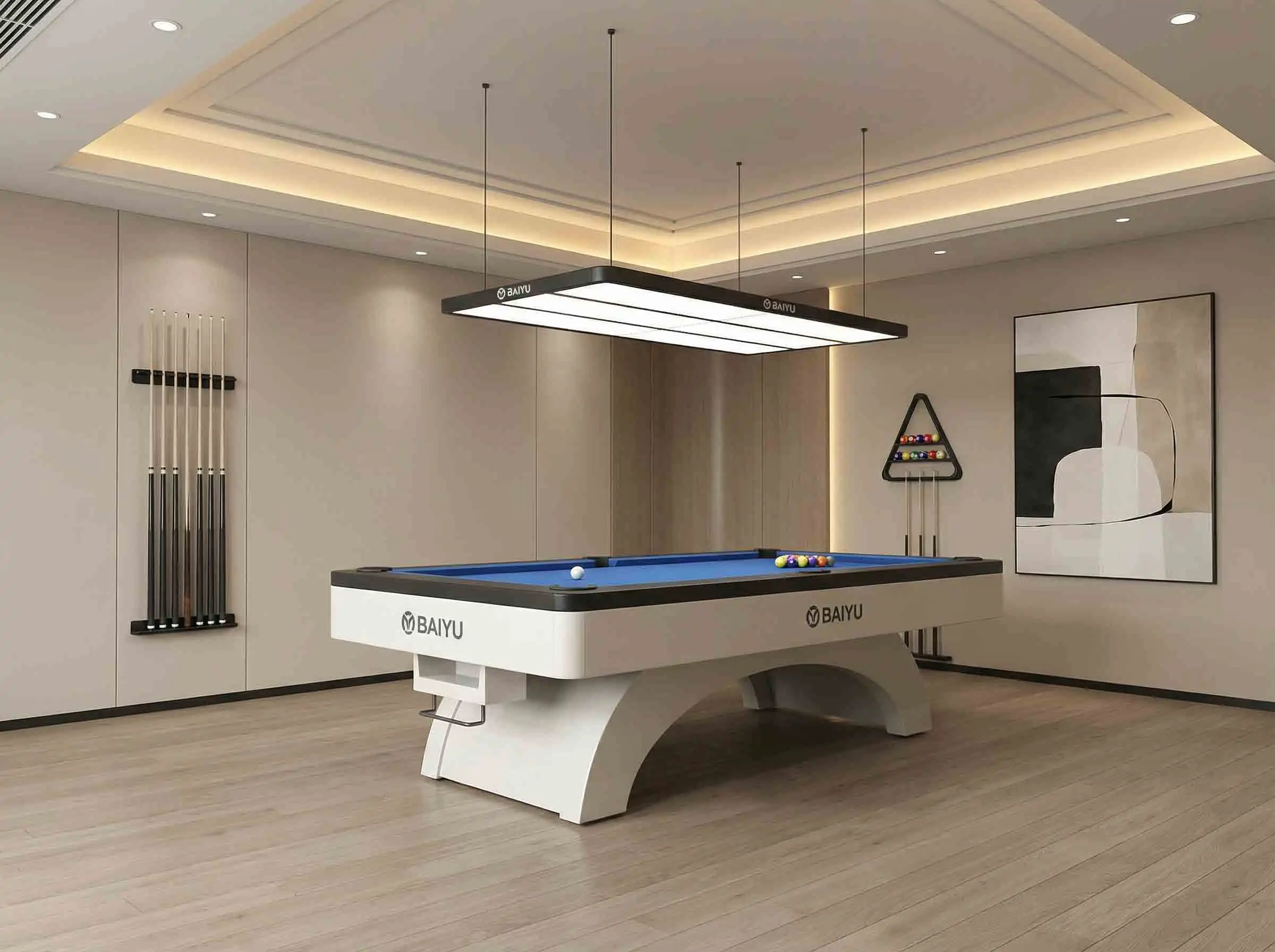
For international buyers, a billiard table (pool table) is a heavy, high-value, precision wooden product. During global shipping, the main concerns are not only price, but also:
- Risk of damage during ocean transportation
- Freight cost calculation (weight vs CBM)
- Container loading efficiency
- Fumigation and customs compliance requirements
This guide explains the professional export packaging system and logistics standards used in the billiard manufacturing industry.

1. Will Pool Tables Be Damaged During Shipping?
A common concern from buyers is:
“Will such a heavy and large product get damaged during long-distance sea shipping?”
In professional export systems, pool tables are not shipped as a whole unit, but as a knock-down modular structure (KD system).
1)Modular Disassembly Structure
A standard pool table is separated into:
- Slate (main load-bearing component)
- Wooden or steel frame
- Legs / base structure
- Rubber cushions (rails)
- Cloth (individually moisture-protected)
- Accessories (balls, cues, triangle, lighting system, etc.)
👉 Each part is independently protected and packaged.
2)Industrial Packaging System (3 Layers Protection)
Layer 1: Internal Protection
- EPE foam wrapping
- Corner protectors
- Stretch film anti-scratch layer
Layer 2: Structural Fixing
- High-density cardboard separation
- Wooden positioning bars to prevent movement
Layer 3: Export Crate Protection
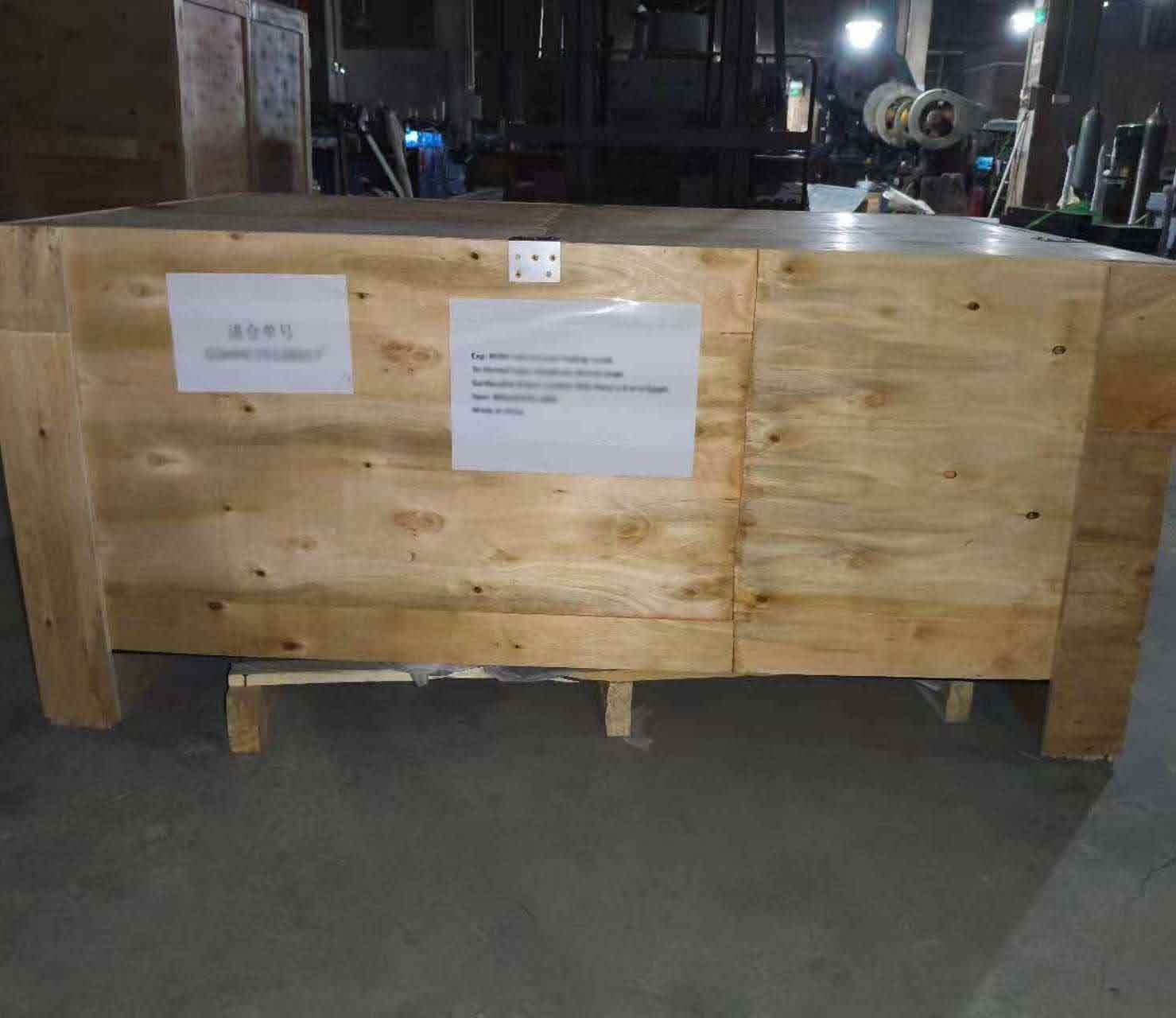
- Fumigated wooden crate or ISPM15 plywood crate
- Steel strap reinforcement
- Moisture-proof sealing system
3)Key En+gineering Principle
Damage risk does not come from shipping itself, but from lack of structural control during packaging.
Properly packed pool tables have extremely low damage rates in ocean freight.
2. Updated Weight & Volume (CBM) Standards
Shipping cost is determined by both actual weight (KG) and volume (CBM).
🟦 1) 9ft American / Chinese Standard Pool Table
- Volume (CBM):
👉 1.8 – 2.2 CBM per set - Special designs (steel frame / irregular base):
👉 up to 2.6 CBM per set - Key rule:
The more compact and regular the structure, the lower the CBM.
🟨 2)Weight Standards (Including Basic Accessories)
All weights include standard accessories such as lighting system, cues, balls, triangle, etc.
American Pool Table (2.5cm slate)
- Total packed weight: ~650–700 kg
Chinese Pool Table (4.5cm slate)
- Total packed weight: ~750–800 kg
- Complex steel structure version:
👉 up to 900 kg
12ft Snooker Table (Professional Standard)
- Slate: 4.5cm thick, 5-piece assembly
- Total weight: up to 1.2 tons (1200 kg)
- Volume: 2.1 – 2.3 CBM
Key Insight
Weight is mainly determined by slate thickness, while CBM is determined by structural design efficiency.
3. How Freight Cost Is Calculated (Weight vs CBM Rule)
International sea freight uses the W/M rule (Weight or Measurement):
- 1 CBM ≈ 500 kg (freight conversion standard)
- Carrier charges whichever is higher:
- Actual weight
- Or volumetric weight
Example
- 1 table = 2 CBM
- Equivalent freight weight ≈ 1000 kg
If actual weight is higher → charged by weight
If CBM is higher → charged by volume
4. Container Loading Capacity (Realistic Industry Standard)
Container utilization depends on packing efficiency and structure design.
🚢 20GP Container (Approx. 28 CBM gross / ~25 CBM usable)
- Effective loading capacity after packaging loss:
👉 33 CBM/22T - Capacity:
- 13 – 15 pool tables (9ft standard types)
🚢 40GP Container (Approx. 58 CBM gross / ~52 CBM usable)
- Effective usable space:
👉 67 CBM/27T - Capacity:
- 23-30 pool tables
🚢 40HQ Container (Approx. 68 CBM gross / ~62–65 CBM usable)
- Effective usable space:
👉 76 CBM/26.5T - Capacity:
- 27-34 pool tables
Container Loading Principle
Efficiency depends not only on container size, but also on packaging engineering and disassembly design quality.
5. Container Loading Engineering Strategy
Professional loading follows three rules:
1. Weight Distribution
- Slate → bottom layer
- Frame → middle
- Accessories → top
2. Space Optimization
- Modular disassembly reduces wasted space
- Nesting structure improves stacking efficiency
3. Anti-Movement Protection
- Airbags (dunnage bags)
- Wooden locking bars
- Shock-absorbing fillers
6. Fumigation Requirements (ISPM15 Standard)
What is fumigation?
Fumigation is a mandatory treatment for wooden packaging to:
- Kill insects and pests
- Prevent biological contamination
- Meet international phytosanitary standards
Countries commonly requiring fumigation:
- United States 🇺🇸
- Canada 🇨🇦
- Australia 🇦🇺
- New Zealand 🇳🇿
- 일부 EU countries 🇪🇺
Alternative: Fumigation-Free Packaging
Modern exports often use:
- ISPM15 compliant plywood crates
- OSB wood packaging
Advantages:
- No fumigation required
- Faster customs clearance
- Lower delay risk
7. Additional Export Risks & Solutions
1. Moisture Protection
- Moisture-proof wrapping
- Desiccant packs
- Fully sealed packaging
2. Long Transit Deformation Prevention
- Independent slate support system
- Stress-balanced frame design
3. Customs Clearance Risk
- Accurate HS code declaration
- Complete invoice & packing list
8. Summary
Based on real export logistics practice:
- ✔ Damage risk depends on packaging engineering, not shipping duration
- ✔ Freight cost is mainly determined by CBM + weight ratio
- ✔ Container efficiency depends on structural design and packing optimization
- ✔ Fumigation compliance directly affects customs clearance success