How to Maintain Constant Speed on Your Snooker Table: Beyond Just Heating Systems
For professional players and club owners, the most frustrating experience isn’t missing a shot—it’s a “heavy” table. When the balls seem to drag and the rebound feels sluggish, your break-building suffers.
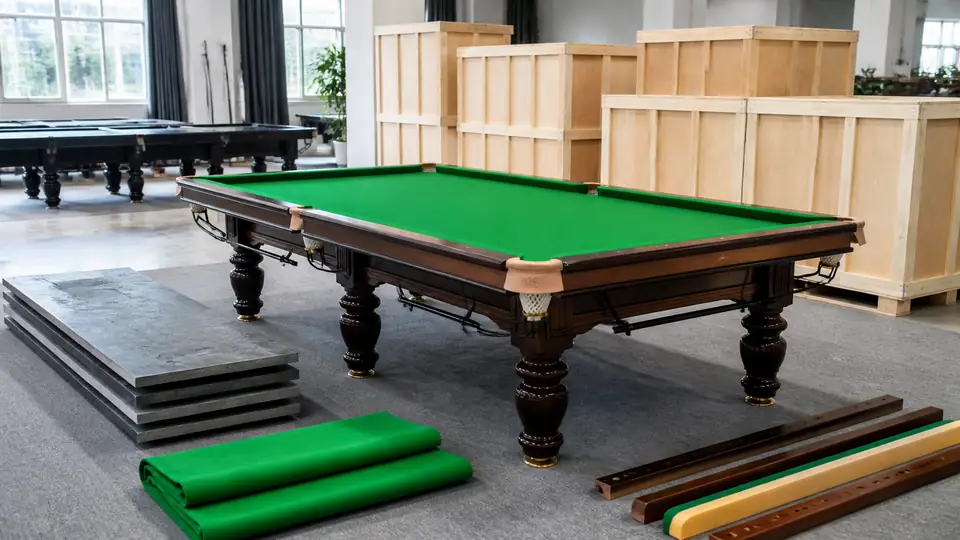
While a heated under-slate system is the gold standard for removing moisture and increasing ball speed, it isn’t the only factor. If you want your snooker table to play like it’s at the Crucible Theatre, you need a holistic maintenance strategy.
Here is how to maintain professional, constant speed on your snooker table by looking beyond just the heaters.
1. Professional Brushing: The Foundation of Speed
The nap of a snooker cloth (the direction of the tiny wool fibers) creates friction. Over time, these fibers become flattened or tangled, slowing the ball down.
- The Technique: Always brush with the nap (from the baulk end toward the black spot). Brushing against the grain ruins the cloth.
- The Goal: Brushing lifts the dust and resets the fibers, reducing the “drag” on the cue ball.
- Pro Tip: Use a high-quality horsehair brush. Synthetic bristles can create static electricity, which actually attracts more dust.
2. The Magic of Ironing
If brushing “lifts” the cloth, ironing “sets” it. This is perhaps the most underrated factor in table speed.
- How it works: A professional snooker iron flattens the fibers in one direction, creating a slick, glass-like surface.
- Consistency: An ironed table can increase ball travel distance by up to 20-30% compared to a brushed-only table.
- Caution: Ensure the iron is at the correct temperature (usually around 150°C – 180°C). Too cold, and it won’t set the nap; too hot, and you’ll scorch the wool.
3. Humidity Control: The Hidden Enemy
Even with a heating system, high ambient humidity in the room can “choke” a table.
- The “Damp” Effect: Wool is hygroscopic, meaning it absorbs moisture from the air. This makes the fibers swell and become “sticky.”
- The Solution: Maintain a room humidity level between 45% and 55%. If you operate in a coastal or humid area, a dedicated dehumidifier is just as important as your under-slate heaters.
- The Synergy: Heaters dry the slate, but a dehumidifier protects the top of the cloth.
4. Ball Hygiene: Friction is the Speed Killer
We often blame the table, but the balls are often the culprits. As balls are played, they pick up “chalk dust” and skin oils, creating microscopic grit.
- Polishing: Regularly use a professional ball cleaning machine or a microfiber cloth with specialized ball polish.
- Transfer: Dirty balls transfer dirt into the cloth fibers, creating “slow spots” on the table. Keep your balls shiny, and the table stays fast.
5. Cloth Selection: Weight and Composition
If you have done all the above and the table is still slow, it might be the cloth itself.
- Professional Grade: Most tournament tables use Strachan 6811 Tournament or No. 10 cloth. These are thinner and shaved more closely than club-grade cloths.
- The Trade-off: Thinner, faster cloths provide incredible speed but wear out faster. If speed is your priority, look for a “short-nap” high-wool-content cloth.
Summary: The “Speed Checklist” for Snooker Success
| Action | Frequency | Impact on Speed |
| Brushing | Daily / After 4 hours of play | Moderate |
| Ironing | 2-3 times a week | High |
| Ball Cleaning | Every session | Moderate |
| Heating System | Constant (Low setting) | Very High |
| Dehumidifying | Constant (45-55% RH) | High |
Conclusion
A heated slate system provides the perfect “base” for a fast table, but it’s the daily maintenance routine that keeps it at peak performance. By combining heat, humidity control, and precise grooming (brushing/ironing), you can ensure your snooker table offers the consistent, lightning-fast response that every serious player craves.
Looking to upgrade your table’s performance? Explore our range of professional [Snooker Table Accessories] or contact our experts to discuss the best [Heated Slate Systems] for your setup.